




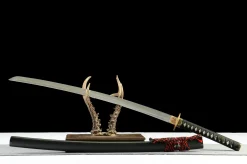
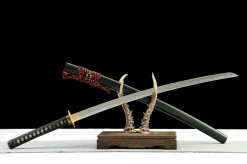





Jade Soul – Hand Forged 1065 Carbon Steel Katana Sword
Hand-forged 1065 Carbon Steel katana (102cm total / 72cm blade), crafted in Longquan. Full-tang construction with traditional fittings and hand-lacquered saya.
$259.99
Jade Soul – Hand Forged 1065 Carbon Steel Katana Sword
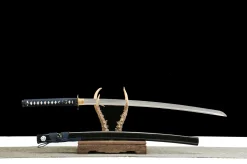
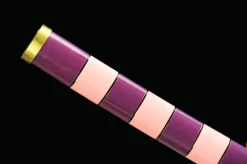
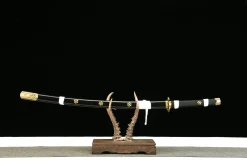
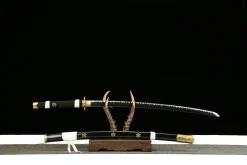
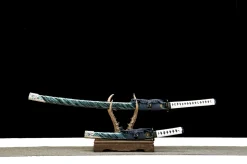
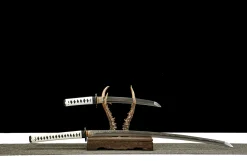
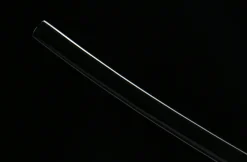
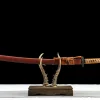
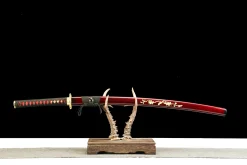
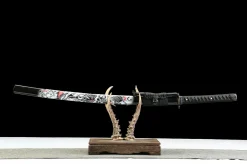
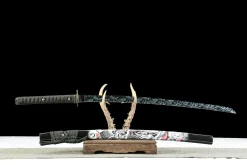
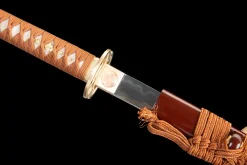
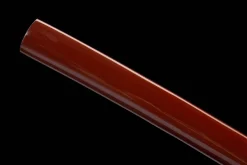
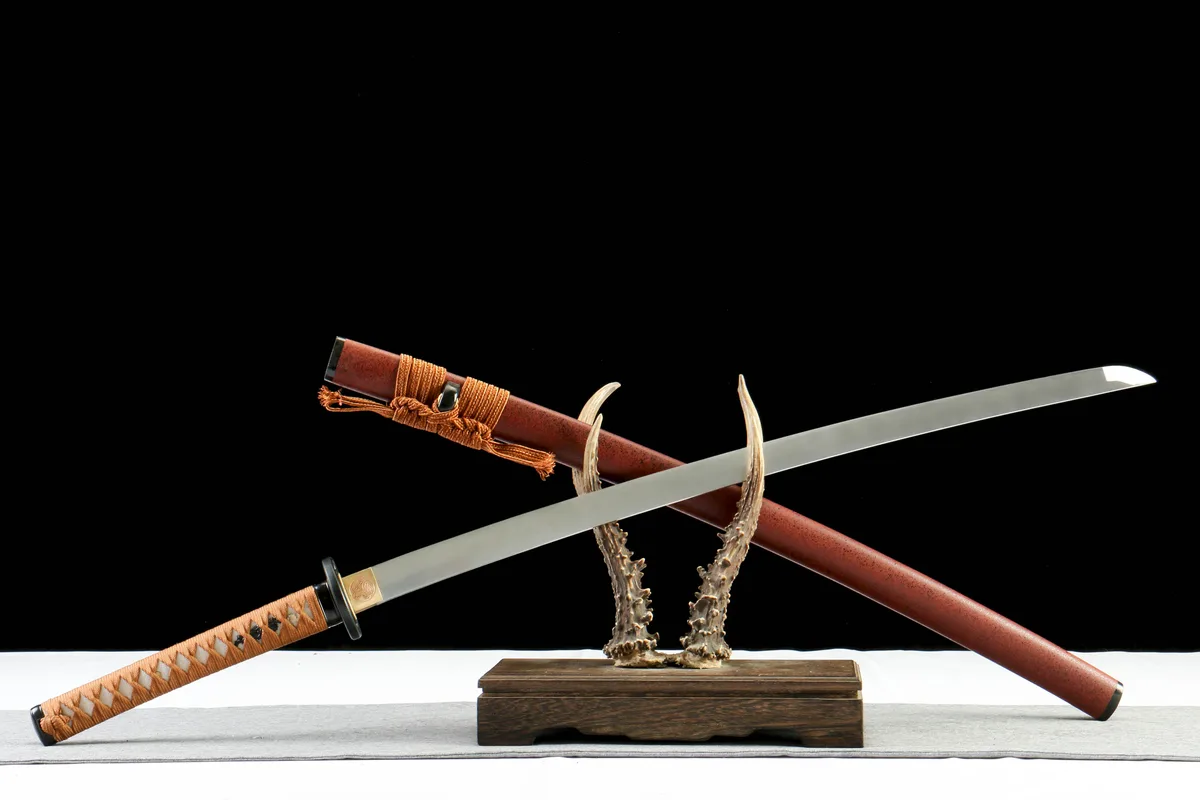
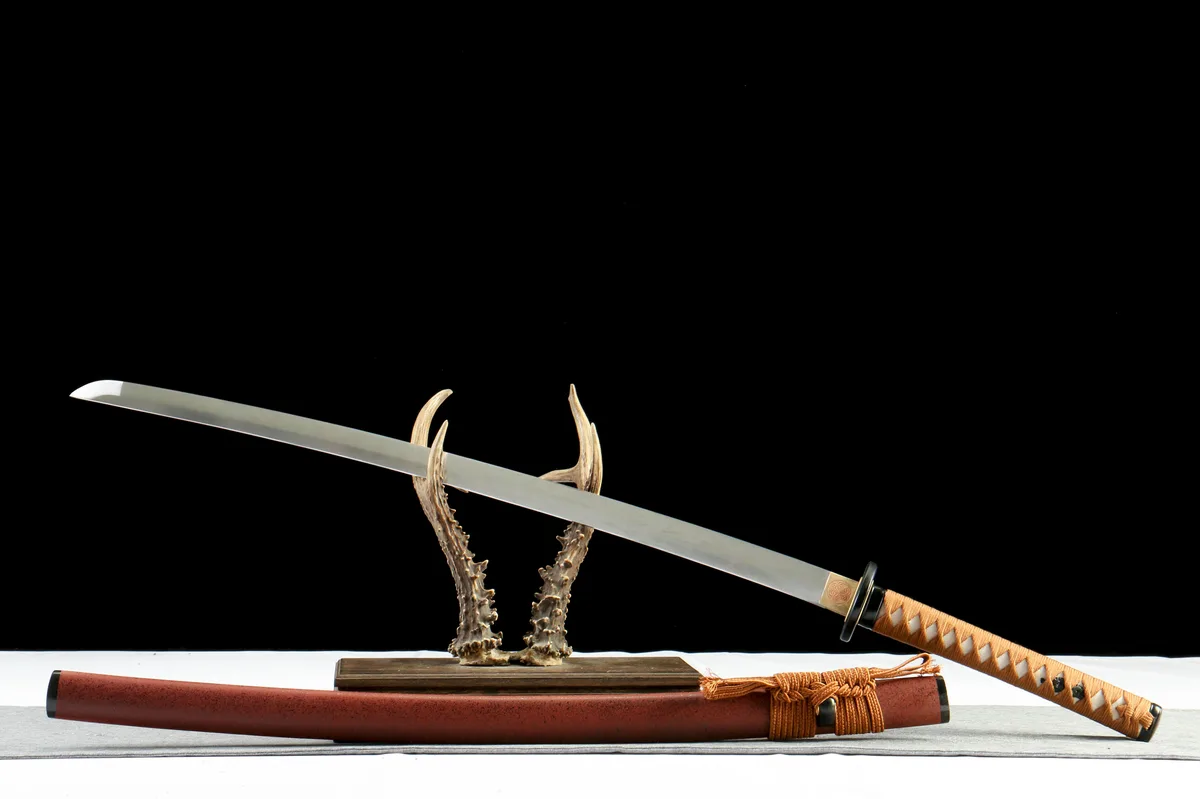
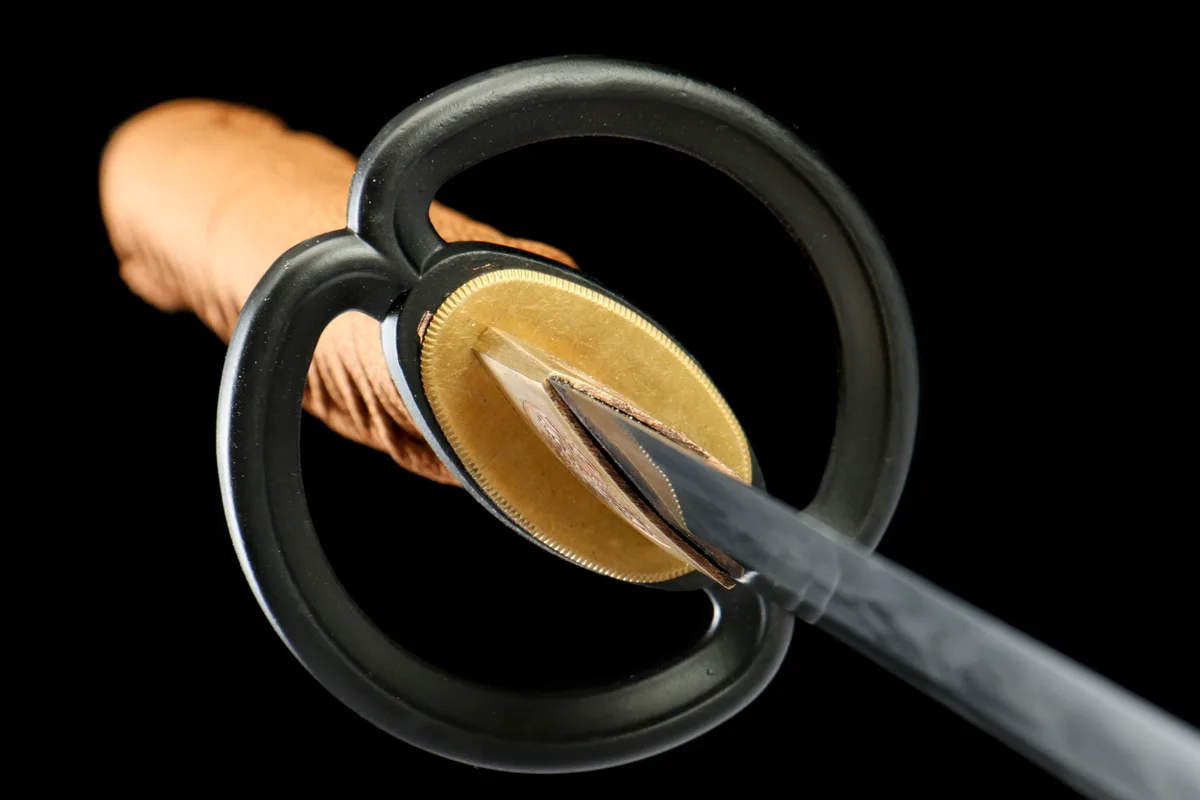
A wine-red lacquered saya alongside iron fittings is a combination that reads immediately as purposeful rather than ornamental – iron tsuba (handguard) and iron furniture have weight and presence that zinc alloy simply does not replicate, and on a working blade that distinction matters from the first handling. The Jade Soul carries the same 1065 high carbon steel and controlled furnace heat treatment that practitioners rely on, in the full 72 cm shinogi-zukuri (ridgeline) blade profile – a geometry that has earned its longevity by performing rather than by looking the part.
Specifications
| Blade Steel | 1065 High Carbon Steel |
| Total Length | 102.0 cm / 40.2 in |
| Blade Length | 72.0 cm / 28.3 in |
| Weight | 1040 g / 36.7 oz |
| Heat Treatment | Controlled-temperature furnace hardening (马沸炉 恒温热处理) |
| Fittings | Iron |
| Handle | Cotton Ito wrap over genuine rayskin (same) |
| Sheath | Hardwood with high-gloss lacquer |
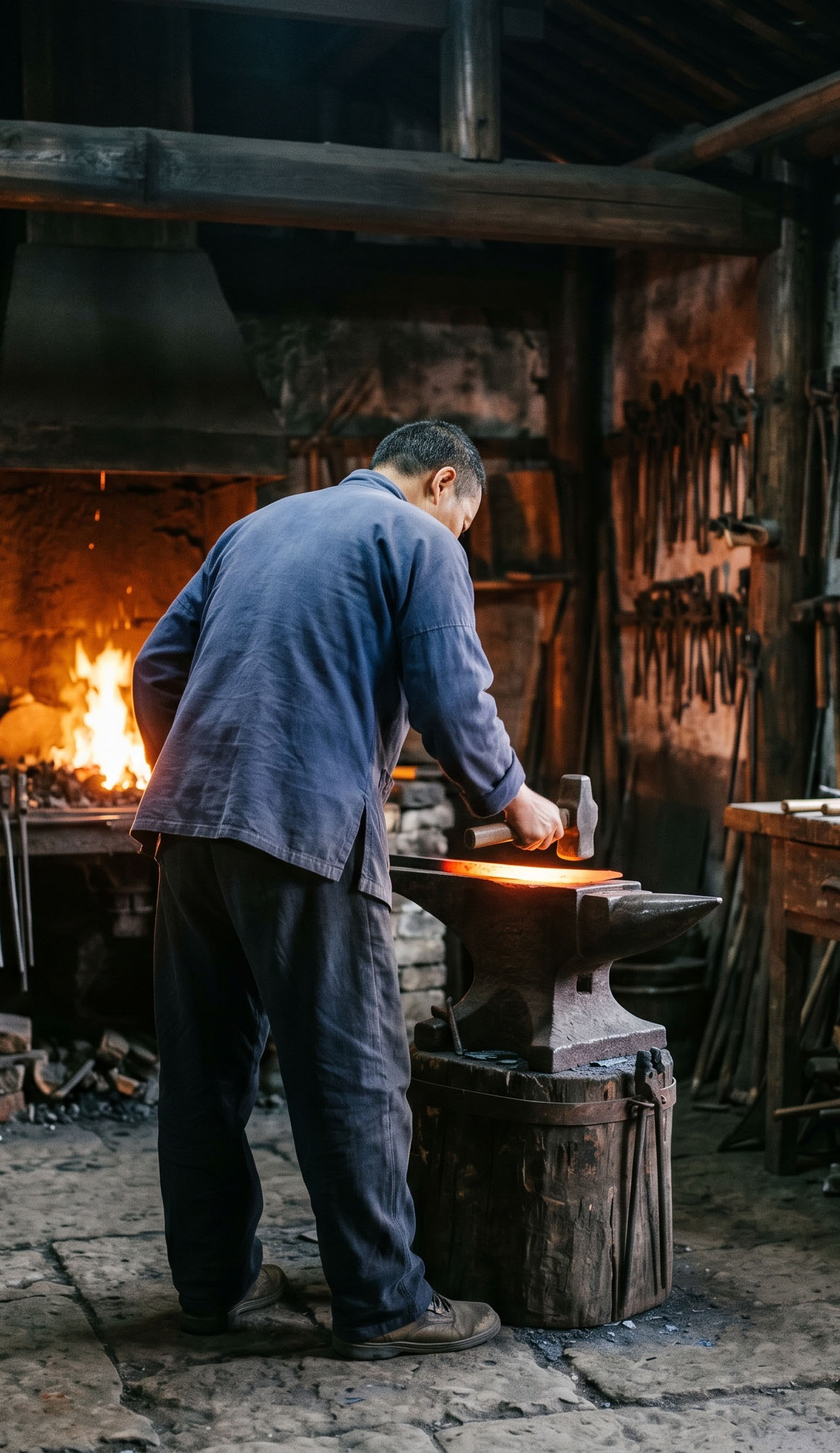
Forged in Longquan
1065 high carbon steel at the correct hardness range is a practitioner’s steel – it holds an edge through sustained use, resists chipping under the kind of lateral stress that occurs in real training, and can be resharpened without requiring specialist equipment. The 马沸炉 恒温热処理 process – controlled-temperature furnace hardening – is what separates a blade with consistent performance from one that tests well at the tip and falls off at the base. Uniform temperature throughout the hardening cycle means uniform hardness along the full 72 cm of cutting edge.
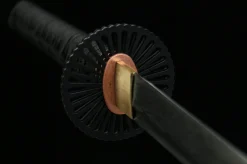
Iron fittings are not nostalgia. Iron tsuba absorb shock differently than cast alloy – they deform slightly under extreme impact rather than cracking, which matters when the blade is being used rather than displayed. The Musashi-style (武蔵) fittings specification on this blade reflects a clean, uncluttered hardware philosophy: nothing on the furniture that does not need to be there.
Weight, Balance, Draw
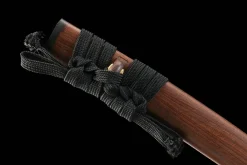
The 26 cm tsuka (handle) accommodates a full two-hand grip in the classical ichimonji (straight across) or diagonal configuration without crowding either hand. Cotton ito over genuine same (rayskin) gives a textured, positive grip that holds through sweat and repetition – the same (rayskin) beneath the wrap is not cosmetic, it is structural, keeping the wrap anchored rather than allowing it to migrate under tension. The wine-red lacquered saya draws quietly and cleanly at the koiguchi (scabbard mouth), and the visual contrast between the deep lacquer and the iron fittings is the kind of thing you notice every time you pick it up.
Keeping It Sharp
After each session, remove moisture from the blade with a soft cloth and apply a light pass of choji oil (clove-infused mineral oil) before sheathing. Iron fittings require their own attention – a very light coat of oil on exposed iron surfaces prevents surface oxidation in humid environments. The lacquered hardwood saya is durable but should be stored away from extreme humidity swings that can cause the wood to move against the fit.
| Weight | 1.32 lbs |
|---|---|
| Dimensions | 102.0 in |
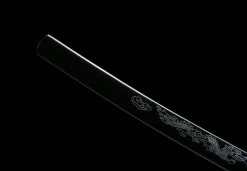
| Hamon | Decorative / Acid-Etched |
| Blade Steel | 1065 Carbon Steel |
| Total Length | 102.0 cm |
| Blade Length | 72.0 cm |
| Heat Treatment | 马沸炉 恒温热处理 |
| Handle Wrap | Cotton Ito + Genuine Rayskin |
| Sheath Material | Hardwood (High-Gloss Lacquer) |
| Fittings | Iron |
| Forging Style | Shinogi-Zukuri (Ridgeline) |
Related products