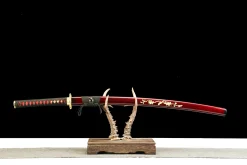

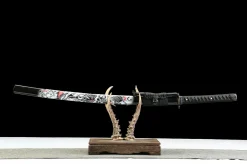
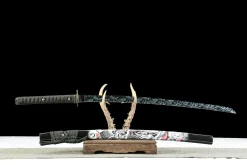




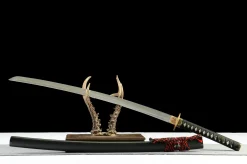
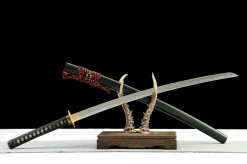





Night Slash – Hand Forged Carbon Steel Katana Sword
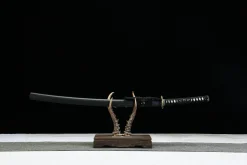
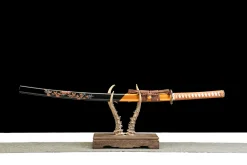
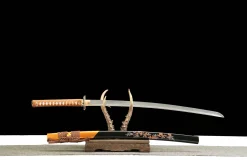
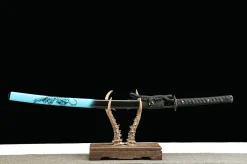
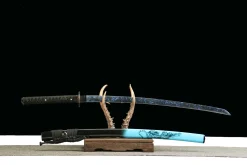
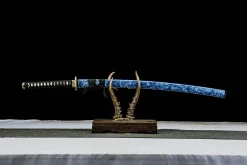
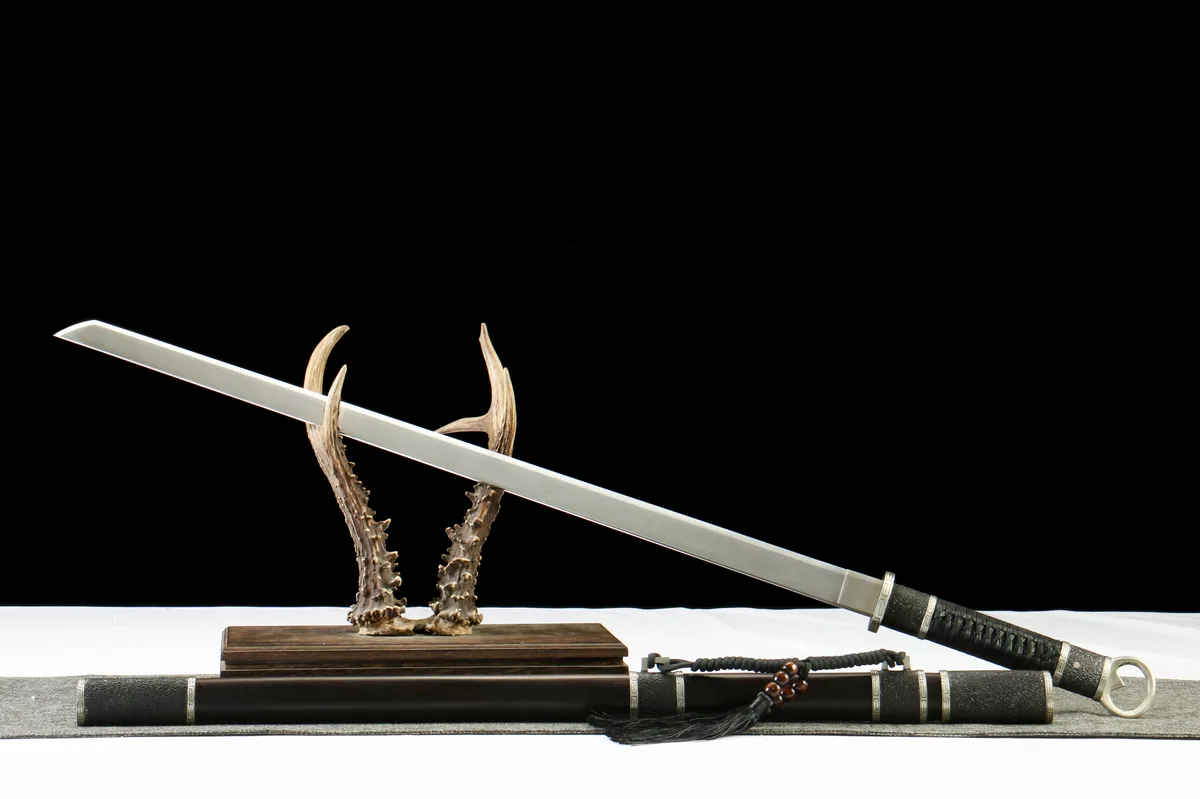
Hand-forged Carbon Steel katana (103cm total / 72cm blade), crafted in Longquan. Full-tang construction with traditional fittings and hand-lacquered saya.
$7,449.99
Night Slash – Hand Forged Carbon Steel Katana Sword
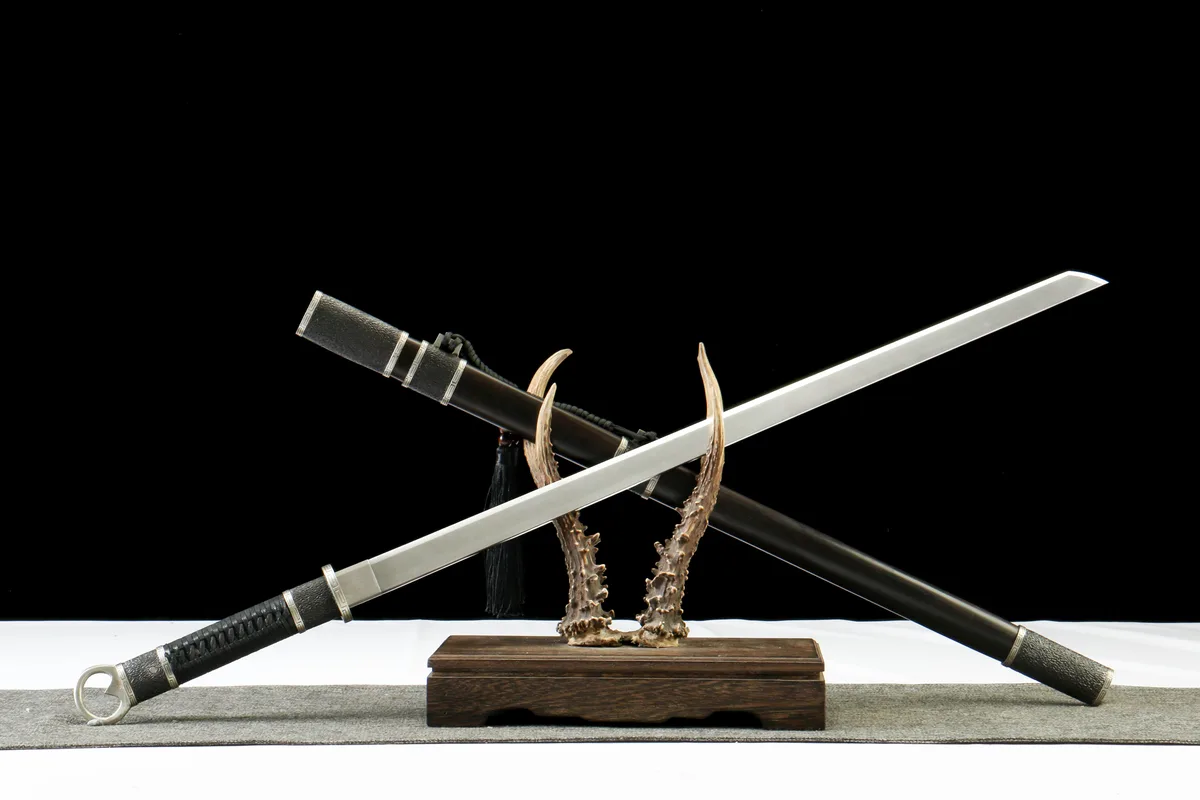
Ebony wood is not chosen for its softness. It is chosen because it does not move – against heat, against humidity, against time – and a saya built from it carries the blade with the same indifference to conditions that the steel inside it should. This is the premise of the Night Slash – 夜斩. The pairing of an ebony saya with DC53 imported tool steel is not decorative coincidence. It is a statement about what this katana is built to do and how long it is built to last.
Specifications
| Blade Steel | DC53 Japanese-Import Tool Steel (日本进口DC53) |
| Total Length | 103.0 cm / 40.6 in |
| Blade Length | 72.0 cm / 28.3 in |
| Blade Width | 3.2 cm |
| Weight | 950 g / 33.5 oz |
| Heat Treatment | Oil Quench & Temper |
| Fittings | Copper (装 – tsuba and fittings set) |
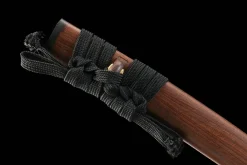
| Handle | Cotton Ito Wrap |
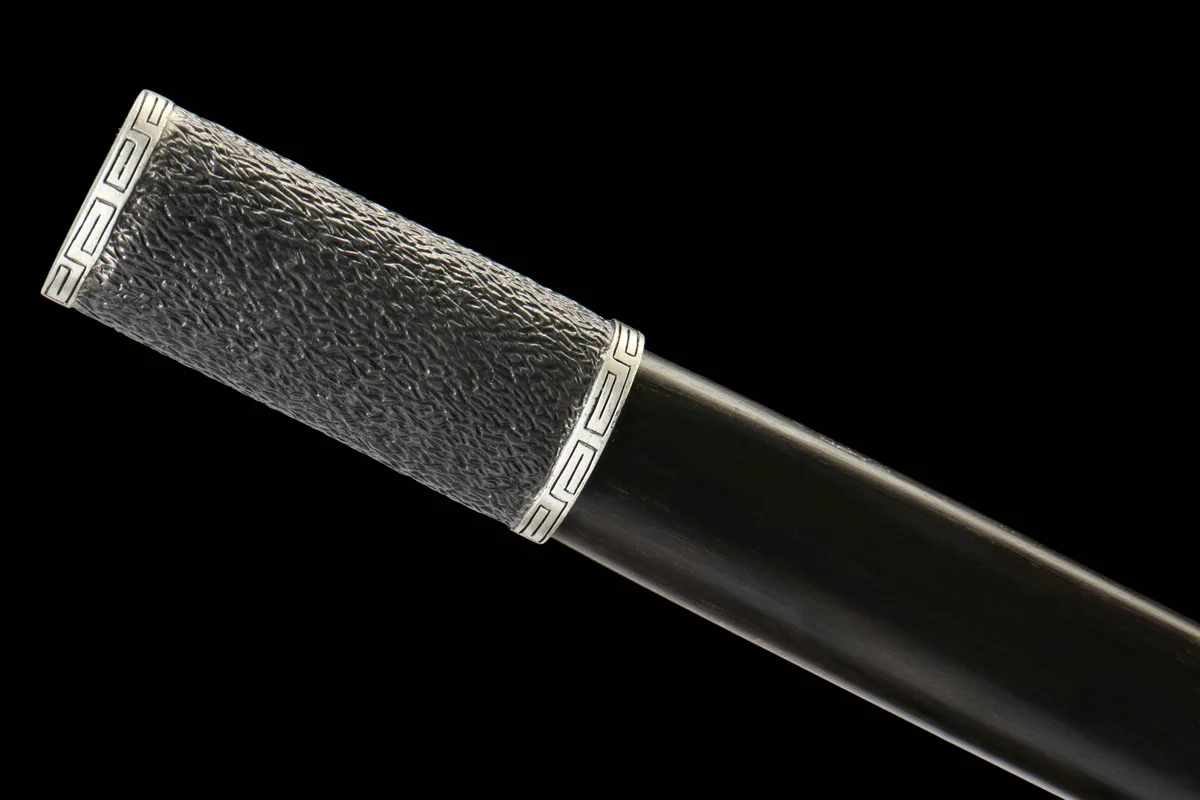
| Sheath | Ebony Wood (鞘 – saya) |
Forged in Longquan
DC53 is a cold-work die steel developed in Japan and imported directly for this blade – not a generic high-carbon substitute, not a domestic approximation. It carries a chromium and vanadium alloy structure that conventional carbon steels cannot replicate: higher compressive strength, superior toughness at hardness levels above HRC 60, and resistance to chipping under lateral stress that would fracture a lesser edge. The trade name is Japanese. The refinement is metallurgical. The result is a blade that handles repeated hard use without the micro-fracture propagation that limits pure high-carbon steels over time.
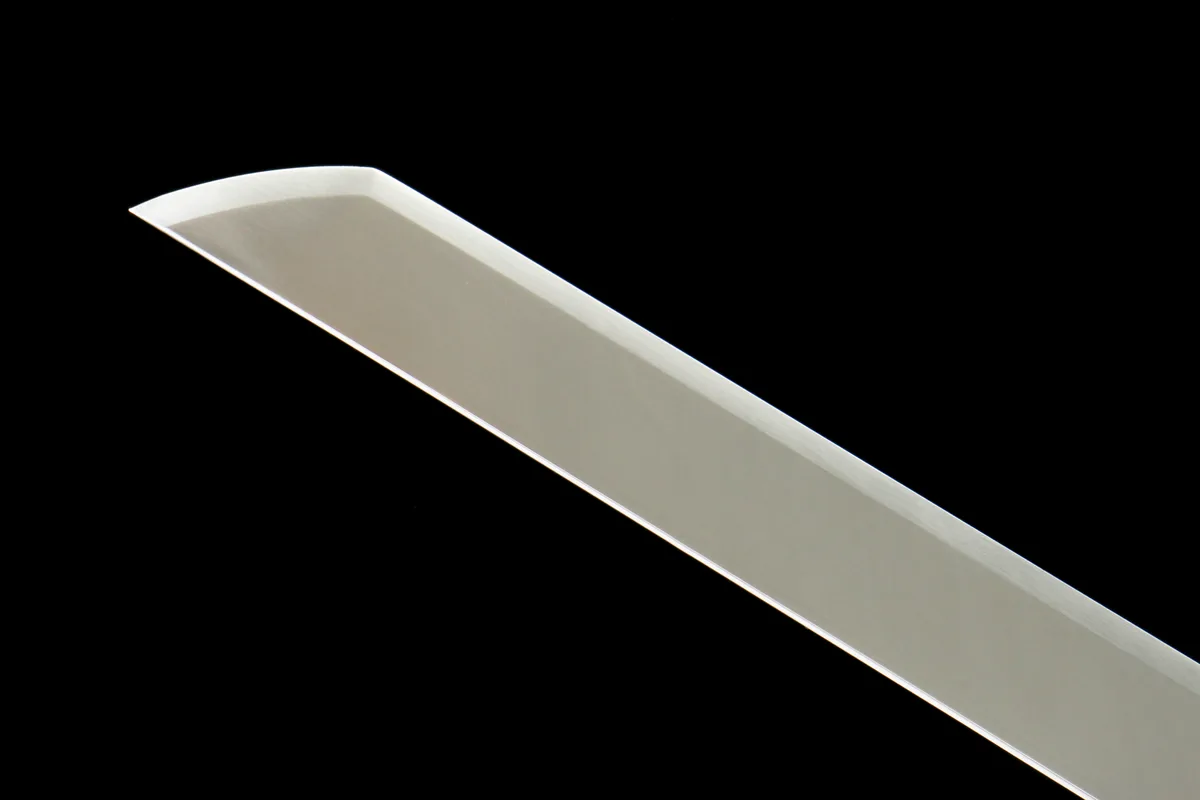
Oil quench and temper is the correct treatment for DC53 – water quench would introduce too steep a thermal gradient in an alloy this complex, risking warp or internal stress. The oil bath slows the transition just enough to let the crystalline structure settle into a tough, fine-grained martensite. What you get at the edge is hardness that does not come at the expense of the spine. The shinogi-zukuri (ridgeline) geometry reinforces this: the raised shinogi spine distributes stress away from the edge during impact, protecting the very geometry that makes DC53 worth using.
Weight, Balance, Draw
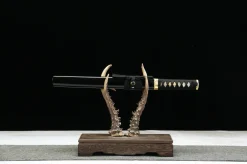
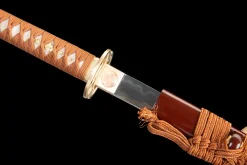
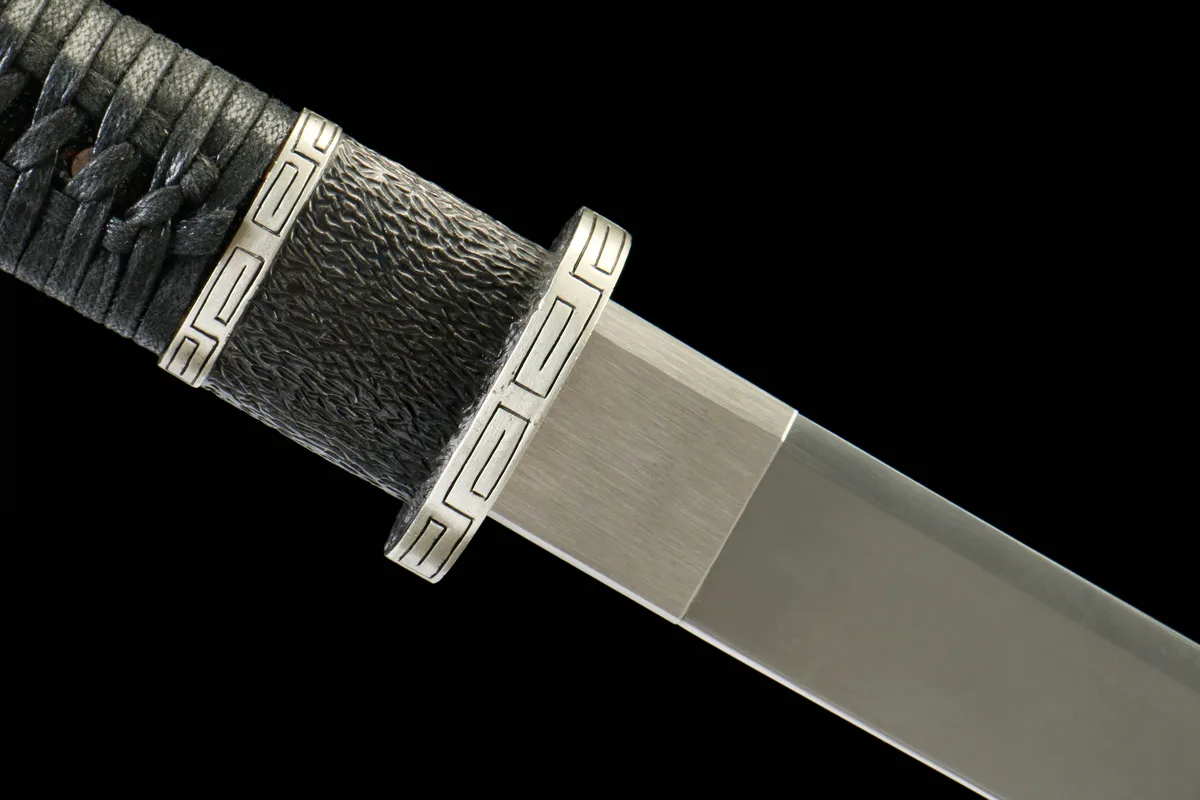
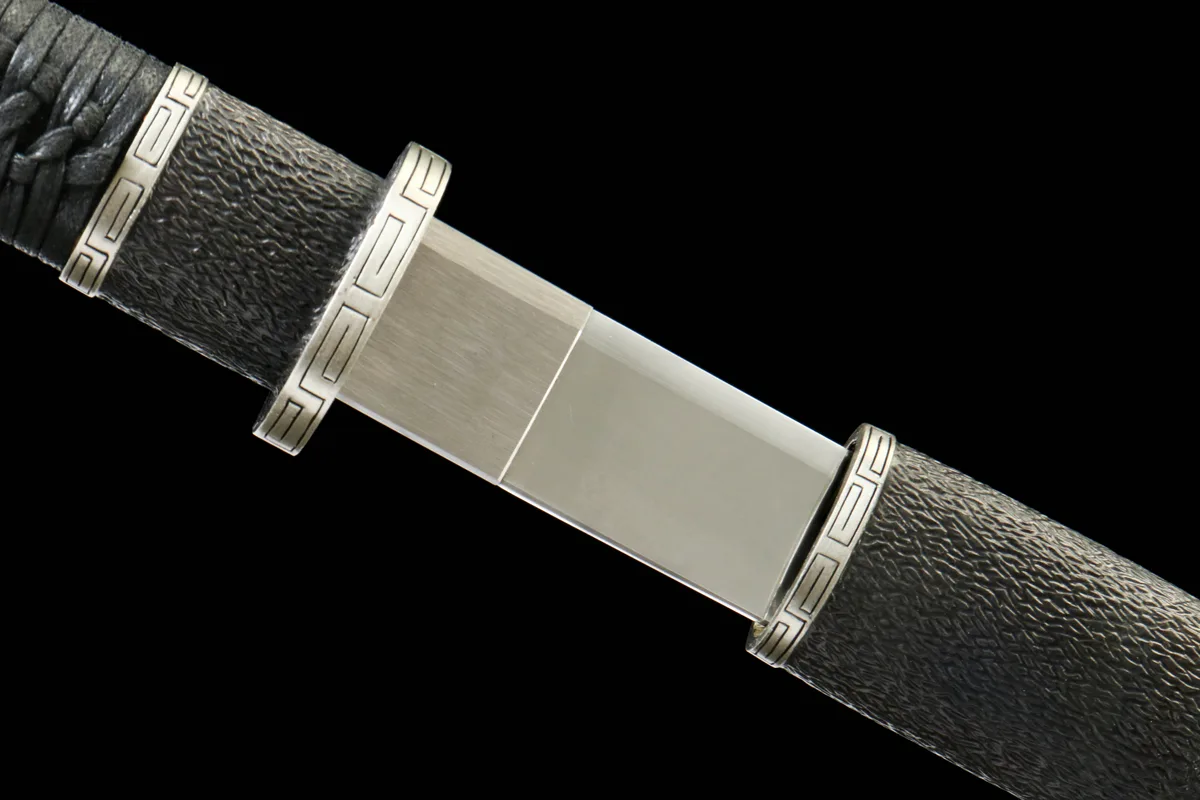
At 72 cm of blade length and a 27 cm cotton ito-wrapped tsuka, the Night Slash is proportioned for a two-hand grip that fills the hand without crowding it. The diamond-pattern ito wrap grips across knuckle and palm equally, and the transition from the kashira (pommel cap) to the first wrap lozenge is immediate – there is no dead handle section here. The ebony saya releases the blade with a clean, low-resistance draw; the koiguchi (saya mouth) is fitted close enough to retain the blade securely under carry but opens without drag. The copper fittings add visual weight to the tsuba end that reads correctly in the hand long before you think about it consciously.
Keeping It Sharp
DC53 holds an edge longer than conventional high-carbon steel but is not immune to corrosion – wipe the blade dry after every session and apply camellia or mineral oil before storage. The ebony saya is dense enough to resist most moisture but should not be left in wet environments; ebony will crack at the end-grain if the moisture cycle is severe. Touch up the edge with a quality ceramic stone when needed – DC53 responds well to fine-grit finishing and rewards patience in the sharpening process.
| Weight | 1.2 lbs |
|---|---|
| Dimensions | 103.0 × 3.2 × 0.7 in |
| Hamon | Decorative / Acid-Etched |
| Blade Steel | Carbon Steel |
| Total Length | 103.0 cm |
| Blade Length | 72.0 cm |
| Heat Treatment | Oil Quench & Temper |
| Handle Wrap | Cotton Ito Wrap |
| Sheath Material | Ebony Wood, (鞘) |
| Fittings | Copper, (装) |
| Forging Style | Shinogi-Zukuri (Ridgeline) |
Related products