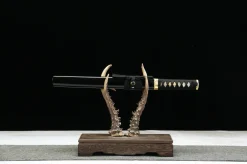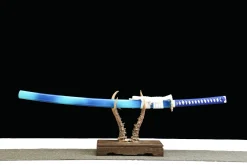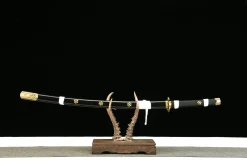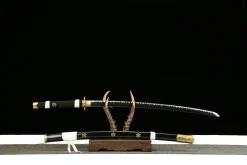


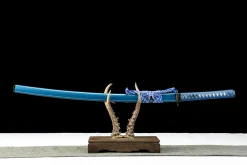





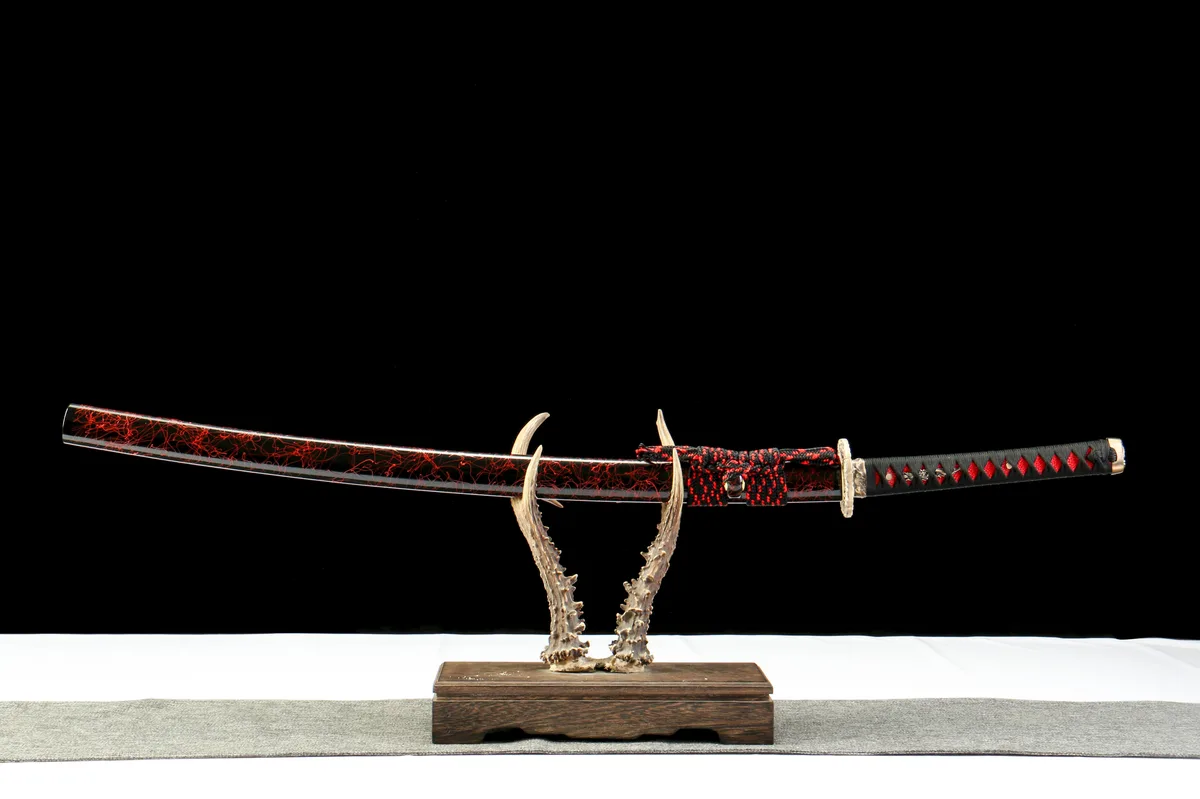




Purgatory Vein – Hand Forged Damascus Steel Katana Sword
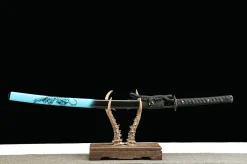
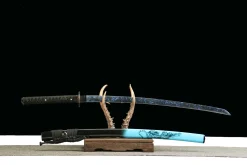
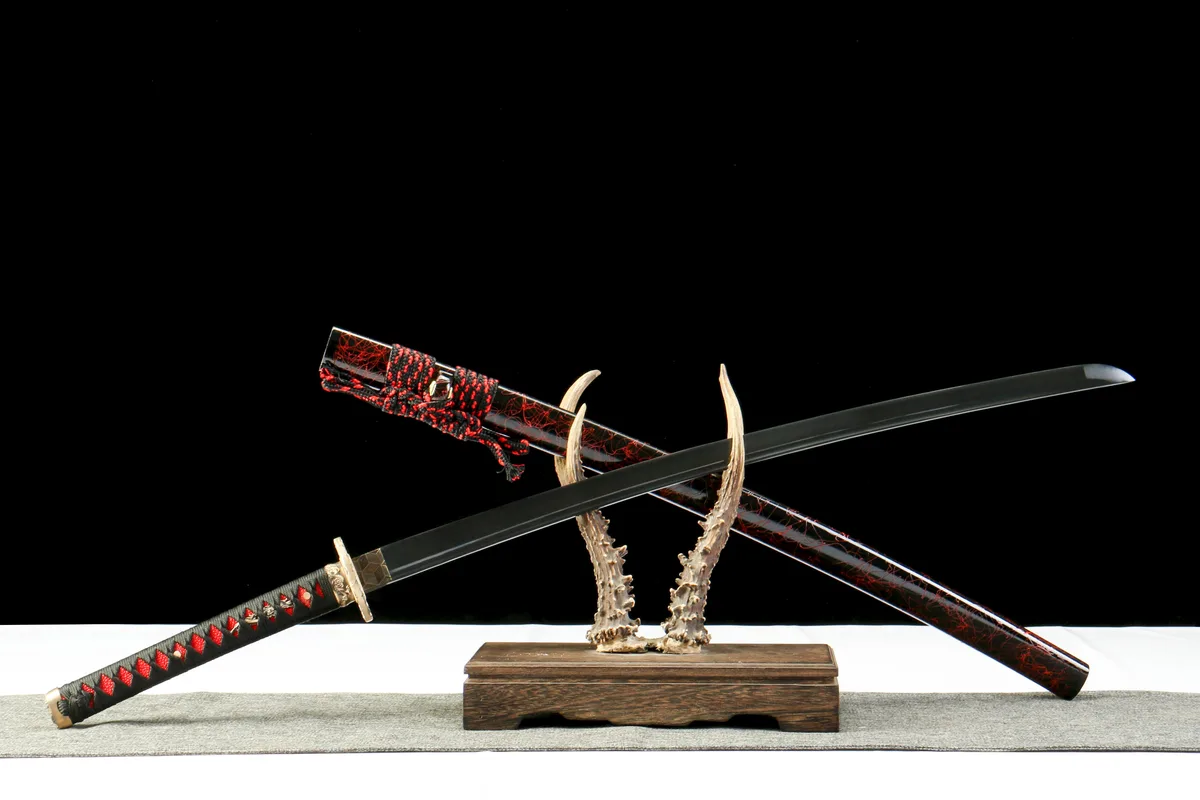
Hand-forged Damascus Steel katana (103cm total / 72cm blade), crafted in Longquan. Hand-folded Damascus pattern steel — each blade carries a unique layered grain from forge to tip.
$359.99
Purgatory Vein – Hand Forged Damascus Steel Katana Sword
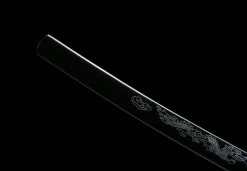
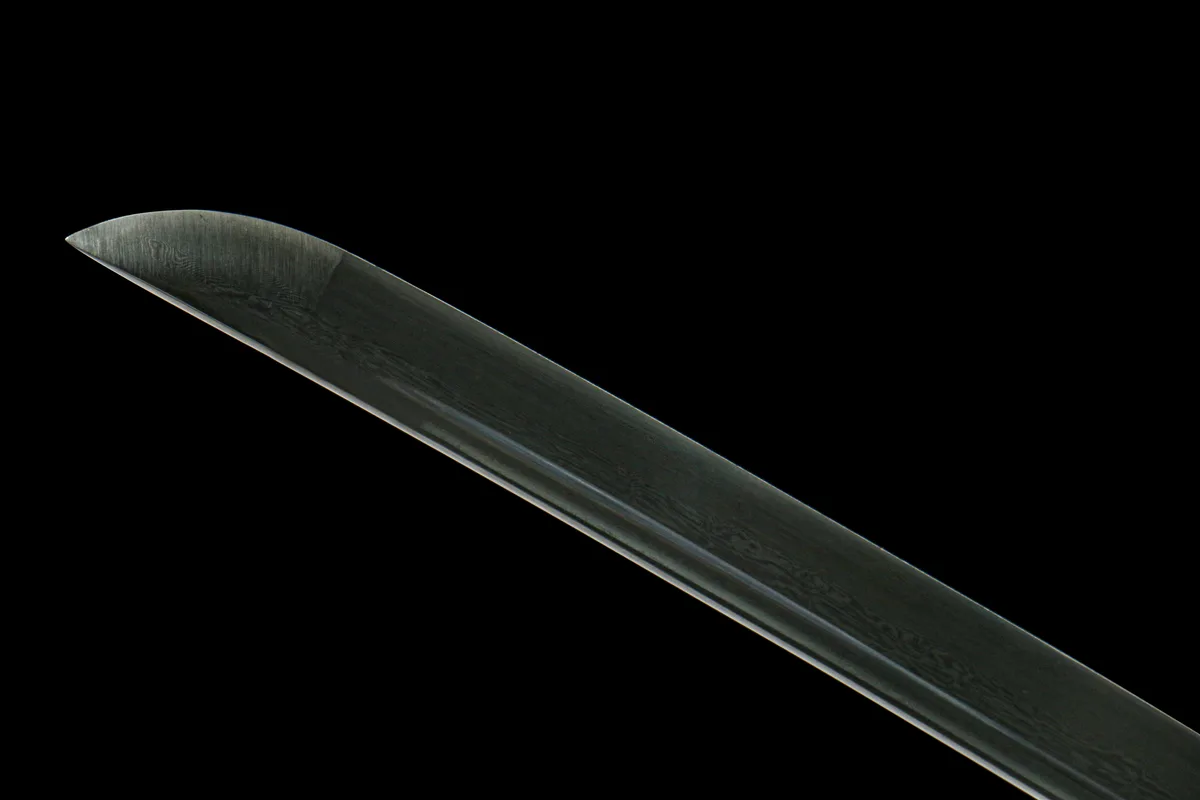
The grain runs like veins of fire through dark stone – and that is not a metaphor the smith chose casually. Purgatory Vein 炼狱脉络 takes its name from the pattern visible in the steel itself: a Damascus weld structure, oil quenched and given the 烤黑 (deep black oxidation) treatment, that produces a dark ground from which the folded layers emerge in high contrast. Every blade in this line is pattern-welded from stacked steel billets, and every one looks different once the etch and oxidation reveal what the forge produced.
Specifications
| Blade Steel | Damascus / Pattern-Welded Steel (烤黑 finish) |
| Total Length | 103.0 cm / 40.6 in |
| Blade Length | 72.0 cm / 28.3 in |
| Blade Width | 3.2 cm |
| Weight | 950 g / 33.5 oz |
| Heat Treatment | Oil Quench & Temper |
| Fittings | Copper |
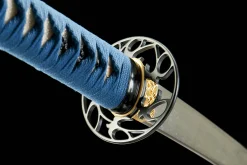
| Handle | Cotton Ito Wrap |
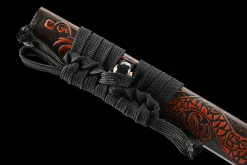
| Sheath | Green Bark Wood (Aohada) |
Forged in Longquan
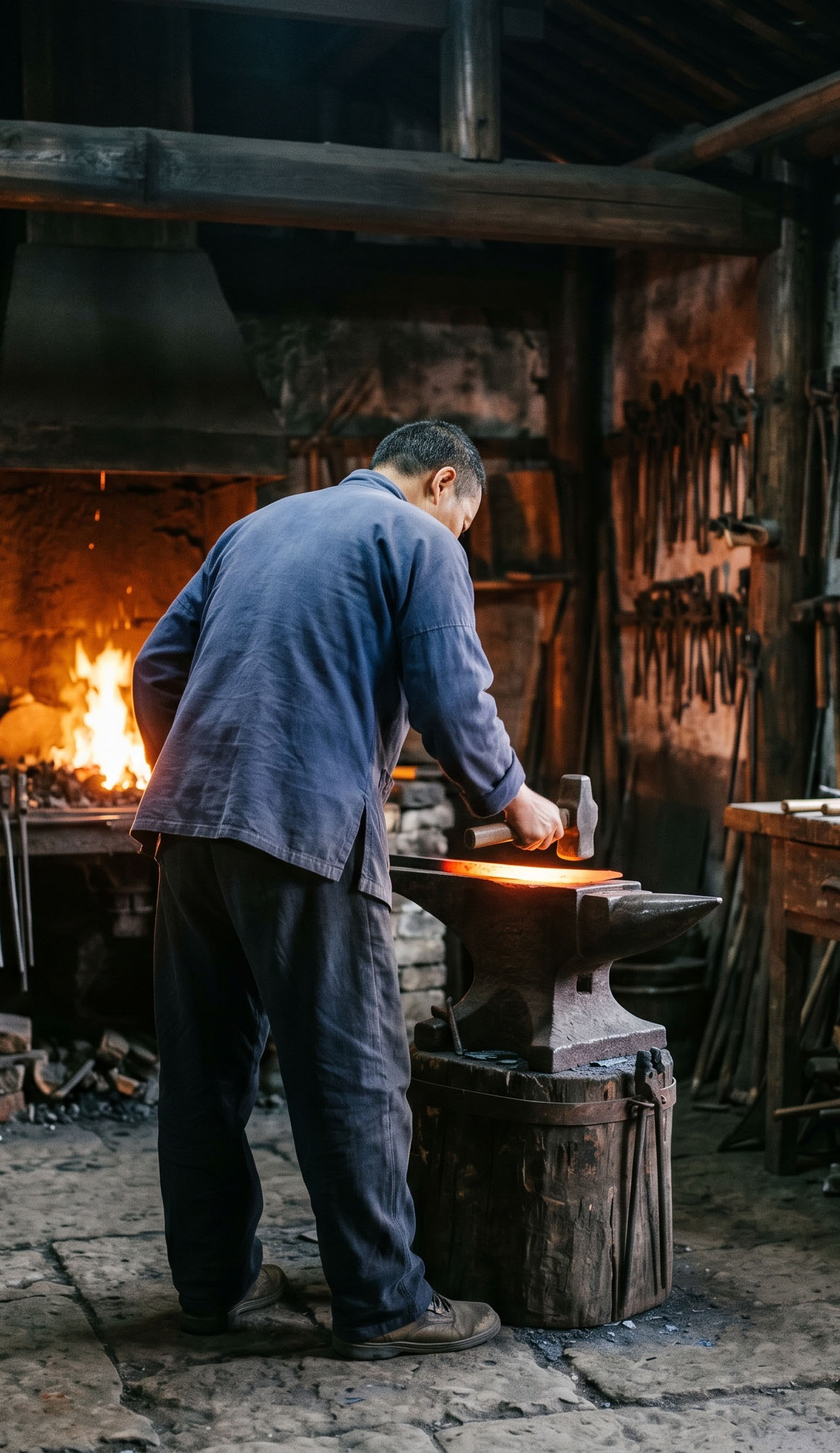
Pattern-welded Damascus is produced by stacking and forge-welding layers of steel with differing carbon content, then drawing out, folding, and welding again – repeatedly – until the billet contains hundreds of discrete layers. When ground, etched in acid, and oxidized, those layers read as visible grain, the darker bands contrasting against the brighter ones. The 烤黑 treatment deepens the dark zones to near-black, making the contrast between layers sharper and more legible than an etch alone would produce. The result is a blade that shifts in appearance as the angle of light changes – what reads as a dark, almost uniform surface under flat light becomes a layered landscape under raking or directional illumination.
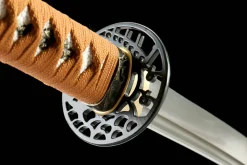
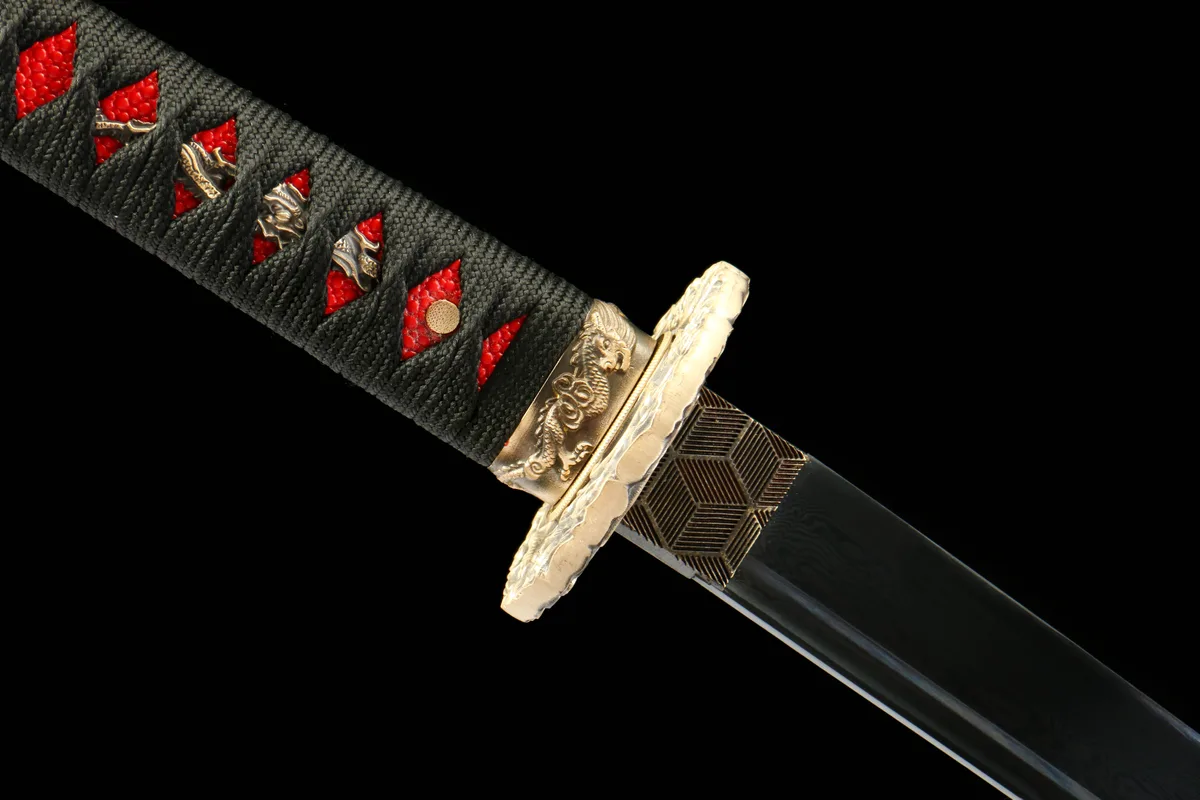
Copper fittings (装, meaning the full fitting set: tsuba guard, habaki collar, fuchi kashira) are chosen for this blade deliberately. Copper’s warm, reddish tone sits against the black oxidized blade without competing – it accents. Zinc alloy fittings go gray over time. Copper develops a patina that deepens the character of the piece.
Weight, Balance, Draw
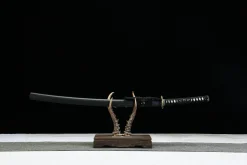
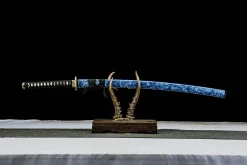
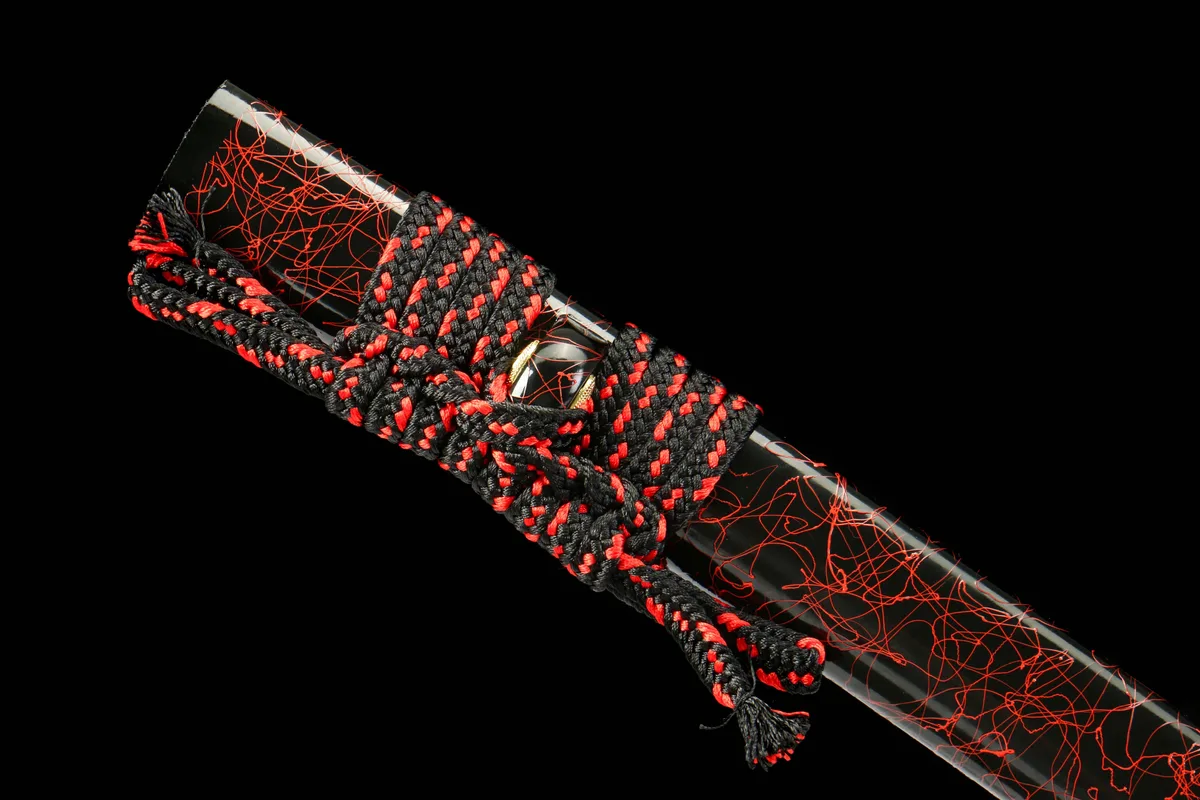
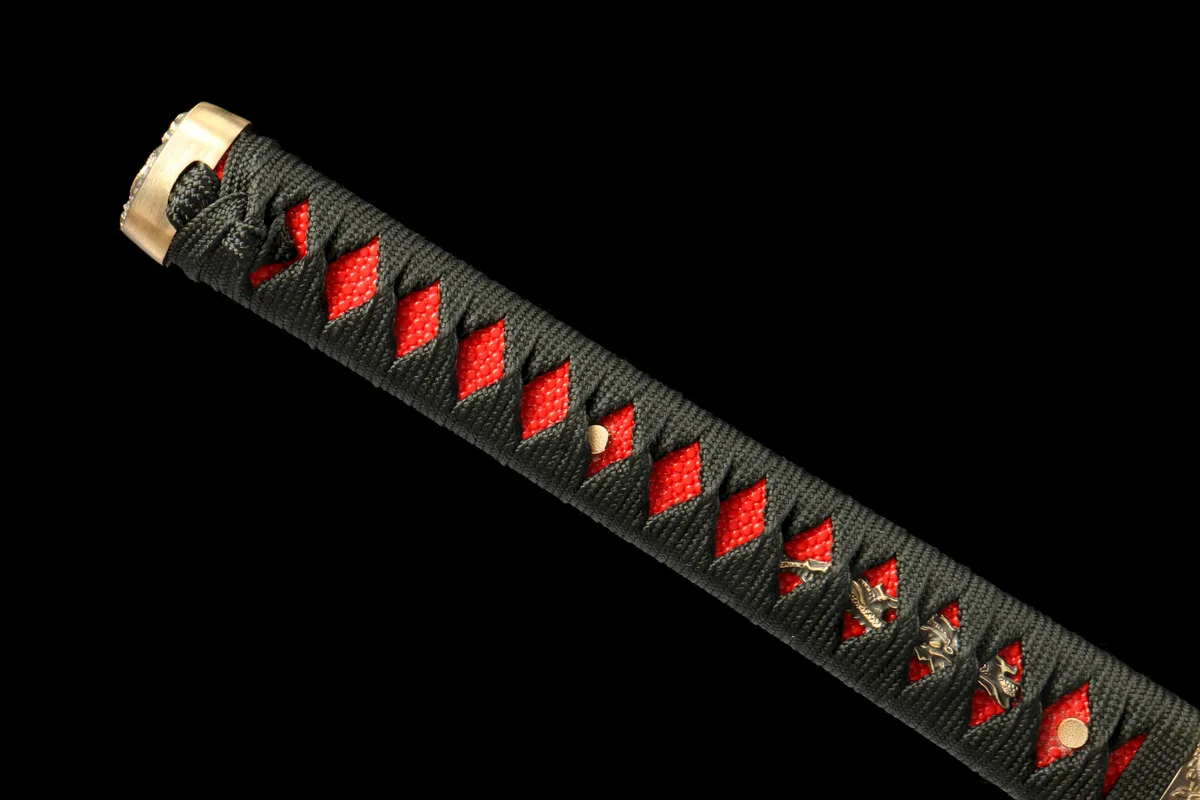
The 27.0 cm handle wrapped in cotton ito gives a two-hand grip with room to spare – the wrap is firm and close-wound, with the diamond pattern of the braid sitting cleanly over the samegawa (ray skin) beneath. The aohada (green bark wood) saya has the close-grain, slightly waxy surface typical of this material, and it draws cleanly, the blade clearing the throat of the sheath without resistance. The shinogi-zukuri blade profile – the ridgeline geometry standard to classical katana – means the cross-section transitions from a thick spine to a thin, acute edge in a well-defined ridge visible along the flat.
Keeping It Sharp
The 烤黑 oxidation finish will wear on the edge bevel with use – this is expected and does not affect the blade’s integrity. Wipe down after handling and apply a light coat of oil before storage. The copper fittings benefit from occasional polishing with a non-abrasive cloth to manage patina buildup if a brighter finish is preferred, though many owners leave them alone.
| Weight | 1.2 lbs |
|---|---|
| Dimensions | 103.0 × 3.2 × 0.7 in |
| Hamon | Damascus Pattern (No Hamon) |
| Blade Steel | Damascus Steel |
| Total Length | 103.0 cm |
| Blade Length | 72.0 cm |
| Heat Treatment | Oil Quench & Temper |
| Handle Wrap | Cotton Ito Wrap |
| Sheath Material | Green Bark Wood (Aohada) |
| Fittings | Copper, (装) |
| Forging Style | Folded Steel (Pattern Welded) |
Related products