





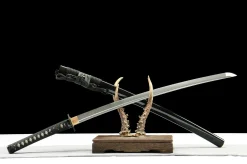

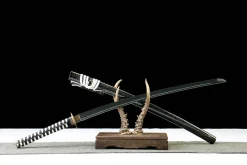






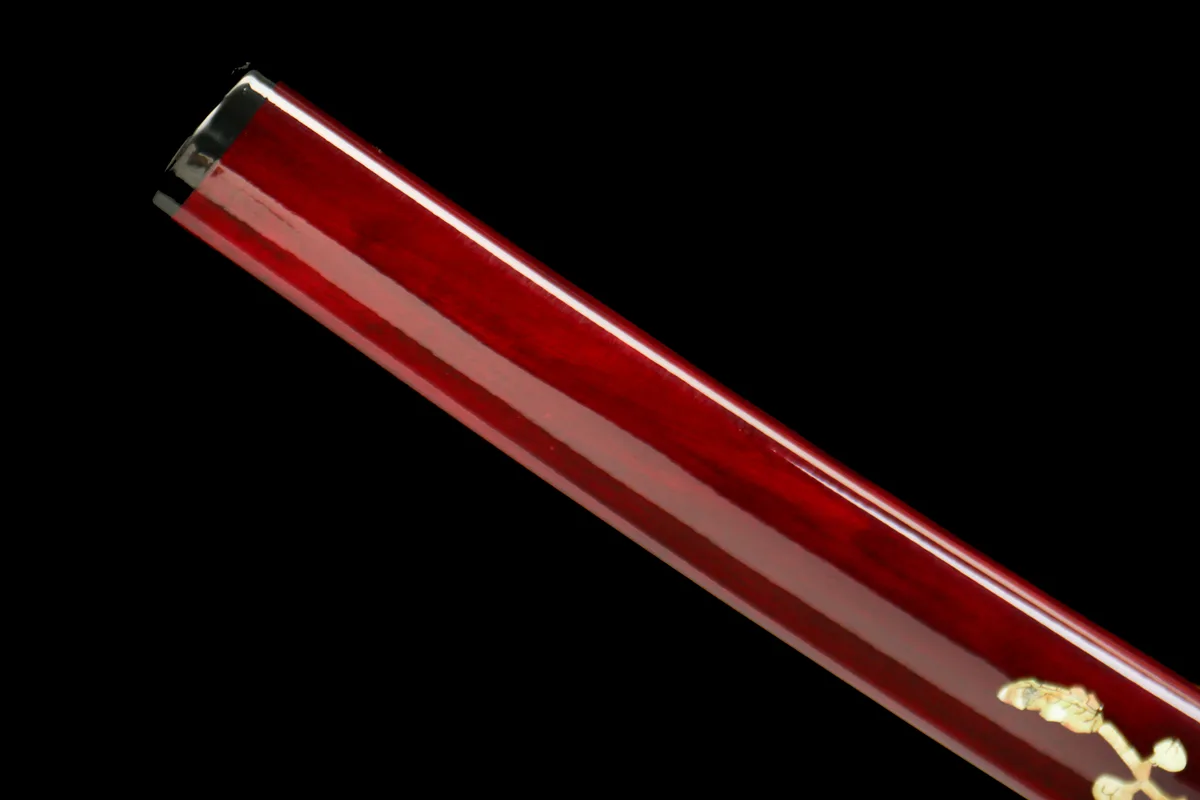





Rose Flame – Hand Forged T10 Tool Steel Katana Sword
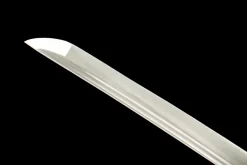
The Rose Flame (瑰焰) is a clay-tempered T10 high speed tool steel katana — one of the finest steel-and-technique combinations available in the $250 mid-premium price range — whose differentially hardened blade reveals a natural, flowing hamon as unpredictable and beautiful as a flame caught in amber. This is the sword for the practitioner ready to move beyond entry-level 1065 steel and experience what a real hamon looks like on a blade forged in Longquan’s 2,600-year tradition. The Rose Flame earns its poetic name in every ripple of its temper line.
Specifications
| Blade Steel | T10 High Speed Tool Steel — Clay Tempered (Differential Hardening) |
| Total Length | 103.0 cm / 40.6 inches |
| Blade Length | 72.0 cm / 28.3 inches |
| Blade Width | 3.2 cm |
| Weight | 950 g / 33.5 oz (net) |
| Heat Treatment | Clay Tempering (Differential Hardening) — Oil Quench & Temper |
| Fittings | Zinc Alloy |
| Handle | Cotton Ito Wrap |
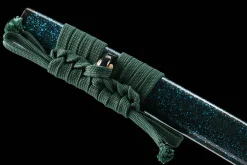
| Sheath | Green Bark Wood (Aohada) |
Craftsmanship & Materials
T10 tool steel is not a beginner’s material — it is a high-carbon, tungsten-alloyed steel with superior edge retention and hardness that rewards a skilled smith’s hand. In the Rose Flame, Longquan’s artisans apply traditional clay tempering (土置き, tsuchidoki) to the T10 blank: the spine is coated in an insulating clay mixture before the blade is plunged into an oil quench, causing the exposed edge to cool rapidly and harden to Rockwell 58–60 while the spine retains a tougher, more flexible ~40 HRC. The result is differential hardness — the same fundamental engineering principle that made the Japanese katana the most technically sophisticated edged weapon in history.
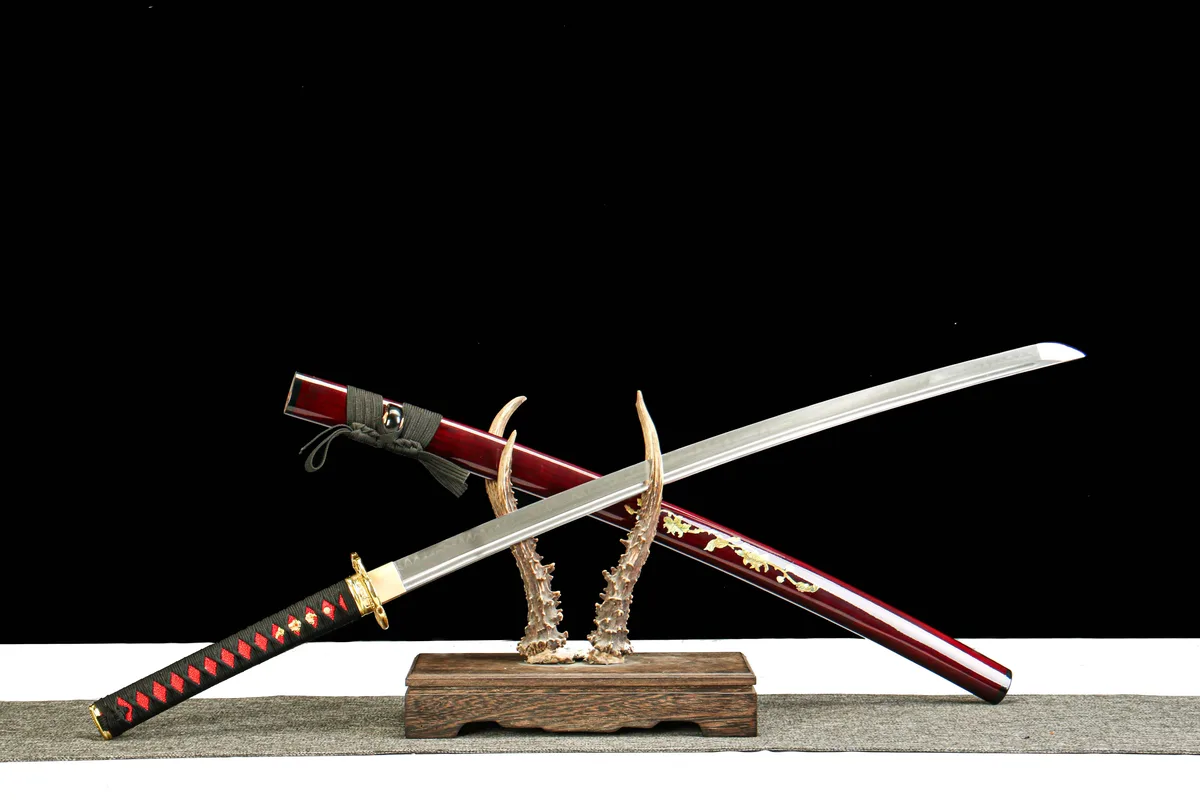
The hamon that emerges after polishing is the soul of the Rose Flame. Because T10 steel contains tungsten carbides that interact unpredictably with the clay quench, the temper line is genuinely organic — no two Rose Flame blades will produce an identical hamon. Expect a dynamic, irregular activity line with nie (martensite crystals) visible under light, transitioning from a hard, pale hagane edge zone into a deeper, warmer ji body. This is not a cosmetic etch; this is metallurgy made visible.
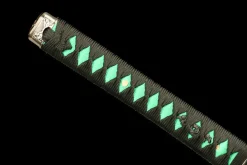
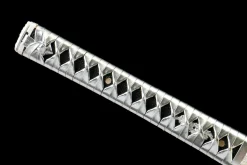
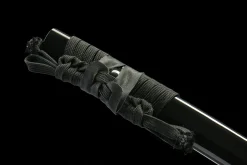
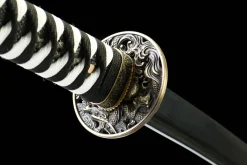
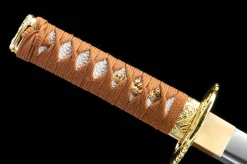
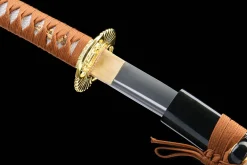
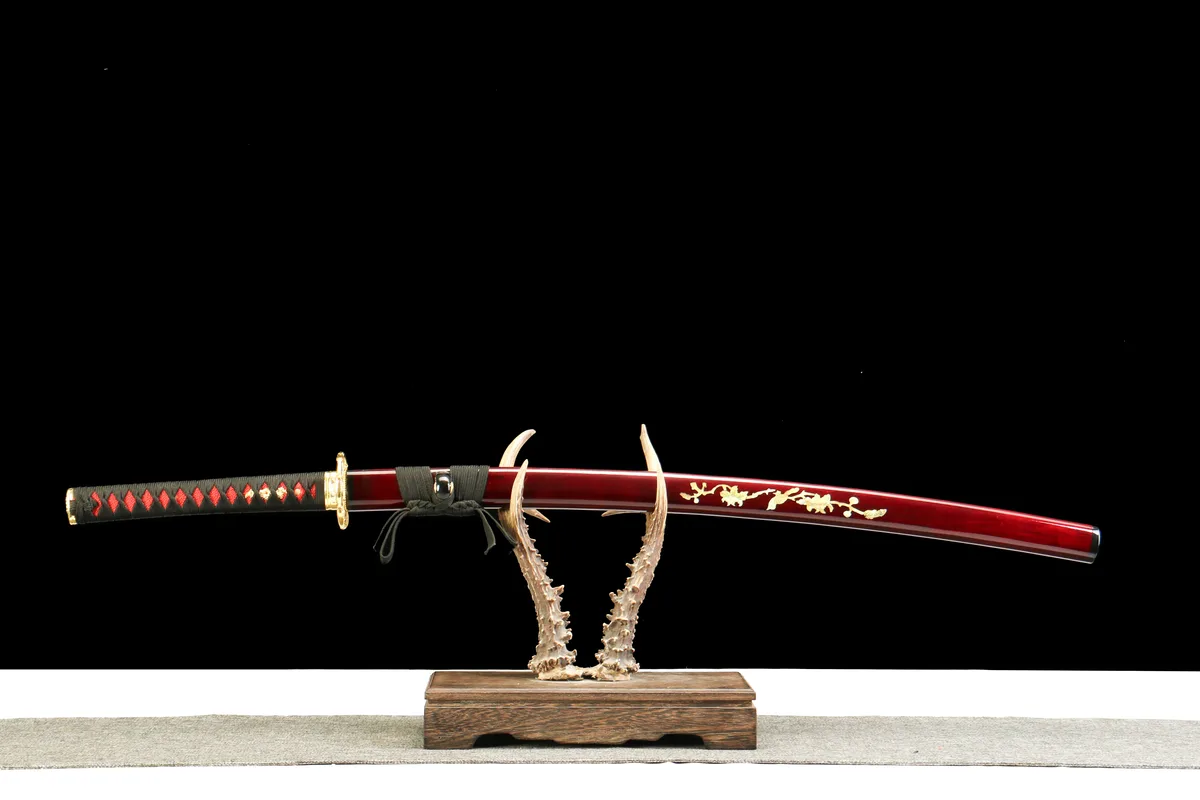
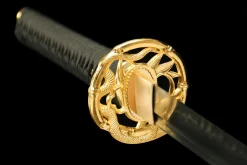
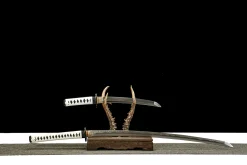
The green Aohada saya and cotton ito wrap are clean and functional complements to a blade that needs no embellishment to command attention. The tsuba and fittings in zinc alloy are appropriately simple at this price tier — the investment is in the steel and the technique, not decorative hardware. For the intermediate practitioner or serious collector, the Rose Flame represents the most technically meaningful upgrade available under $300.
Perfect For
- Intermediate practitioners upgrading from 1065 steel who want to experience genuine differential hardening and a natural hamon
- Collectors seeking a technically authentic, functionally superior katana at a premium-accessible price point
- Martial artists who study iaido or tameshigiri and require a blade with real edge geometry and superior cutting performance
Care & Maintenance
T10 tool steel contains no chromium and will rust rapidly if left unprotected — apply a generous coat of choji oil after every handling session and wipe the blade down with a soft nuguigami cloth before re-sheathing. The natural hamon is susceptible to discoloration from acidic fingerprints; handle the polished blade surface minimally with bare hands. Inspect the saya interior seasonally and ensure it remains clean and dry, as trapped moisture against the blade is the most common cause of T10 pitting.
Frequently Asked Questions
What is T10 tool steel and why is it used in katanas?
T10 is a high-speed tungsten-alloyed tool steel containing approximately 1.0% carbon, giving it superior hardness and edge retention compared to standard high carbon steels like 1060 or 1065. The tungsten content improves wear resistance, allowing the blade to hold a razor-sharp edge longer under stress. The Rose Flame uses T10 steel paired with clay tempering, making it an excellent choice for intermediate practitioners and collectors who demand both performance and a genuine hamon.
What is clay tempering and does the Rose Flame have a real hamon?
Clay tempering (tsuchioki) is a traditional Japanese heat treatment process where clay is applied to the blade’s spine before quenching, insulating it from rapid cooling. This creates differential hardness: a hard, wear-resistant cutting edge and a tougher, more flexible spine. The boundary between these zones forms the hamon — a visible crystalline temper line. The Rose Flame undergoes genuine clay tempering on T10 steel, producing a real, natural hamon rather than a cosmetic acid-etched imitation.
Is the Rose Flame katana suitable for cutting practice and martial arts?
Yes, the Rose Flame is a battle-ready katana well-suited for tameshigiri and martial arts training. Its clay-tempered T10 steel blade delivers a hard cutting edge with a resilient spine, reducing the risk of catastrophic failure under lateral stress. At 72 cm blade length and a traditional Shinogi-Zukuri profile, it performs comparably to swords costing significantly more. It’s recommended for intermediate practitioners who have outgrown entry-level 1060/1065 blades.
What is differential hardening on a katana blade?
Differential hardening refers to creating intentionally different hardness levels within a single blade. On the Rose Flame, clay tempering achieves this: the edge reaches a hardness of approximately HRC 60+, ideal for maintaining a sharp cutting edge, while the clay-insulated spine remains softer at around HRC 40, providing flexibility and shock absorption. This mirrors the forging philosophy of traditional Japanese swordsmiths and is a key marker distinguishing authentic functional blades from purely decorative ones.
Is the Rose Flame worth $250 compared to budget clay-tempered katanas?
At $250, the Rose Flame sits at the entry point of the premium tier and delivers meaningful upgrades over sub-$200 katanas: T10 tool steel holds a finer, more durable edge than 1065, and genuine clay tempering produces a real hamon with true differential hardness. The Green Bark Wood sheath and cotton ito wrap add aesthetic quality. Buyers should note zinc alloy fittings; upgrading fittings later is possible. For the price, it’s a strong value in T10 clay-tempered swords.
| Weight | 1.2 lbs |
|---|---|
| Dimensions | 103.0 × 3.2 × 0.7 in |
| Sword Type | Katana |
| Blade Steel | T10 Tool Steel |
| Total Length | 103.0 cm |
| Blade Length | 72.0 cm |
| Heat Treatment | Oil Quench & Temper |
| Handle Wrap | Cotton Ito Wrap |
| Sheath Material | Green Bark Wood (Aohada) |
| Fittings | Zinc Alloy |
| Forging Style | Differential Hardening (Clay Tempered) |
Related products

1045 Carbon Steel
1065 Carbon Steel


Damascus Steel
Crimson Flame (之烽) – Hand Forged Damascus Steel Katana Sword


1065 Carbon Steel

1045 Carbon Steel
1045 Carbon Steel
1065 Carbon Steel

Anime & Pop Culture
Ghost of Tsushima – Hand Forged T10 Tool Steel Wakizashi Sword