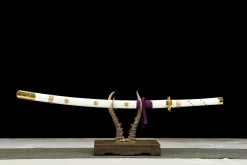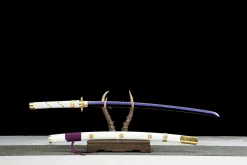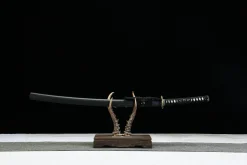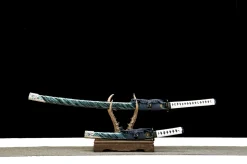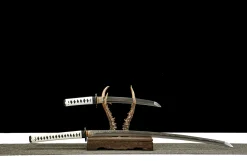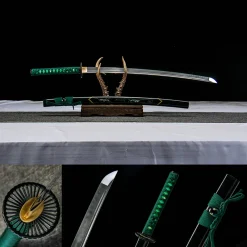
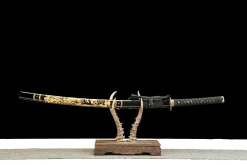
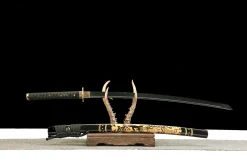
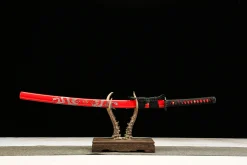







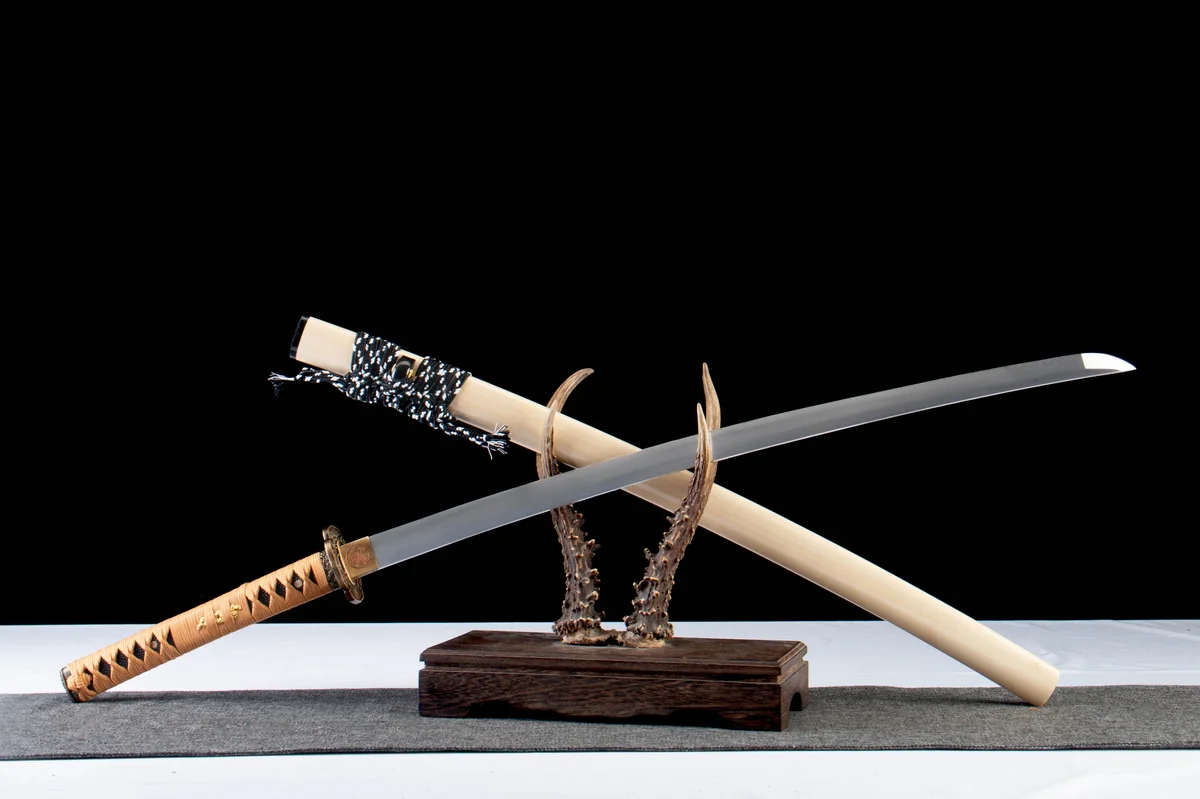



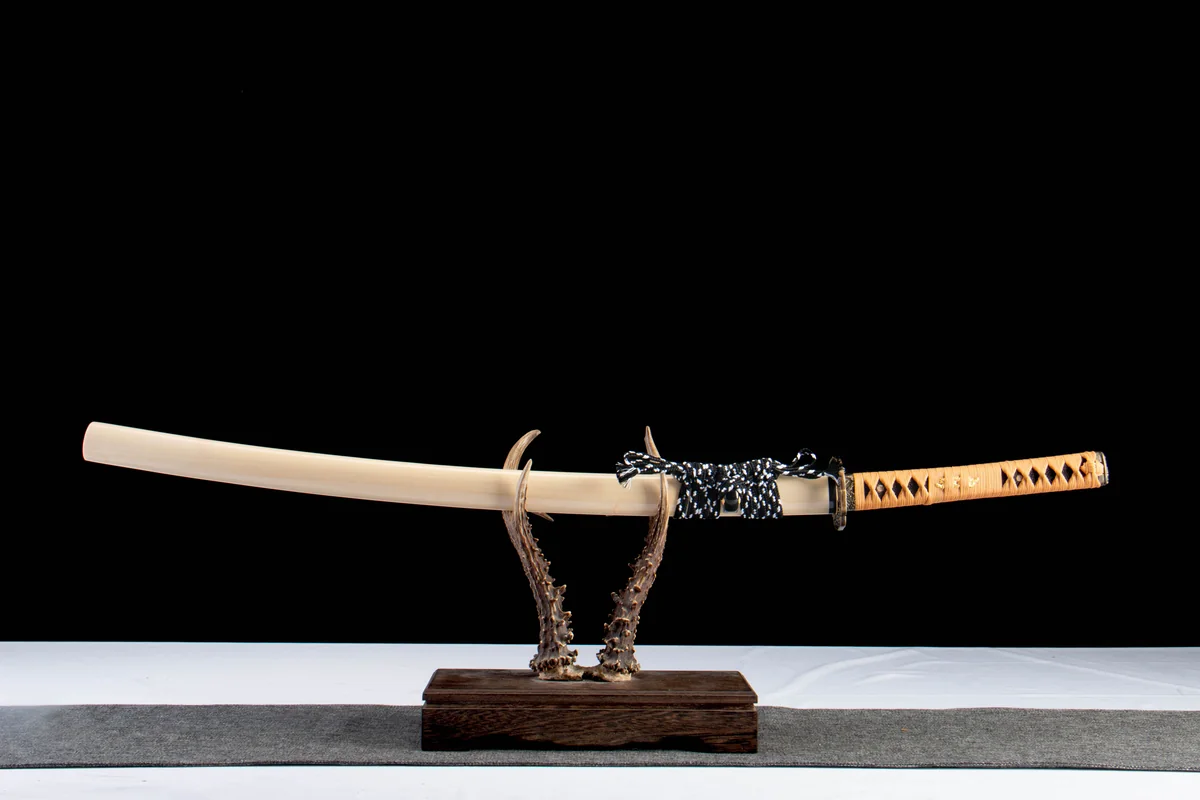
Sacred Boundary – Hand Forged 1065 Carbon Steel Katana Sword
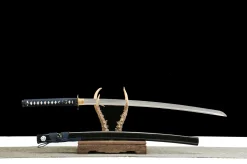
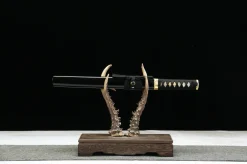
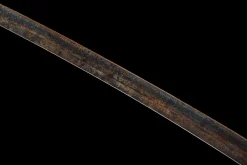
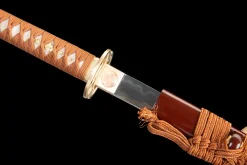
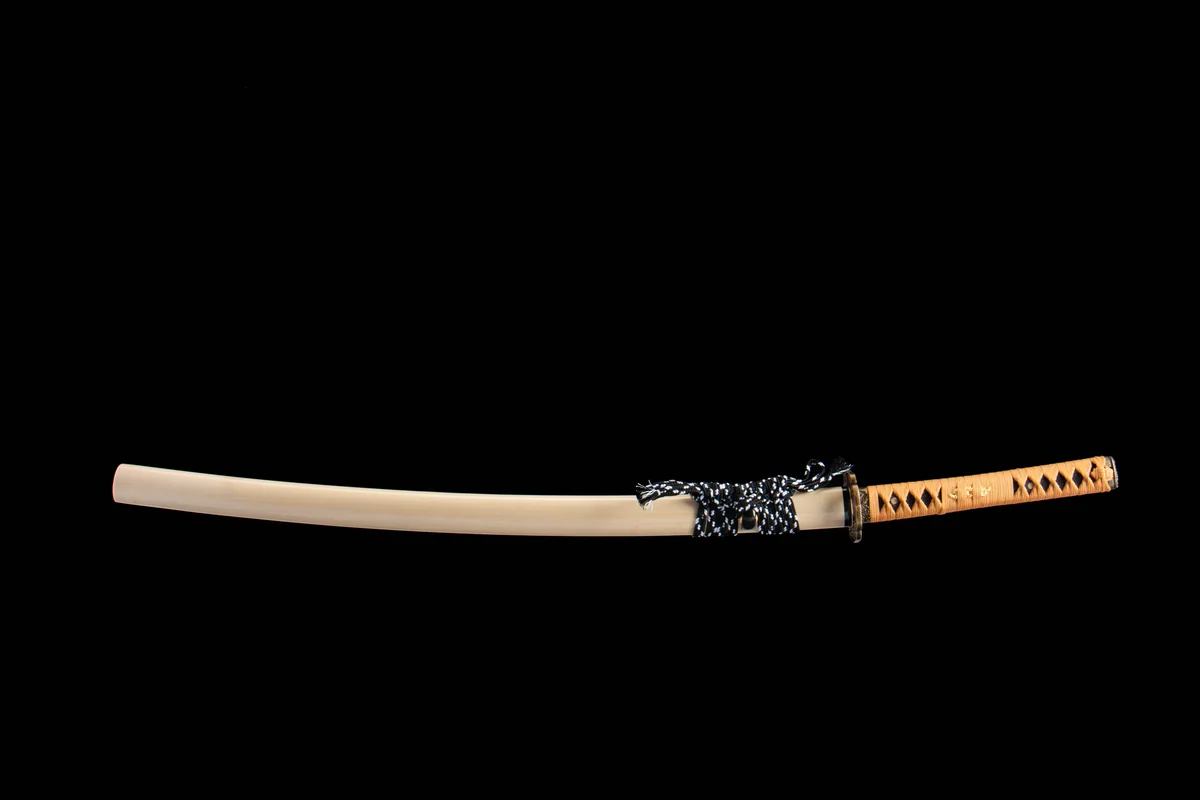
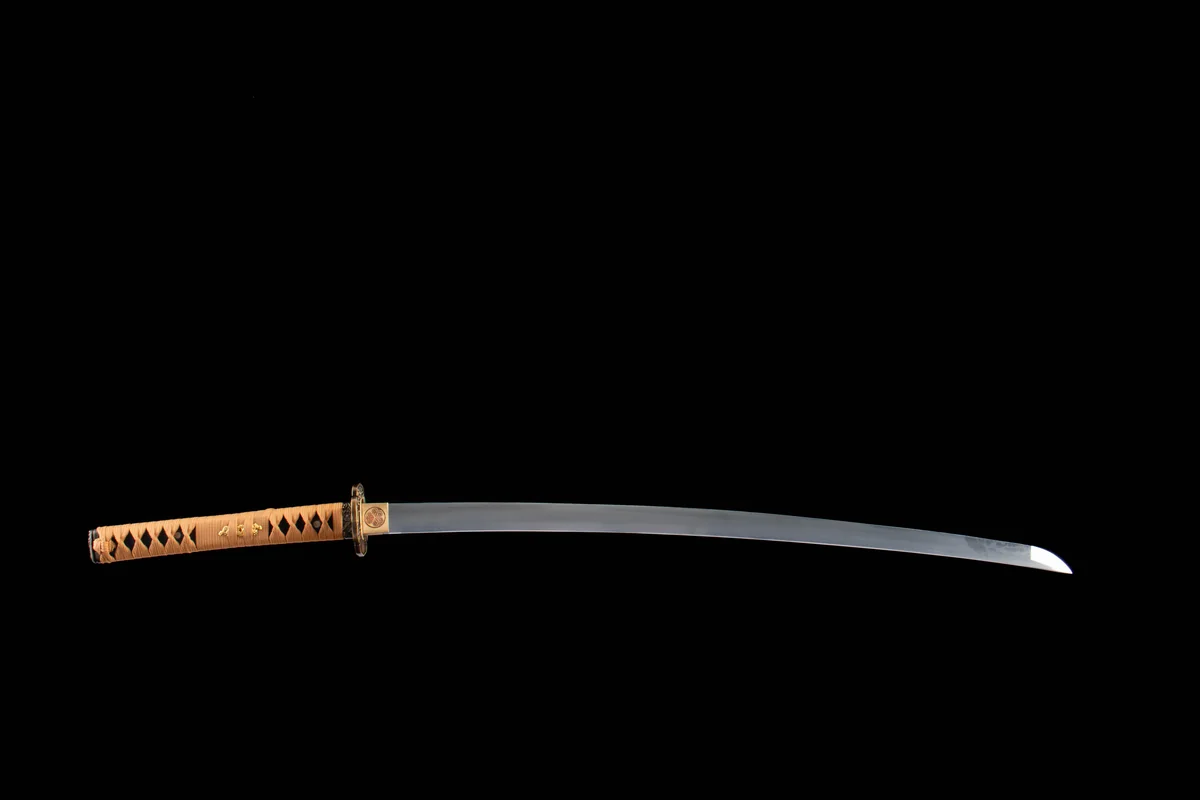
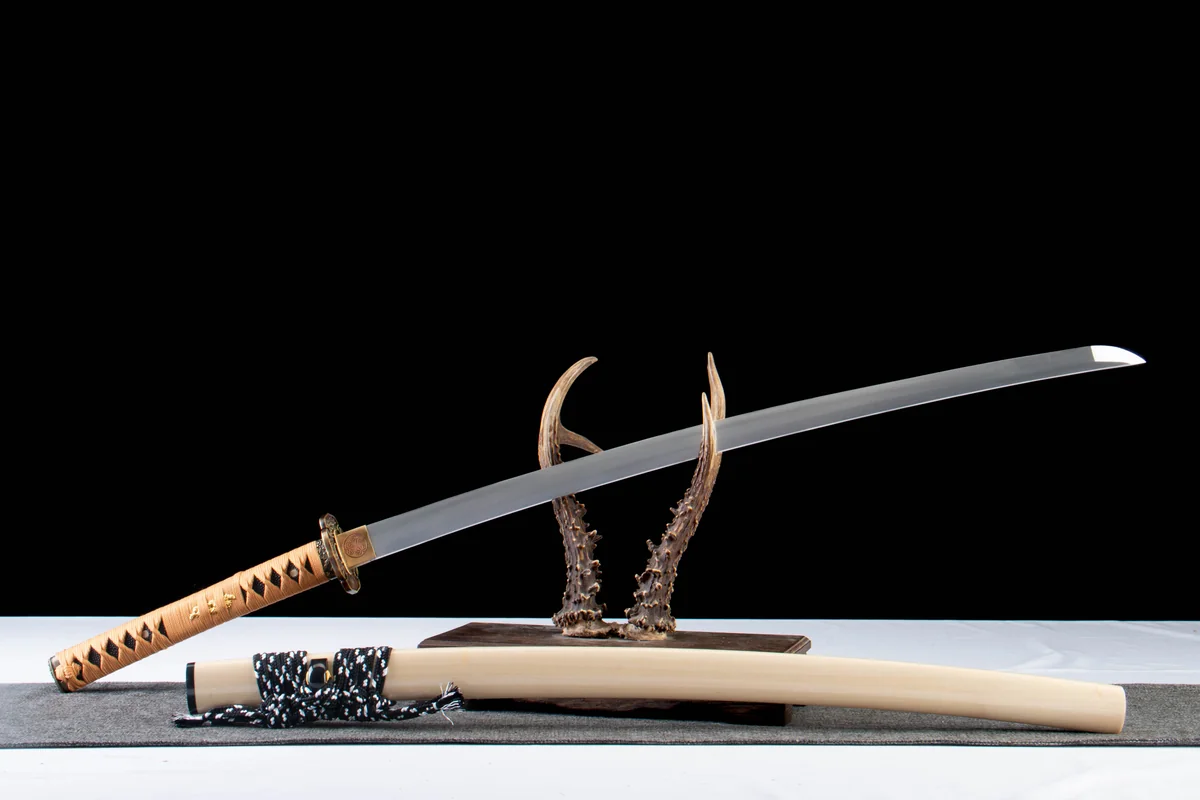
Hand-forged 1065 Carbon Steel katana (102cm total / 72cm blade), crafted in Longquan. Full-tang construction with traditional fittings and hand-lacquered saya.
$209.99
Sacred Boundary – Hand Forged 1065 Carbon Steel Katana Sword
Sacred Boundary (神篱) refers to the 神籬 (himorogi) of Shinto tradition — a sacred enclosure marked by ropes and branches where the divine and mortal worlds meet. The name gives this katana a contemplative quality: a blade that stands at a threshold. The 原木樱花 (natural-wood cherry blossom) aesthetic reinforces this — the raw wood surface and cherry blossoms evoking a shrine courtyard in spring.
Specifications
| Blade Steel | 1065 High Carbon Steel |
| Total Length | 102.0 cm / 40.2 in |
| Blade Length | 72.0 cm / 28.3 in |
| Handle Length | 27.0 cm / 10.6 in |
| Blade Width | 3.2 cm |
| Blade Thickness | 0.7 cm |
| Net Weight | 1100 g / 38.8 oz |
| Gross Weight | 1300 g / 45.9 oz |
| Heat Treatment | Oil Quench & Temper |
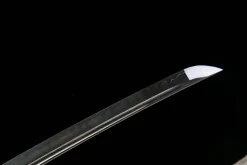
| Blade Profile | Shinogi-Zukuri (Ridged Profile) |
| Tang Construction | Full Tang (Nakago) |
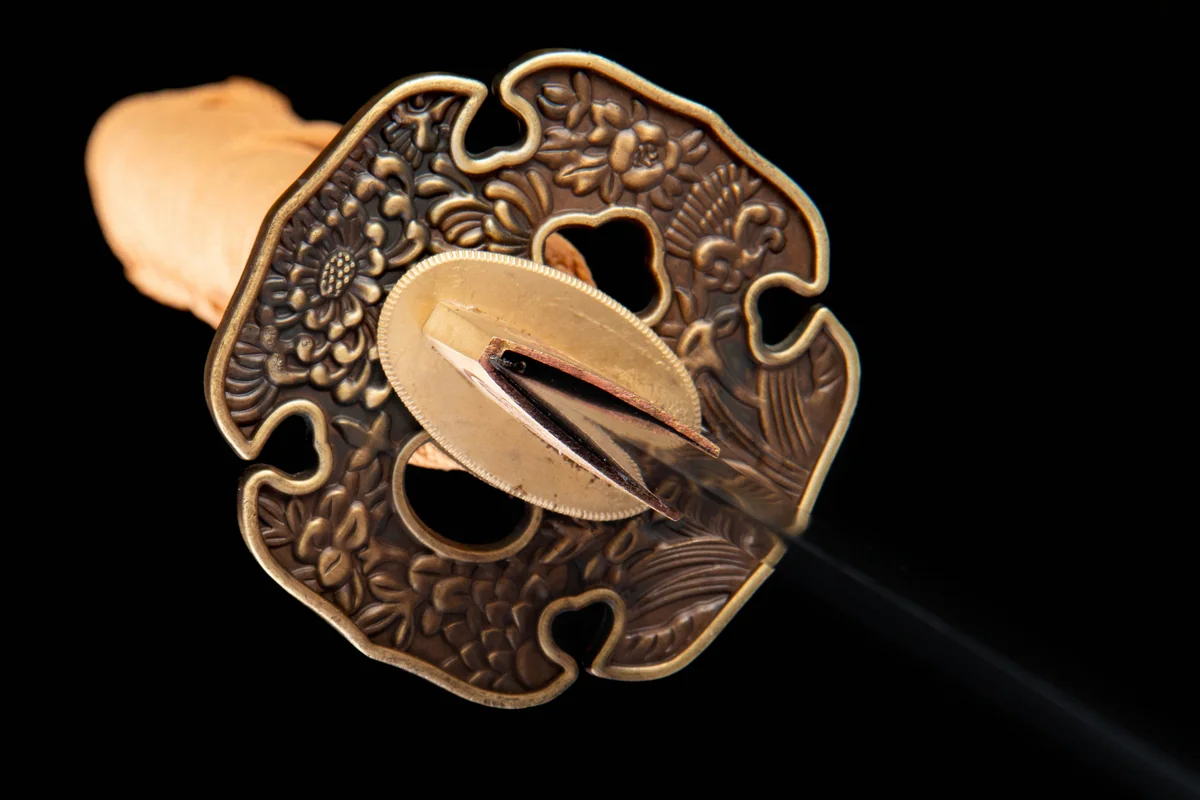
| Fittings | Zinc Alloy Fittings |
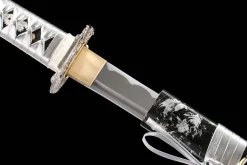
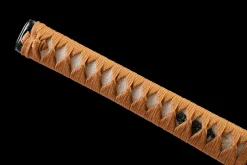
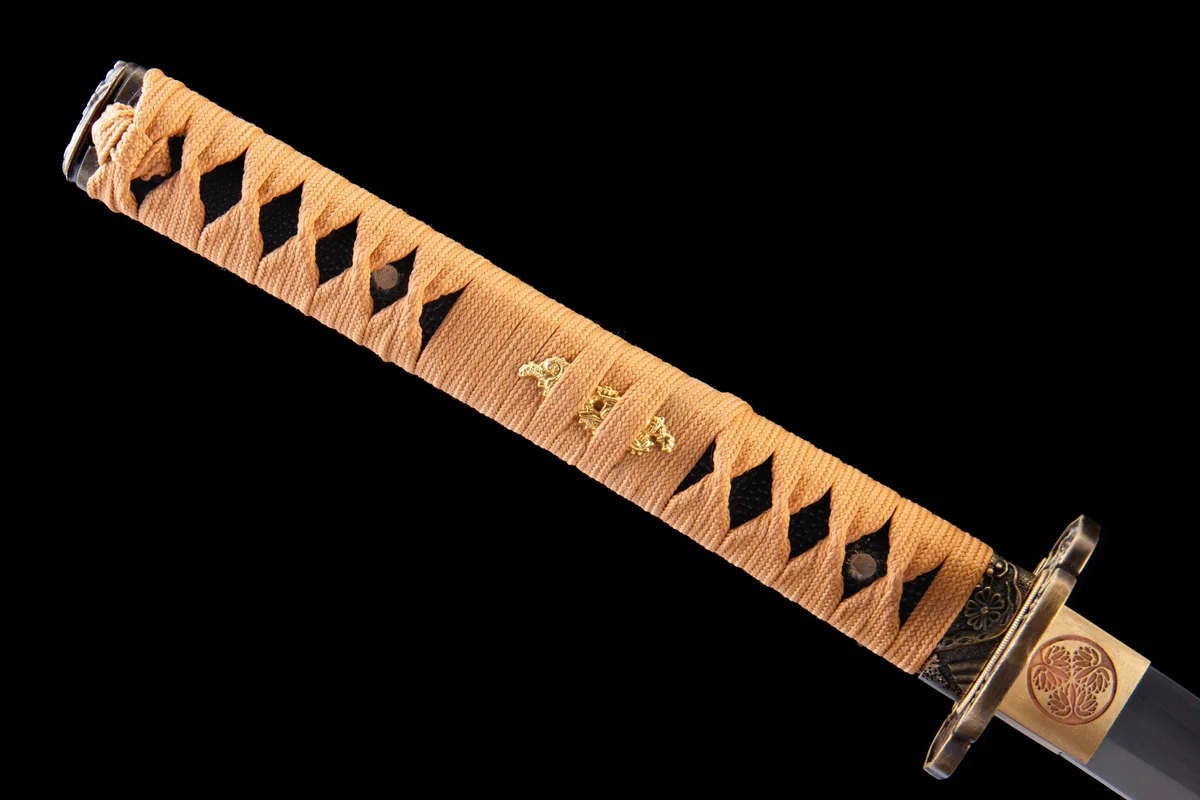
| Handle Wrap | Cotton Ito over Ray Skin (Same) |
What the Steel Does
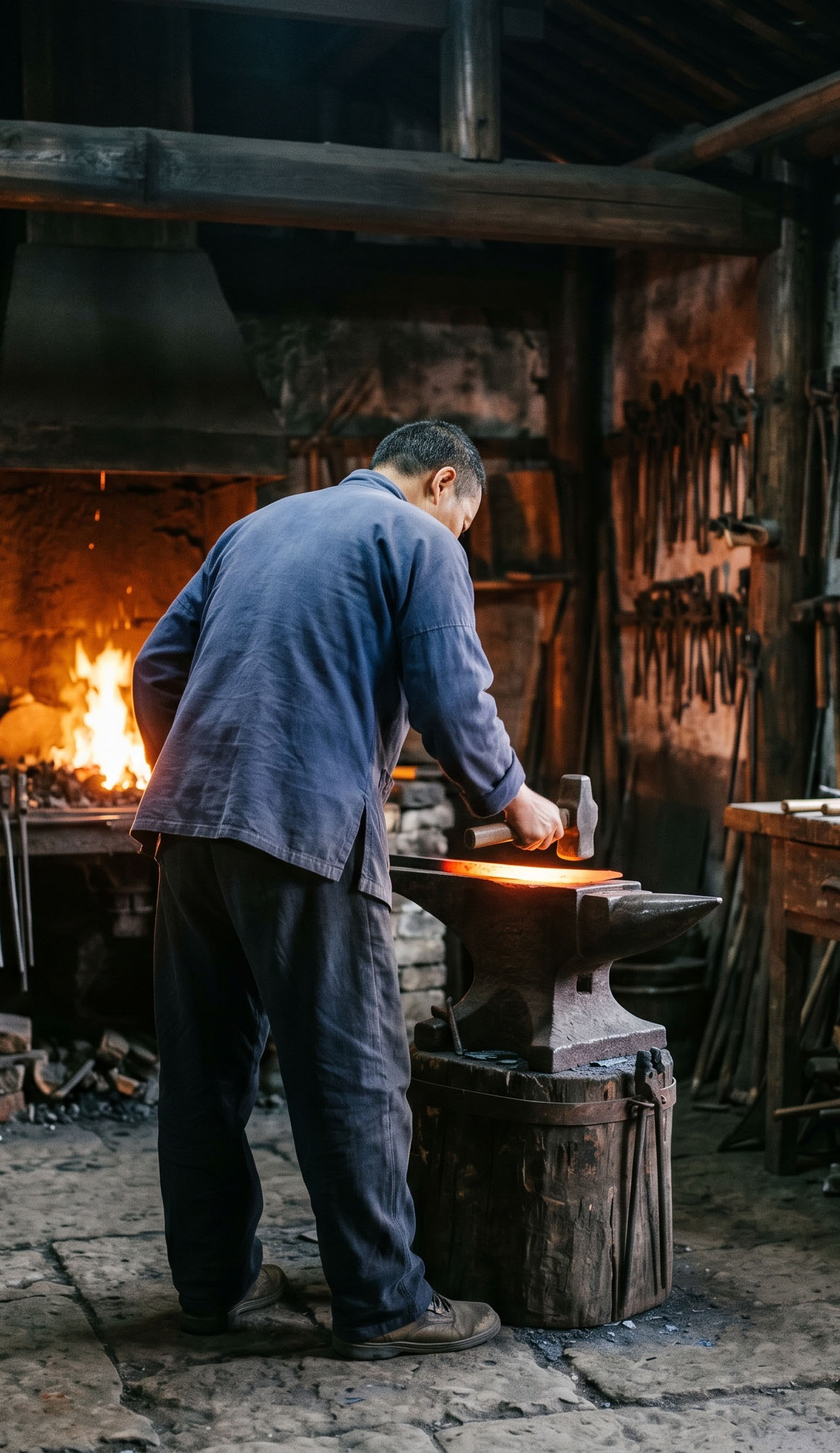
The 1065 designation identifies a steel with 0.65% carbon — positioned precisely where a functional sword blade performs best. Below this carbon level, the steel lacks the hardness ceiling to hold a true cutting edge; above it, brittleness becomes a liability under the lateral and shock loads that cutting practice generates. Oil quenching after forging keeps the cooling rate controlled, producing a hardness profile that distributes through the cross-section without the stress fractures that a more aggressive water quench can introduce. The temper cycle that follows sets the final character: an edge that holds, a spine that absorbs, a blade that functions the way it looks.
Longquan smiths have been working this steel for decades — not because it is exotic, but because the results are reliable and repeatable. The shinogi-zukuri (ridgeline) blade profile is the classical standard for a reason: the raised ridge directs mass efficiently to the cutting edge, stiffens the flat of the blade against lateral loads, and creates a cross-section that performs rather than merely photographs well. The full-tang nakago running beneath the ito wrap means the handle and blade are mechanically one piece — no joint, no flex point, no weak link at the connection where swords typically fail under hard use.
The Feel of It
The 27 cm handle gives genuine room for two-hand control — both hands on the tsuka with separation between them, which is the mechanical basis for leverage, power transmission, and direction changes in two-handed technique. The cotton ito wrap over the ray skin creates a surface that stays consistent under grip pressure and directional changes; there is no slipping, no micro-adjustment required during a cutting sequence. The weight — approximately 1,100g net — is in the range where the sword drives cuts rather than requiring the hands to supply force on the edge’s behalf.
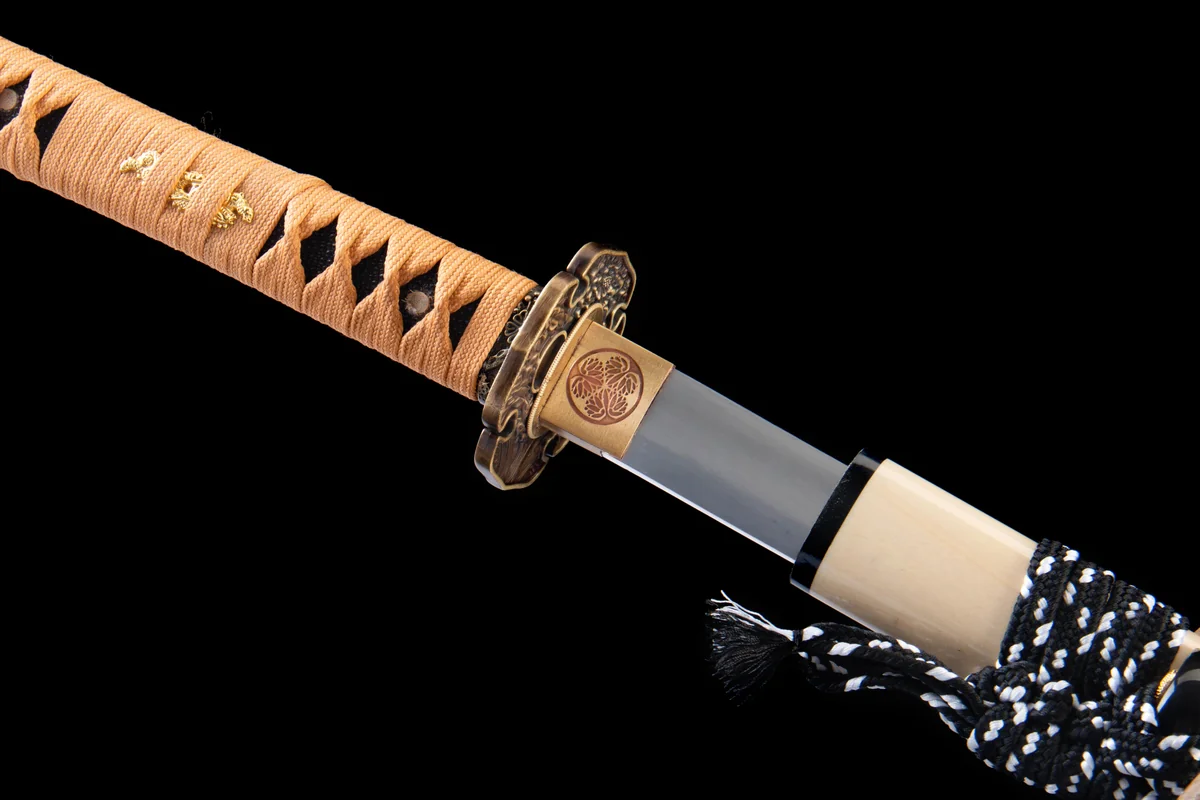
The saya draw is clean and indexed: the koiguchi holds the blade without looseness, but releases on a controlled movement without requiring significant force. At 102 cm total and 72 cm blade, you have the full reach and arc of a classical daito. Iai practitioners will find the geometry correct for standard draw-and-cut sequences; martial artists practicing two-hand katas will find the handle length adequate for full rear-hand placement. The balance does not run nose-heavy — a common fault in production blades at lower price points — and does not fight the hand during transitions between angles.
Maintenance Notes
High carbon steel requires active oil maintenance — it will surface-oxidize in humid conditions if left dry, and a carbon steel blade without consistent oiling will show rust spots within weeks in a typical indoor environment. After every handling session, wipe the blade from habaki to kissaki with a clean cloth to remove fingerprint oils and moisture, then apply a thin, even coat of choji oil (traditional clove-infused mineral oil) or neutral camellia oil. Wipe down to a thin film — pooled oil is not more protective and attracts dust. Store horizontally in the saya in a stable, low-humidity environment away from prolonged direct sunlight.
Check the blade surface monthly even when the sword is not in active use — the habaki (blade collar) area is where moisture collects preferentially, and early surface oxidation caught at this stage cleans off with an oiled cloth. The cotton ito handle wrap should be kept dry; do not store the sword sheathed in a high-humidity environment without periodic inspection. The fittings are durable and do not require maintenance beyond keeping dry and free from cleaning chemicals.
| Weight | 1.3 lbs |
|---|---|
| Dimensions | 102.0 × 3.2 × 0.7 in |
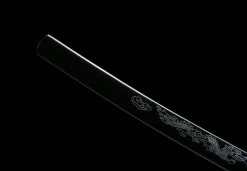
| Hamon | Decorative / Acid-Etched |
| Blade Steel | 1065 Carbon Steel |
| Total Length | 102.0 cm |
| Blade Length | 72.0 cm |
| Heat Treatment | Temper |
| Handle Wrap | Cotton Ito Wrap 真鱼皮 |
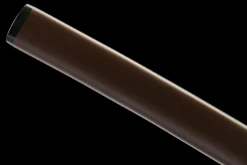
| Sheath Material | 实木钢琴烤漆 |
| Fittings | Alloy |
| Forging Style | 鎬造 |
Related products