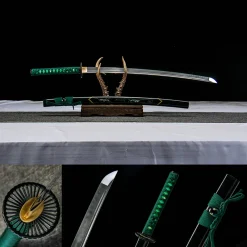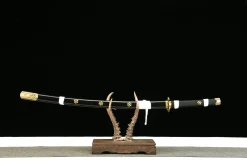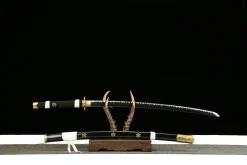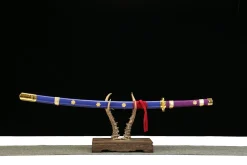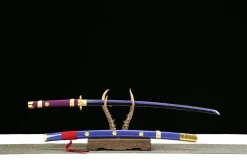









Shadow Carve – Hand Forged T10 Tool Steel Katana Sword
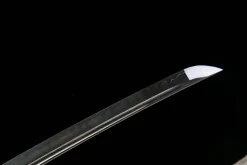
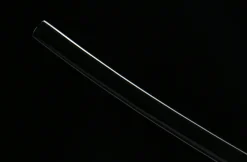
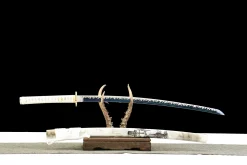
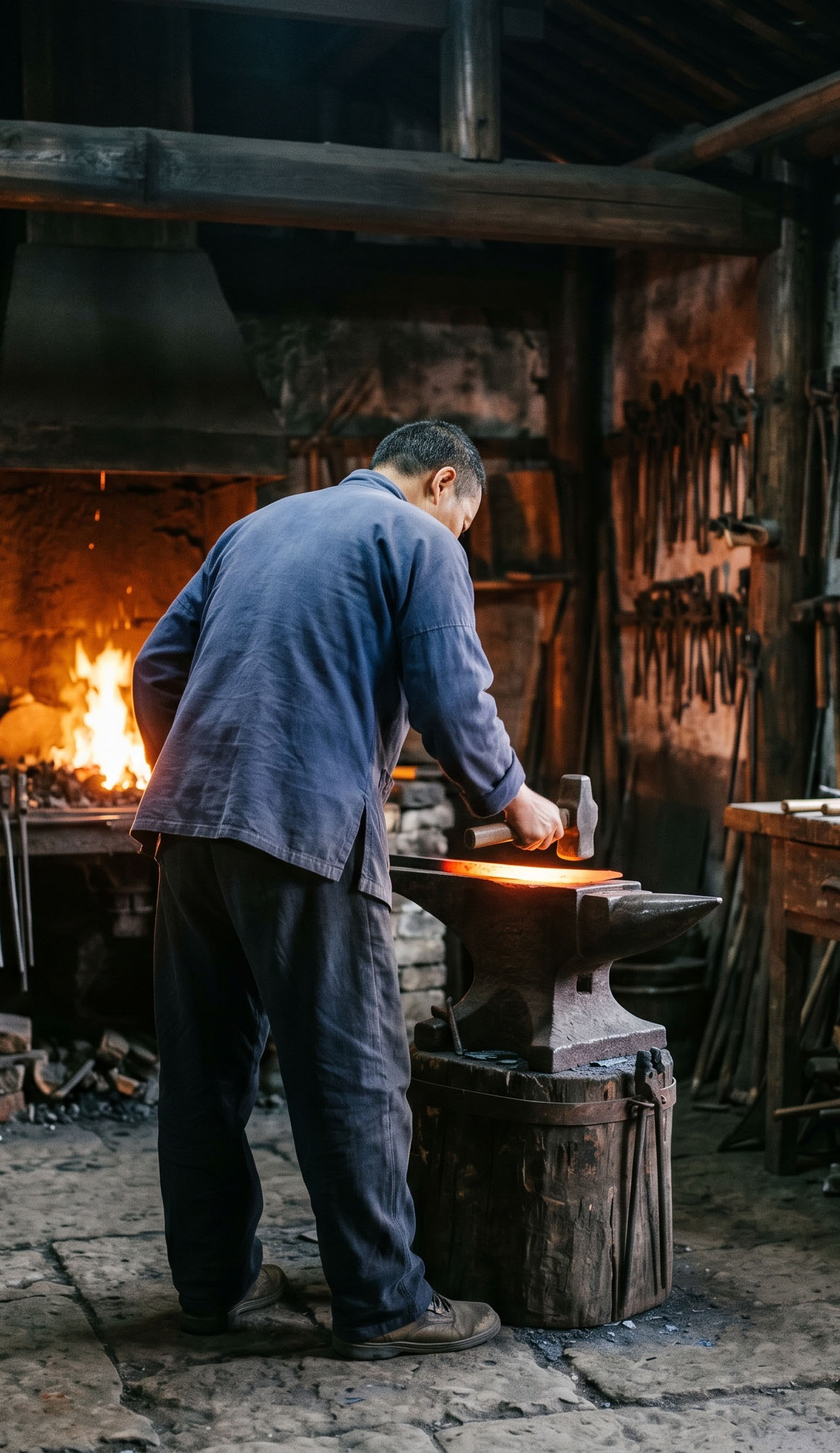
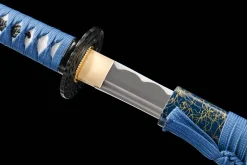
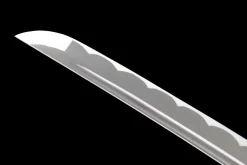
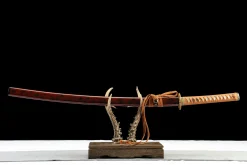
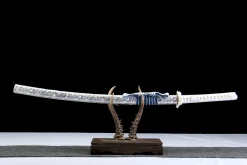
Hand-forged T10 Tool Steel katana (103cm total / 72cm blade), crafted in Longquan. Clay-tempered blade with a genuine hamon line — visible contrast between hardened edge and soft spine.
$379.99
Shadow Carve – Hand Forged T10 Tool Steel Katana Sword
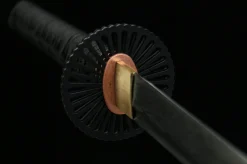
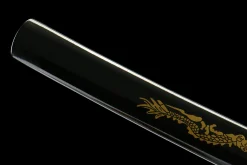
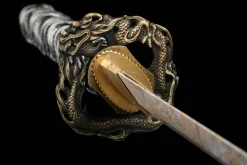
Among T10 katanas in this class, the Shadow Carve – 影雕 – is distinguished by one specific decision: the iron fittings set against an aohada saya. Where most makers reach for brass or copper to finish a clay-tempered blade, this build uses raw iron – harder visually, more austere, and unambiguously functional. It tells you what this katana is before you read a single specification.
Specifications
| Blade Steel | T10 High Speed Tool Steel, Clay Tempered (Differential Hardening) |
| Total Length | 103.0 cm / 40.6 in |
| Blade Length | 72.0 cm / 28.3 in |
| Blade Width | 3.2 cm |
| Weight | 950 g / 33.5 oz |
| Heat Treatment | Oil Quench & Temper |
| Fittings | Iron (装 – fittings set) |
| Handle | Cotton Ito Wrap |
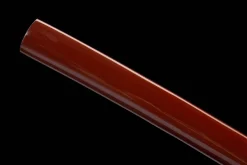
| Sheath | Green Bark Wood (Aohada) |
What the Steel Does
T10 tool steel contains tungsten alongside its high carbon content, which pushes wear resistance and edge retention beyond what standard 1095 or 1060 can sustain under repeated hard use. Clay tempering – tsuchioki, the selective application of refractory clay along the spine before quench – keeps the spine soft and tough while allowing the edge zone to harden fully during the quench cycle. The result is a blade with a hard martensite edge that sharpens to a serious cutting geometry and holds it, backed by a spine that flexes and absorbs rather than shattering under lateral load. The hamon – the visible temper line left by the clay process – is the physical record of where hardness transitions to toughness. It is not decorative. It is structural.
Oil quenching rather than water quenching reduces the thermal shock at the moment of transformation. For T10 at this cross-section, that matters: the blade arrives straight, with internal stress distributed evenly rather than concentrated at the edge or the monouchi (the primary cutting zone, roughly the forward third of the blade). At hardness levels this steel achieves through differential treatment, straightness is not guaranteed – it is earned by process discipline. The Shadow Carve is that process done correctly.
The Feel of It
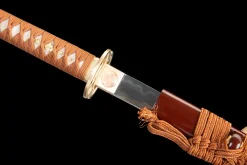
The 72 cm blade runs in shinogi-zukuri (ridgeline) geometry – a raised central spine that stiffens the blade along its length without adding thickness to the edge zone. The 27 cm tsuka wrapped in cotton ito sits in a two-hand grip with enough length to position the off hand at the kashira-end for full mechanical leverage. The ito wrap is the traditional hishi-gumi (diamond) pattern; the same (ray skin) underneath it provides the abrasion layer that keeps the wrap from rotating under a hard pull. The aohada – green bark wood – saya has a tactile character that plain lacquered wood does not: slightly textured at the surface, dense at the core, the koiguchi (mouth of the saya) fitted to release cleanly without play.
Maintenance Notes
T10 is high-carbon and will rust if neglected – wipe the blade with a clean cloth after every use and apply a light film of camellia oil before storage. The aohada saya should be stored away from prolonged humidity; the bark finish is resilient but the underlying wood will move if the moisture differential is severe. Sharpen on a water stone, progressing through grits – the tungsten content means T10 takes longer to sharpen than plain carbon steel but the edge it holds makes the effort worthwhile.
| Weight | 1.2 lbs |
|---|---|
| Dimensions | 103.0 × 3.2 × 0.7 in |
| Hamon | Real Hamon (Clay Tempered) |
| Blade Steel | T10 Tool Steel |
| Total Length | 103.0 cm |
| Blade Length | 72.0 cm |
| Heat Treatment | Oil Quench & Temper |
| Handle Wrap | Cotton Ito Wrap |
| Sheath Material | Green Bark Wood (Aohada) |
| Fittings | Iron, (装) |
| Forging Style | Differential Hardening (Clay Tempered) |
Related products