






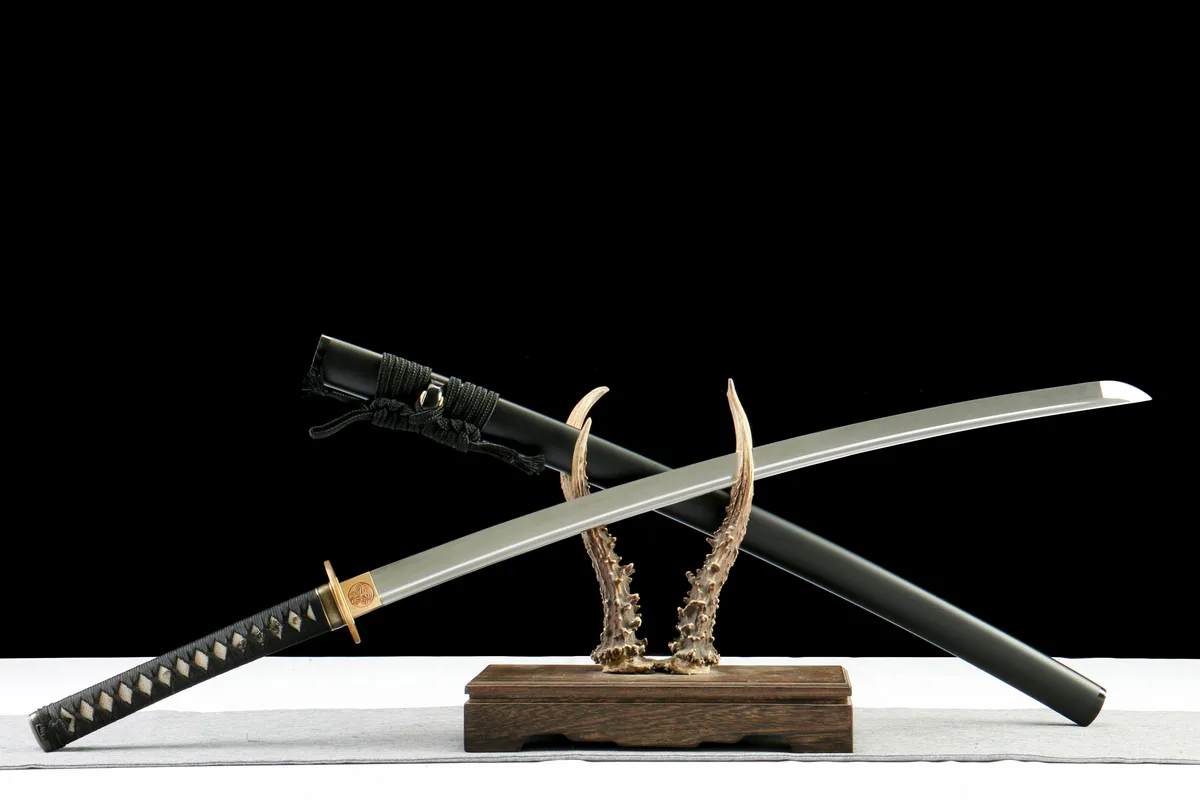


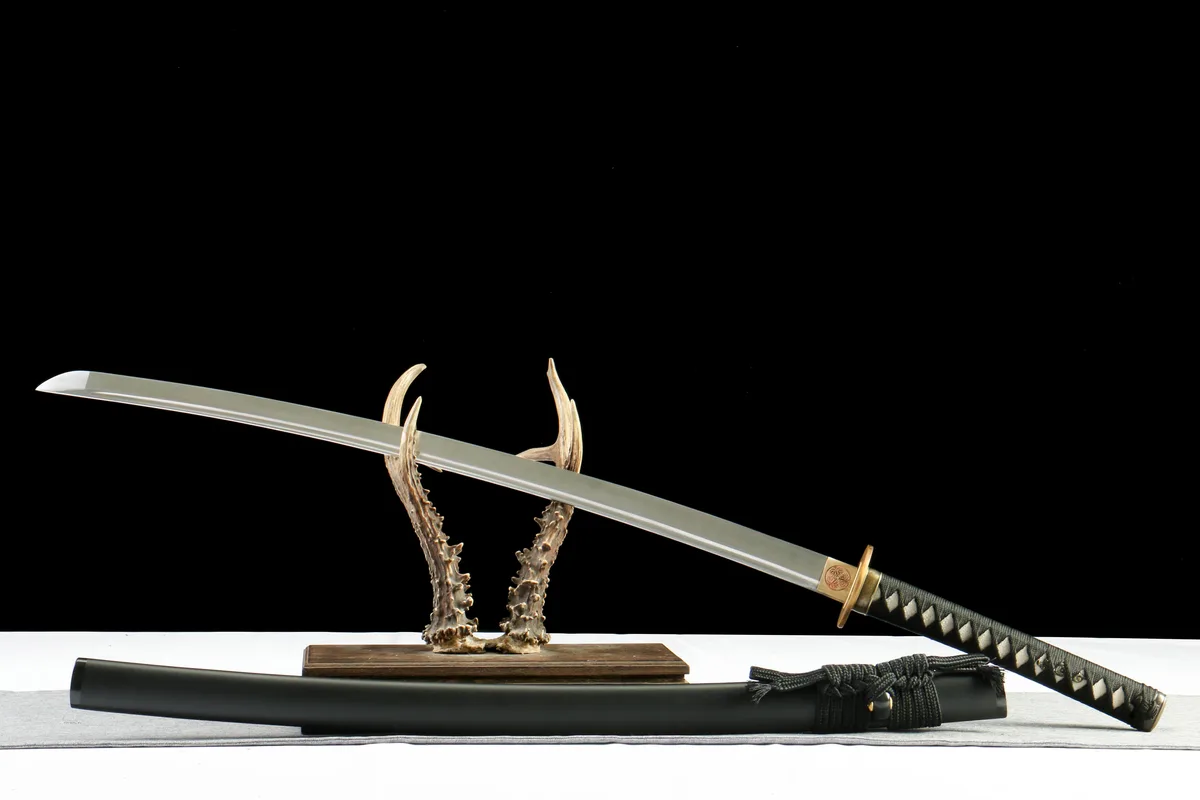


Shadow Sun – Hand Forged T10 Tool Steel Katana Sword
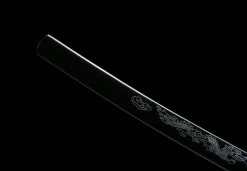
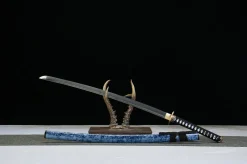
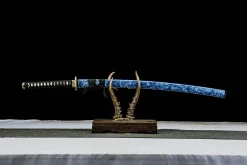
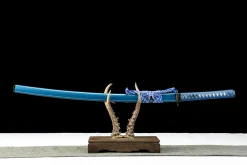
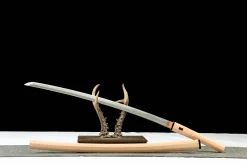
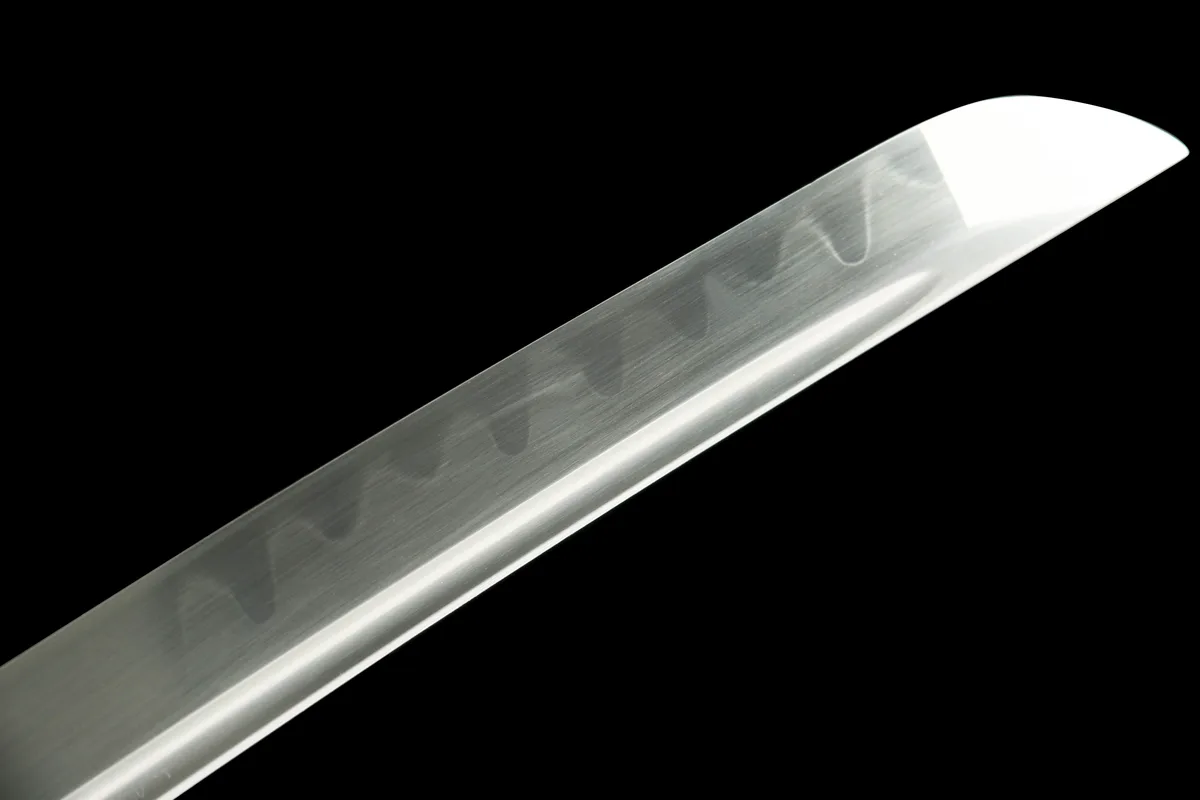
Hand-forged T10 Tool Steel katana (102cm total / 72cm blade), crafted in Longquan. Clay-tempered blade with a genuine hamon line — visible contrast between hardened edge and soft spine.
$419.99
Shadow Sun – Hand Forged T10 Tool Steel Katana Sword
The hamon on this blade does not whisper – it declares. Clay tempering on T10 tool steel produces a temper line with a character all its own, and the Shadow Sun earns its name from the contrast between its blackened blade finish and the bright, active habuchi (the boundary zone of the hamon) that emerges from the dark like a horizon line at first light. This is a blade for the buyer who reads specifications carefully and knows exactly what they mean.
Specifications
| Blade Steel | T10 High Speed Tool Steel |
| Total Length | 102.0 cm / 40.2 in |
| Blade Length | 72.0 cm / 28.3 in |
| Blade Width | 3.2 cm |
| Blade Thickness | 0.7 cm |
| Weight | 1040 g / 36.7 oz |
| Heat Treatment | Clay Tempering (Differential Hardening) |
| Fittings | Zinc Alloy |
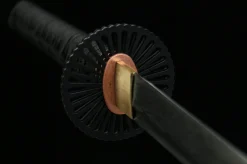
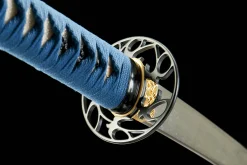
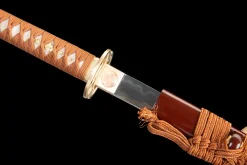
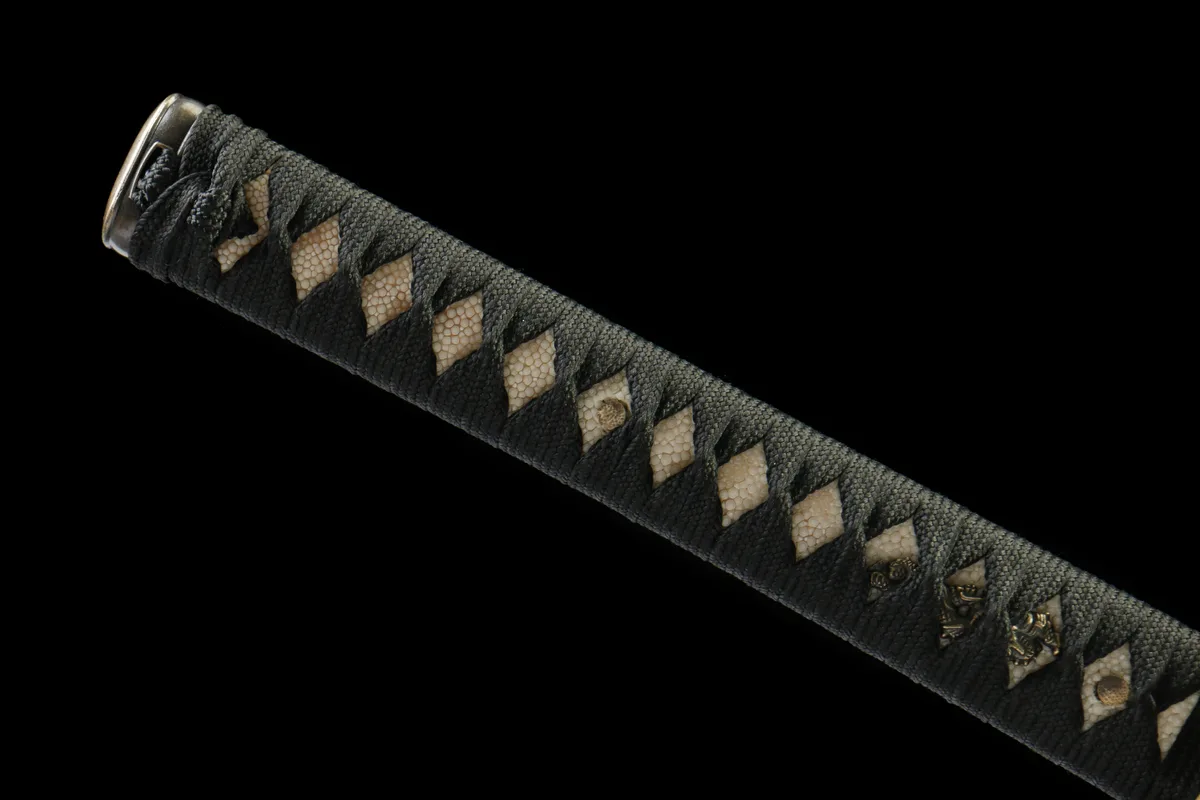
| Handle | Cotton Ito + Genuine Rayskin |
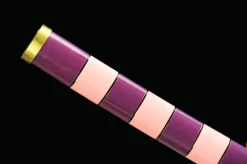
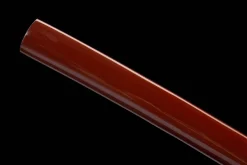
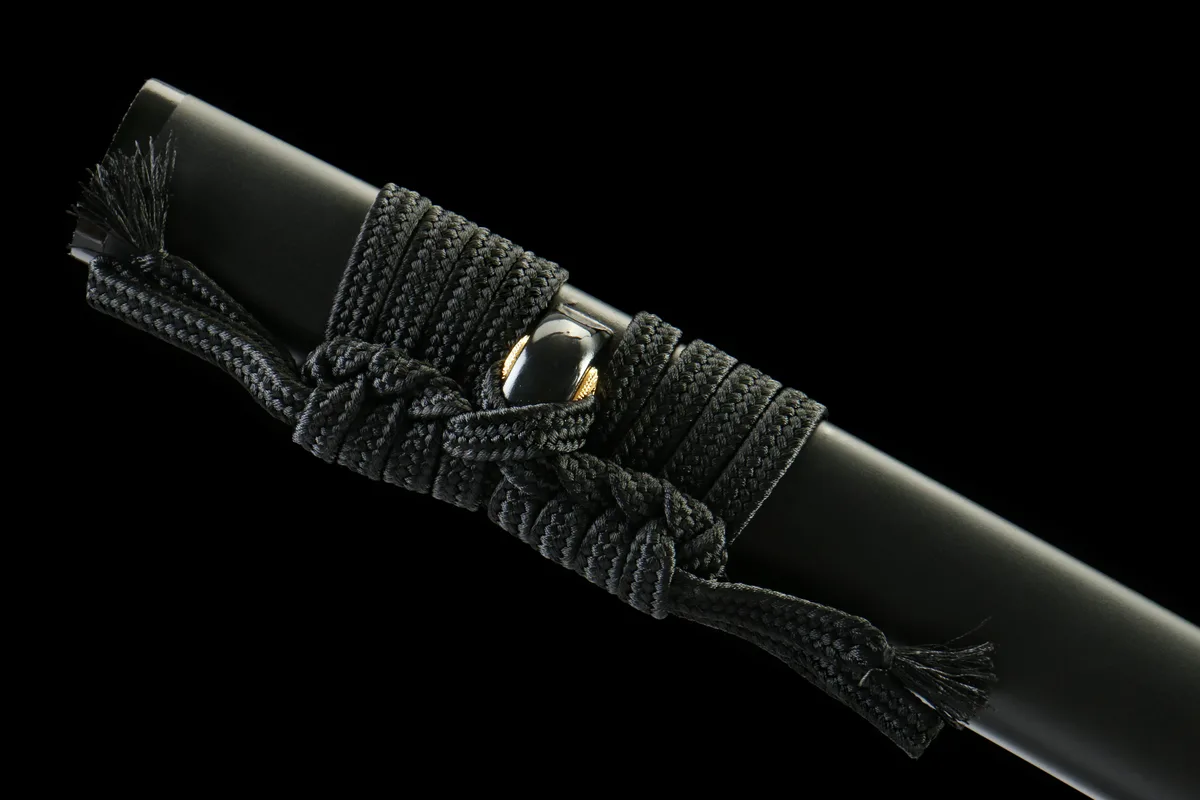
| Sheath | Hardwood (High-Gloss Lacquer) |
The Steel
T10 is not standard high-carbon steel. The addition of tungsten to its composition elevates wear resistance and allows the steel to hold a refined edge geometry over extended use in a way that simpler carbon steels cannot match. When the clay is applied to the spine before quenching – thickly along the mune (back of the blade), thinly or absent along the ha (cutting edge) – the differential cooling rate produces two distinct microstructures in a single piece of steel. The edge resolves into hard martensite. The spine retains a tougher, more flexible pearlitic structure. That boundary between them is the hamon, and on the Shadow Sun, the blackened blade finish makes it the most visible thing on the sword.
The nie (individual crystalline particles of martensite visible within and along the hamon) on a well-executed T10 clay temper catches light at acute angles and appears almost granular – like iron sand held just beneath the surface. The habuchi on this blade sits against the blackened ji (the body of the blade) with exceptional clarity. The darkness of the finish is not cosmetic concealment. It is a deliberate contrast that makes the hamon read with a sharpness and depth that a polished blade finish distributes differently.
In Your Hands
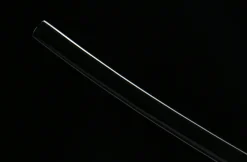
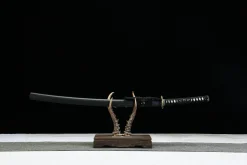
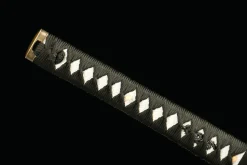
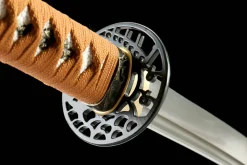
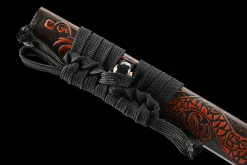
The shinogi-zukuri (ridgeline) geometry runs the full 72 cm of blade, the central ridge dividing the flat ji from the beveled edge in a profile that has been the functional and visual standard of Japanese swordsmithing for centuries. The 26 cm handle is wrapped in cotton ito over genuine same (rayskin), the raised nodules of the rayskin pressing through the wrap and creating a grip that locks the hand without demanding it. The high-gloss lacquered hardwood saya (scabbard) draws cleanly against the habaki (blade collar), and the contrast between the lacquered black sheath and the darkened blade surface means the sword presents as a unified object – shadow on shadow, until the hamon catches the light and the whole thing changes.
Care
After each handling session, wipe the blade with a clean cloth to remove fingerprint oils, then apply a thin coat of choji oil (clove-based mineral oil) using a soft cloth or uchiko ball. Store horizontally in the saya in a low-humidity environment – moisture is the primary enemy of high-carbon steel at this level of finish. The blackened blade surface should never be abraded with anything abrasive; if the finish is compromised, consult a professional polisher rather than attempting correction at home.
| Weight | 1.32 lbs |
|---|---|
| Dimensions | 102.0 × 3.2 × 0.7 in |
| Hamon | Real Hamon (Clay Tempered) |
| Blade Steel | T10 Tool Steel |
| Total Length | 102.0 cm |
| Blade Length | 72.0 cm |
| Heat Treatment | Clay Tempering (Differential Hardening) |
| Handle Wrap | Cotton Ito + Genuine Rayskin |
| Sheath Material | Hardwood (High-Gloss Lacquer) |
| Fittings | Zinc Alloy |
| Forging Style | Shinogi-Zukuri (Ridgeline) |
Related products