











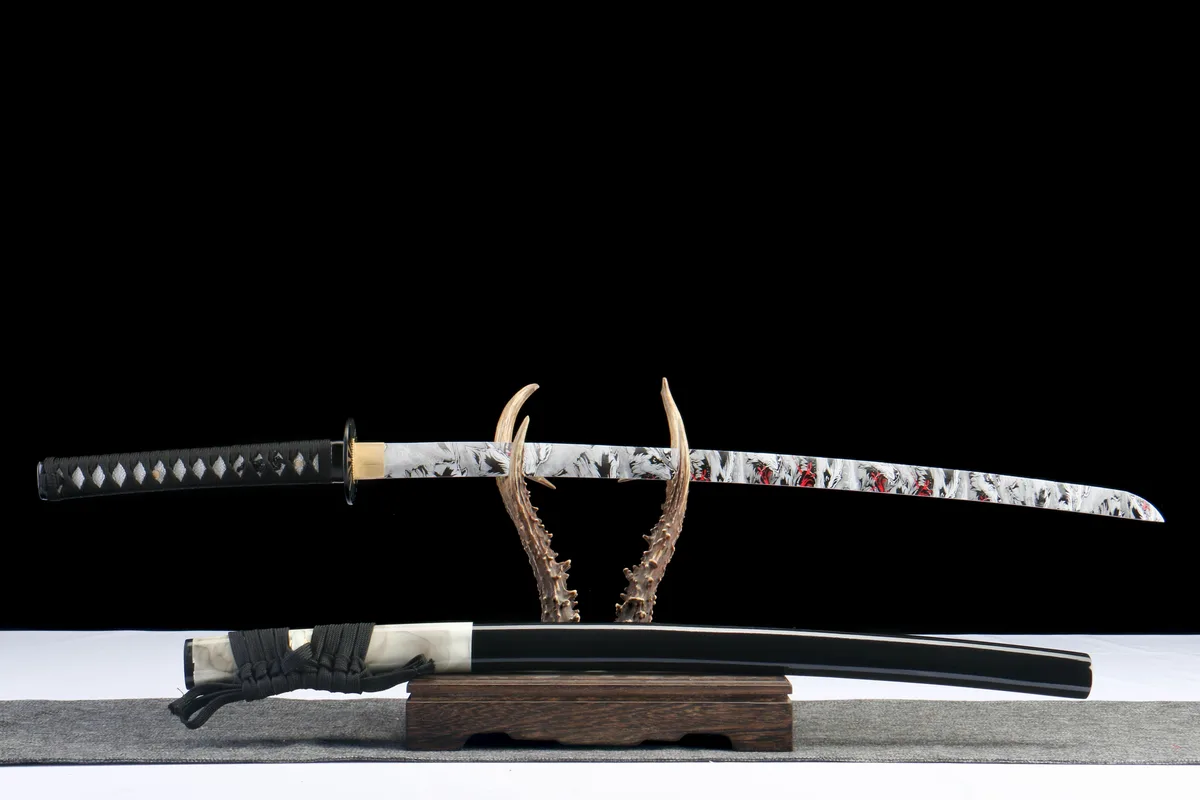



Shattered Peak – Hand Forged 1045 Carbon Steel Katana Sword
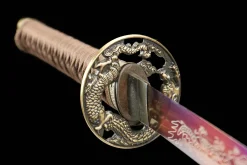
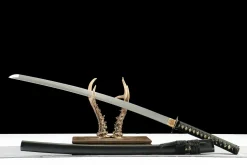
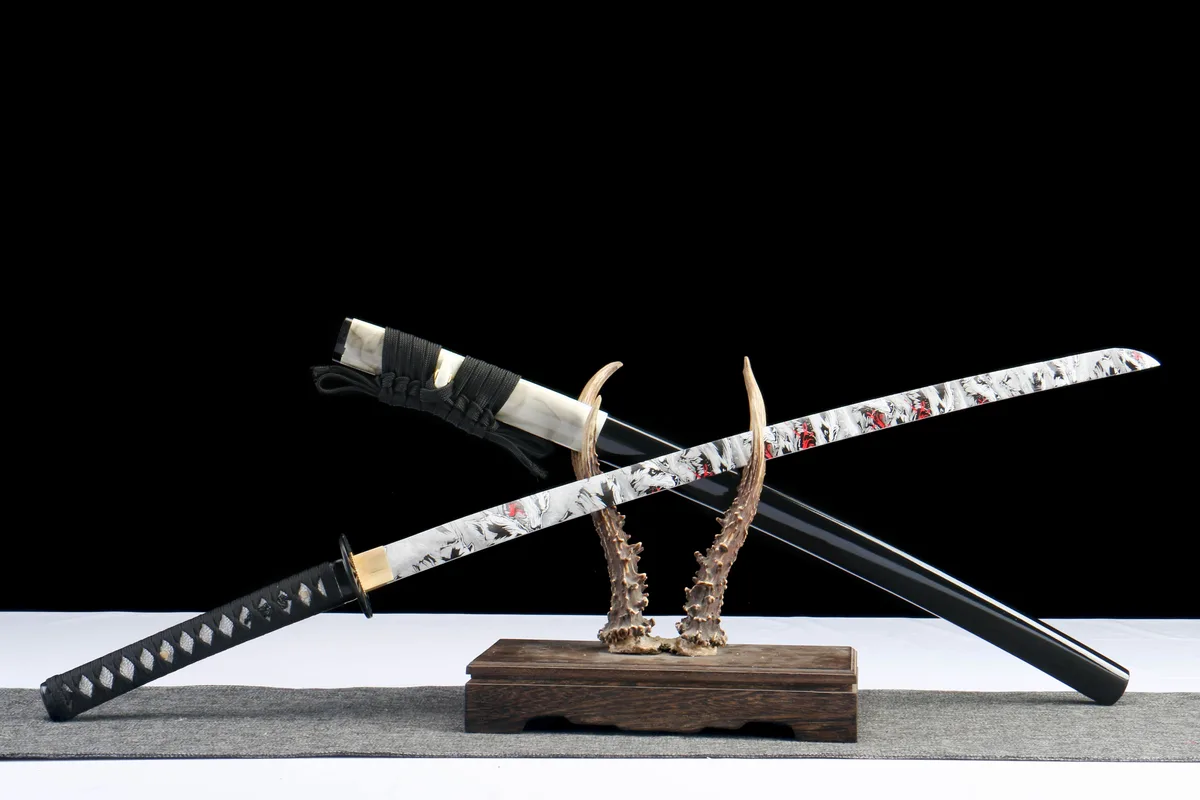
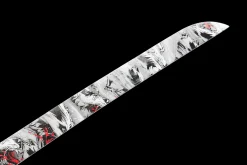
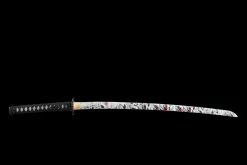
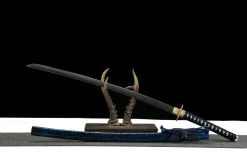
The Shattered Peak katana — 碎岳 — takes its name from the violent, asymmetric drama of a mountain face broken by time, and it earns that name through the one detail that sets it apart from every other sword in this lineup: its iron fittings. Where most 1045 katanas in this tier use alloy hardware, Shattered Peak is mounted with iron tsuba and iron collar fittings that develop a natural patina over time, growing more characterful with every year of ownership. This is a $150 sword built with the philosophy of a more expensive one.
Specifications
| Blade Steel | 1045 Carbon Steel, Special Process |
| Total Length | 102.0 cm / 40.16 inches |
| Blade Length | 72.0 cm / 28.35 inches |
| Blade Width | 3.2 cm |
| Weight | 1040 g / 36.69 oz (net) |
| Heat Treatment | Temper |
| Fittings | Iron |
| Handle | Cotton Ito Wrap |
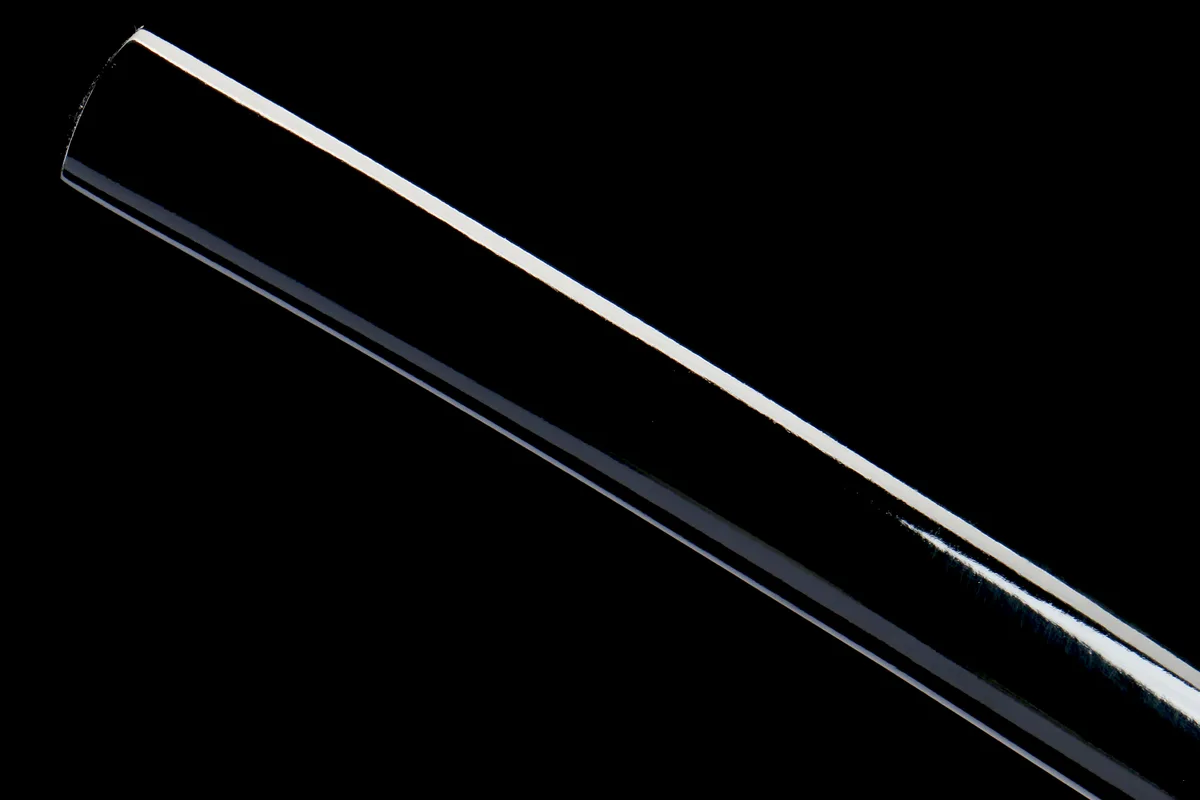
| Sheath | Solid wood, piano lacquer finish (saya) |
Craftsmanship & Materials
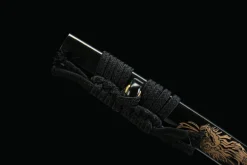
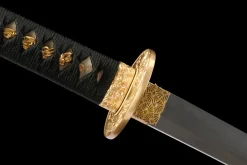
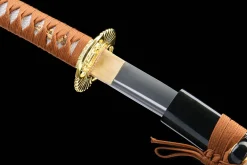
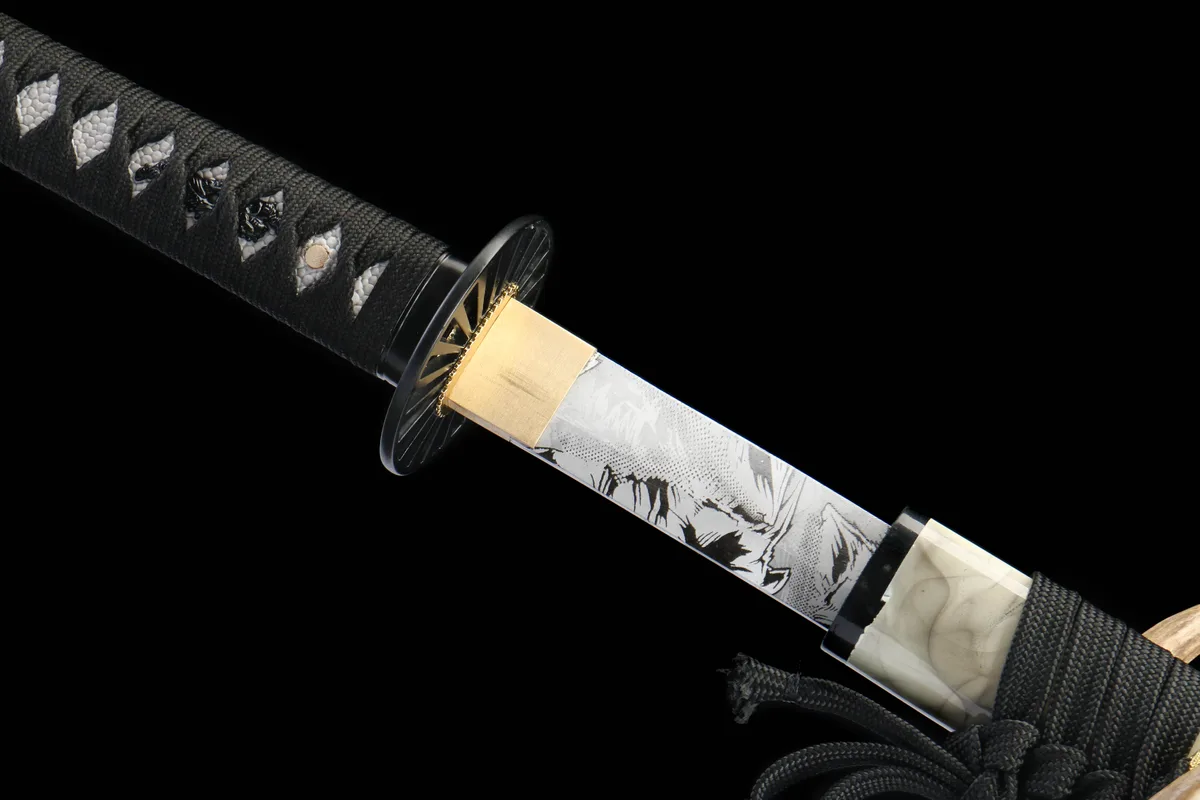
Iron fittings are a deliberate choice, not an economy measure — and on the Shattered Peak, they are the soul of the sword. Unlike cast alloy hardware, iron tsuba and fittings carry genuine weight, a denser feel in hand, and the ability to develop a living surface over time. Depending on how the owner cares for them, the iron components can be maintained bright and clean or allowed to build a controlled rust patina — a tradition among Japanese sword connoisseurs who view the aged iron guard as evidence of a sword’s biography. This makes every Shattered Peak truly unique within months of ownership.
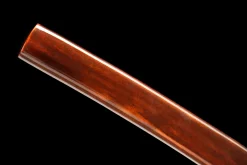
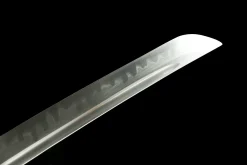
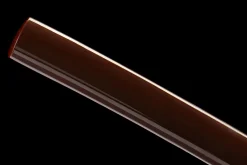
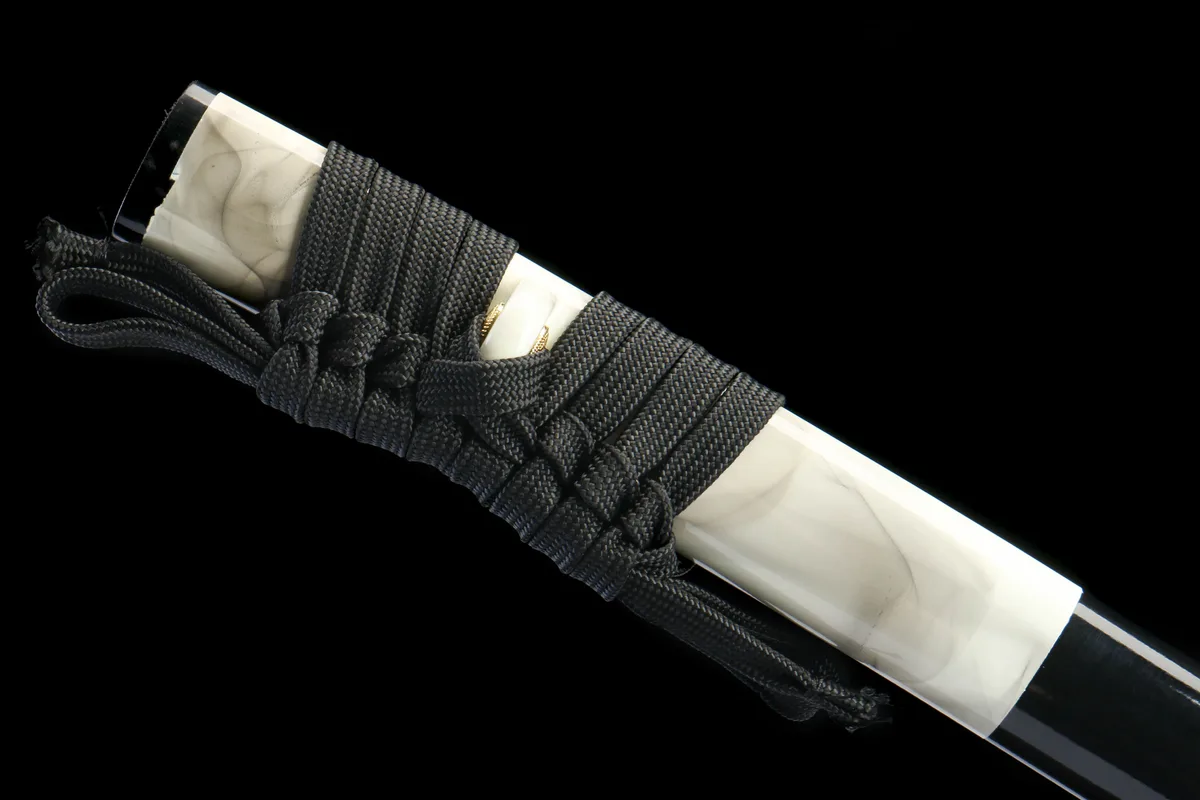
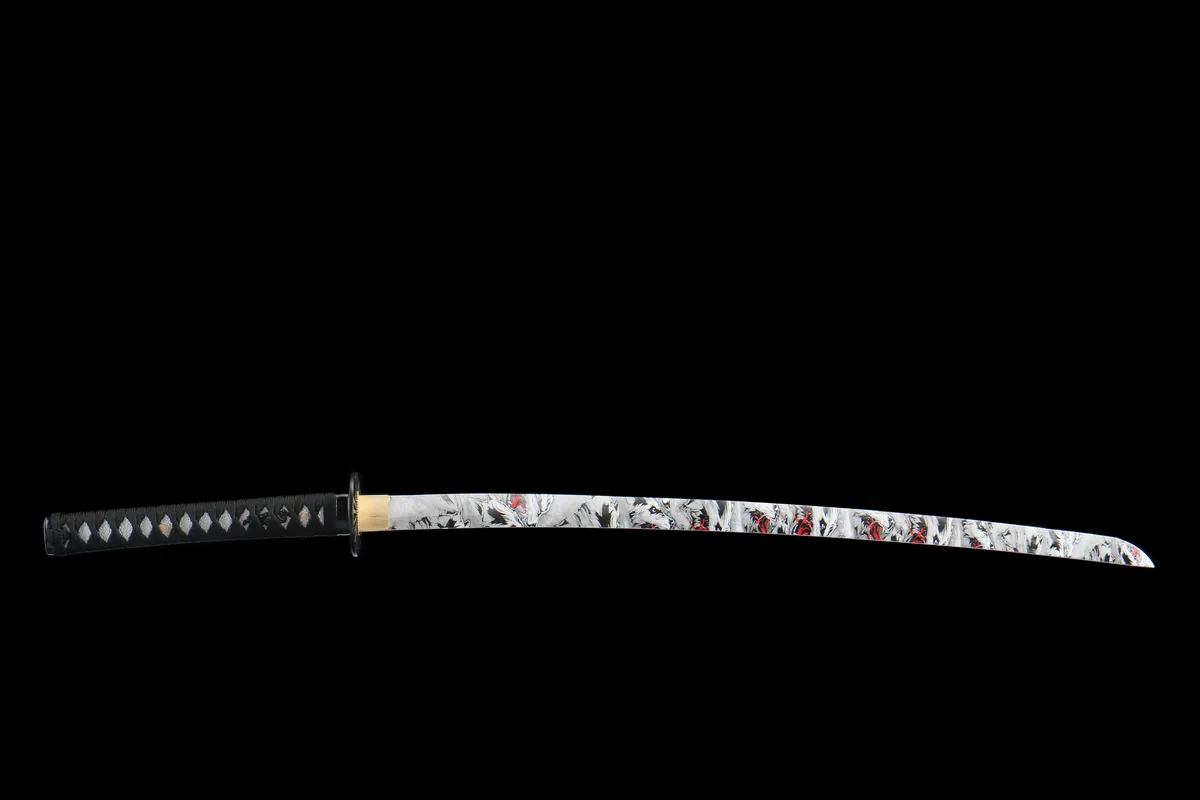
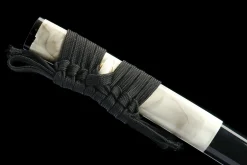
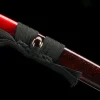
The blade itself is 1045 carbon steel processed through Longquan’s special finishing protocol, ground into the shinogi-zukuri (鎬造) geometry that has defined functional Japanese swords for over five centuries. This profile — with its prominent central ridge — provides the mechanical advantage of a thickened spine while allowing the bevel to thin dramatically toward the edge for cutting performance. The solid-wood piano lacquer saya presents a clean, unfussy counterpoint to the raw materiality of the iron fittings: smooth gloss against rough-textured metal, polished certainty against the suggestion of geological force.
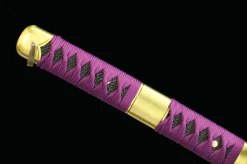
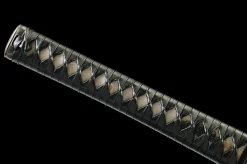
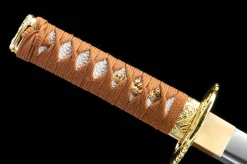
The cotton ito wrap on the 27 cm tsuka is laid tightly enough to prevent shifting under grip pressure, and the diamond-pattern openings allow the underlying same (rayskin, or similar grip material) to show through, adding tactile and visual interest at the handle. Shattered Peak is a sword that rewards closer inspection — the more you handle it, the more it tells you about itself.
Perfect For
- Collectors who value aging materials and want a sword whose iron fittings develop a unique personal patina over years of ownership
- Intermediate practitioners stepping up from a basic alloy-fitted practice sword and wanting hardware with more substance and heft
- History-minded enthusiasts drawn to the unadorned, martial aesthetic of iron-mounted swords that echoes classical samurai equipment
Care & Maintenance
Iron fittings on this 1045 carbon steel katana require attention alongside blade maintenance — if you prefer to keep the tsuba and fittings rust-free, a light coat of camellia or mineral oil applied monthly will hold oxidation at bay. If you embrace the patina tradition, allow surface rust to form naturally then stabilize it with a light wax or oil treatment to prevent it from progressing to pitting. The blade itself should be wiped clean after every use, oiled lightly, and stored horizontally or edge-up in the lacquered saya to prevent moisture pooling.
Frequently Asked Questions
What is 1045 carbon steel and is it suitable for the Shattered Peak katana?
1045 carbon steel contains approximately 0.45% carbon, making it a medium-carbon steel that is tough, forgiving, and capable of holding a working edge. For the Shattered Peak katana, this steel is well-suited to its mid-range positioning — durable enough for display, handling, and light kata practice while remaining accessible in price. A special process treatment on the blade enhances its surface aesthetics, complementing the sword’s bold ‘shattered peak’ visual identity.
Why does the Shattered Peak use iron fittings instead of alloy, and does it matter?
The Shattered Peak (LQS-0263) is distinguished among its sibling models by its iron fittings rather than standard alloy (zinc-based) hardware. Iron fittings are more historically authentic to traditional Japanese sword construction, offering greater density and a more subdued, natural patina over time. While iron is more susceptible to rust than alloy if left unmaintained, it provides a more genuine aesthetic and slightly superior tactile quality, making the Shattered Peak a better choice for buyers valuing authenticity.
Is the Shattered Peak katana battle ready for cutting?
The Shattered Peak is a functional katana built with a full-tang 1045 carbon steel blade in the traditional shinogi-zukuri ridge-line geometry, and it is suitable for light cutting practice — tatami omote, thin bamboo — as well as kata training and display. Its iron fittings provide a slightly more secure fitting than alloy alternatives. However, standard temper heat treatment means it is not engineered for rigorous or repeated heavy test-cutting sessions.
What is shinogi-zukuri blade geometry, and why does the Shattered Peak use it?
Shinogi-zukuri (鎬造) is the classic Japanese blade profile featuring a distinct central ridge line (shinogi) that divides the flat upper portion of the blade from the beveled cutting edge below. It is the most iconic and historically prevalent katana geometry, offering an optimal balance of cutting performance, blade strength, and visual elegance. The Shattered Peak’s use of shinogi-zukuri ensures it conforms to traditional katana standards in both form and function.
Is the Shattered Peak good value at $150, especially with iron fittings?
At $150, the Shattered Peak offers a notable upgrade over similarly priced alloy-fitted katanas due to its iron fittings, which are more historically authentic and aesthetically refined. Combined with a specially processed 1045 carbon steel blade, piano-lacquered solid wood saya, cotton ito wrap, and traditional shinogi-zukuri geometry, it represents strong value in the $100–$200 mid-range. Buyers who care about fitting quality and authenticity will find the iron hardware a meaningful differentiator at this price point.
| Weight | 1.32 lbs |
|---|---|
| Dimensions | 102.0 × 3.2 × 0.7 in |
| Sword Type | Katana |
| Blade Steel | 1045 Carbon Steel |
| Total Length | 102.0 cm |
| Blade Length | 72.0 cm |
| Heat Treatment | Temper |
| Handle Wrap | Cotton Ito Wrap |
| Sheath Material | 实木钢琴烤漆鞘 |
| Fittings | Iron |
| Forging Style | 鎬造 |
Related products

1045 Carbon Steel

1065 Carbon Steel

1045 Carbon Steel
Black Heaven Feather – Hand Forged 1045 Carbon Steel Katana Sword

High-End ($400-$800)
1045 Carbon Steel

1065 Carbon Steel


1065 Carbon Steel


Anime & Pop Culture