

















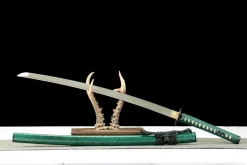


Teal Wave – Hand Forged Damascus Steel Katana Sword
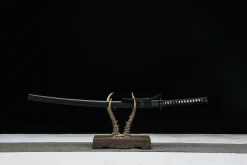
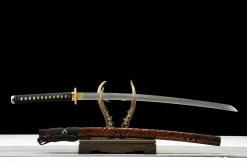
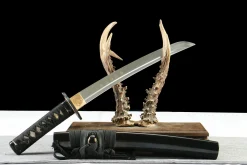
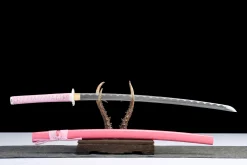
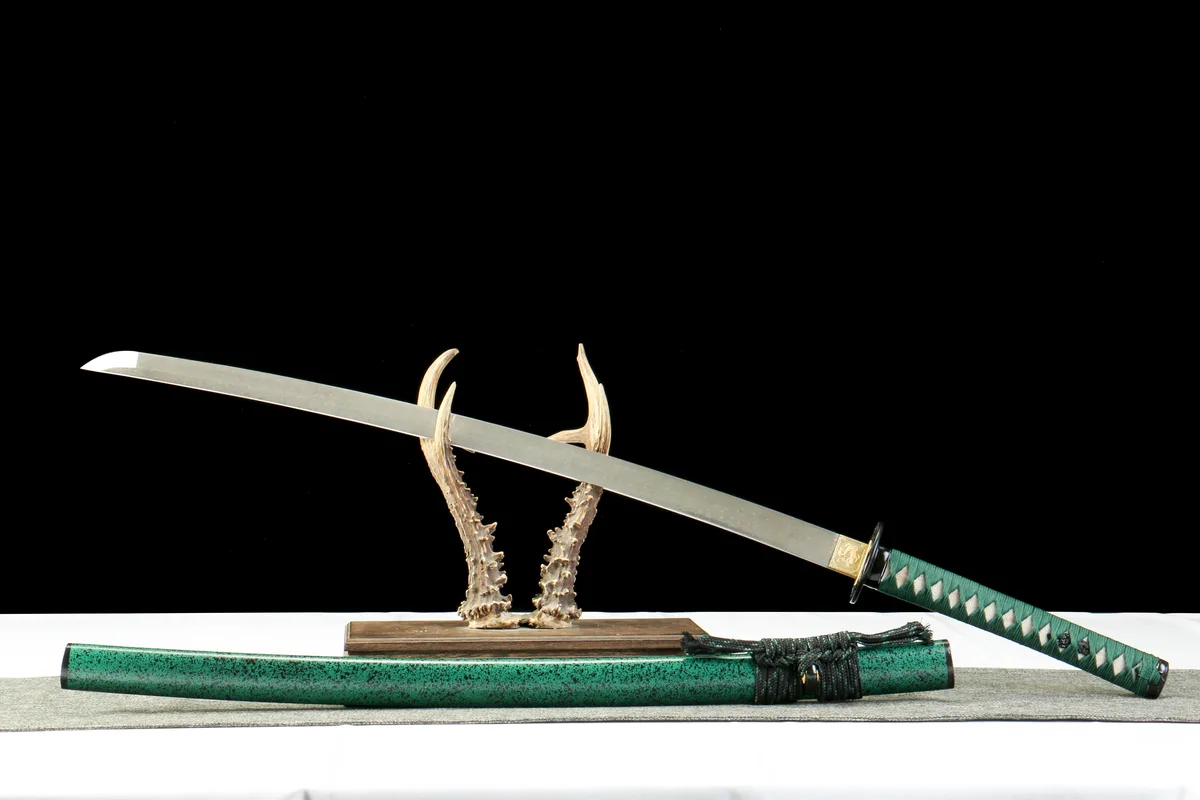
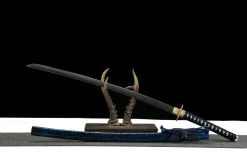
The Teal Wave (青波) is a premium Damascus steel katana forged in the rare 四叶草 (four-leaf clover) pattern-welded style — a mesmerizing folded steel construction that makes every blade’s surface markings entirely unique, like a fingerprint pressed in iron and fire. Set within iron fittings that nod to the austere aesthetic of feudal Japan’s most disciplined sword traditions, and sheathed in a cool green aohada bark wood saya, this $280 sword is where artistry and function converge. The Teal Wave is not merely a cutting instrument — it is a wearable conversation about the history of steel.
Specifications
| Blade Steel | Damascus Steel (四叶草 Pattern) |
| Total Length | 103.0 cm / 40.6 inches |
| Blade Length | 72.0 cm / 28.3 inches |
| Blade Width | 3.2 cm |
| Weight | 950 g / 33.5 oz (net) |
| Heat Treatment | Oil Quench & Temper |
| Fittings | Iron (装) |
| Handle | Cotton Ito Wrap |
| Sheath | Green Bark Wood (Aohada) |
Craftsmanship & Materials
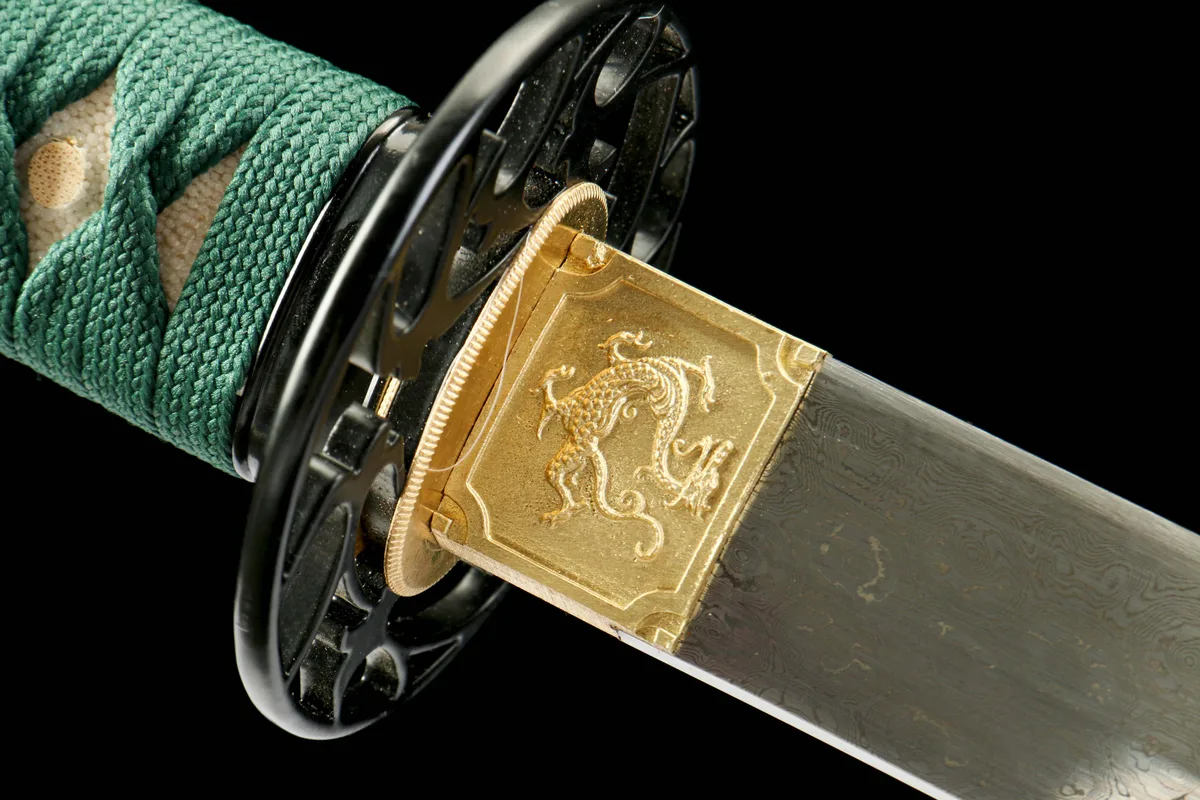
The 四叶草 — four-leaf clover — Damascus pattern is one of the most technically demanding layouts in pattern-welded smithing. Rather than the more common straight-grain or ladder patterns, the four-leaf arrangement requires the smith to manipulate, cut, and re-forge the billet in a precise rotational sequence so that the finished surface reveals an interlocking organic motif that ripples along the blade like light on moving water. This is the origin of the sword’s name: the teal-green saya reflecting the undulating steel above it, both moving in silent harmony.
Damascus or pattern-welded steel is produced by forge-welding multiple steel billets of differing carbon content into a single composite billet, then drawing, folding, and manipulating that billet repeatedly until thousands of microscopic layers are compressed into the blade. The result is a steel that combines the hardness of high-carbon layers with the toughness of lower-carbon ones — a natural gradient that ancient smiths understood intuitively long before metallurgy existed as a science. After oil quenching and tempering, the acid-etched surface reveals the pattern in full, the darker low-carbon layers contrasting against the bright high-carbon ones.
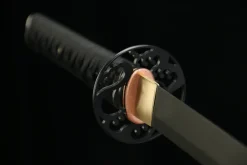
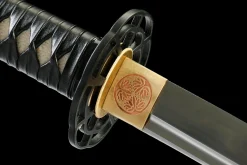
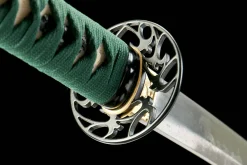
The iron tsuba and fittings (装) are deliberately understated — a conscious choice that lets the blade’s own visual drama lead. Iron fittings carry a gravity and historical authenticity that brighter metals cannot replicate: they patina slowly and gracefully, becoming more personal to their owner with each passing year. The cotton ito wrap in the traditional diamond pattern completes a sword that is cohesive from tip to kashira.
Perfect For
- Damascus steel collectors seeking a pattern-welded katana with a rare, named forging motif rather than a generic swirl pattern
- Intermediate practitioners who want a step up from entry-level carbon steel with visual and metallurgical distinction
- Gift buyers looking for a premium, handmade sword presentation at a price that respects a considered budget
Care & Maintenance
Damascus pattern-welded blades require the same diligent oiling routine as any carbon steel katana, but with particular attention to the acid-etched surface — re-etching with ferric chloride can refresh the pattern if it fades over time, though this is best left to experienced hands. The iron fittings will develop a natural patina that should be encouraged rather than polished away; a light coat of renaissance wax on the fittings preserves the surface while allowing the aging process to continue authentically. Keep the blade dry and oiled, and the Teal Wave will remain both functional and visually spectacular for decades.
Frequently Asked Questions
What is four-leaf clover Damascus steel (四叶草) used in the Teal Wave katana?
The Teal Wave features a specialized Damascus pattern known in Chinese swordsmithing as 四叶草 (four-leaf clover). This refers to a specific layering and twisting technique applied during pattern welding that creates a repeating clover-like motif across the blade surface when etched. It is both visually distinctive and structurally sound, combining multiple steel types through forge welding to produce a blade with visible character and real cutting capability.
What are the iron fittings on the Teal Wave and how do they compare to zinc alloy?
The Teal Wave uses iron fittings (装), a significant upgrade over zinc alloy found on entry and mid-range swords. Iron fittings are denser, more durable, and develop a natural patina over time that many collectors appreciate. They are far less likely to loosen or deform under the stresses of cutting. Combined with the Damascus blade, the iron fittings on the Teal Wave signal a premium, craftsman-level build quality consistent with its $280 price point.
Is the Teal Wave Damascus katana functional or just for display?
The Teal Wave is a functional, battle-ready Damascus katana capable of real cutting. Pattern-welded Damascus steel, when properly forge-welded and heat treated with an oil quench, produces a blade with sufficient hardness and toughness for tameshigiri and martial arts practice. Its shinogi-zukuri geometry and standard katana dimensions support cutting performance. While its Damascus patterning makes it visually collectible, it is not limited to display — it is built to be used.
What is pattern-welded (folded steel) construction in the Teal Wave?
The Teal Wave is forged using pattern welding, where multiple steel billets are layered, heated, and hammer-welded together repeatedly. This process aligns and refines the steel’s grain structure while creating the characteristic flowing surface patterns visible after acid etching. The 四叶草 clover pattern is achieved through precise manipulation of the layered billet during forging. The result is a blade that is both structurally refined and aesthetically unique — no two pattern-welded blades are identical.
How does the Teal Wave compare to other Damascus katanas at its $280 price?
At $280, the Teal Wave stands out for its combination of a named specialty Damascus pattern (四叶草), iron fittings, and handmade construction. Many Damascus katanas in this range use generic pattern-welded steel with zinc alloy fittings. The Teal Wave’s iron hardware, green aohada wood sheath, and distinctive clover Damascus pattern offer greater collector appeal and durability. It is well-positioned as an entry point into premium Damascus katanas without crossing into luxury territory.
| Weight | 1.2 lbs |
|---|---|
| Dimensions | 103.0 × 3.2 × 0.7 in |
| Sword Type | Katana |
| Blade Steel | Damascus Steel |
| Total Length | 103.0 cm |
| Blade Length | 72.0 cm |
| Heat Treatment | Oil Quench & Temper |
| Handle Wrap | Cotton Ito Wrap |
| Sheath Material | Green Bark Wood (Aohada) |
| Fittings | Iron, (装) |
| Forging Style | Folded Steel (Pattern Welded) |
Related products


1065 Carbon Steel


Damascus Steel
Crimson Flame (之烽) – Hand Forged Damascus Steel Katana Sword

1045 Carbon Steel

1045 Carbon Steel

1065 Carbon Steel


1065 Carbon Steel

1065 Carbon Steel


Anime & Pop Culture