





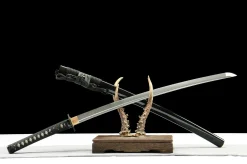

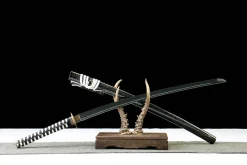




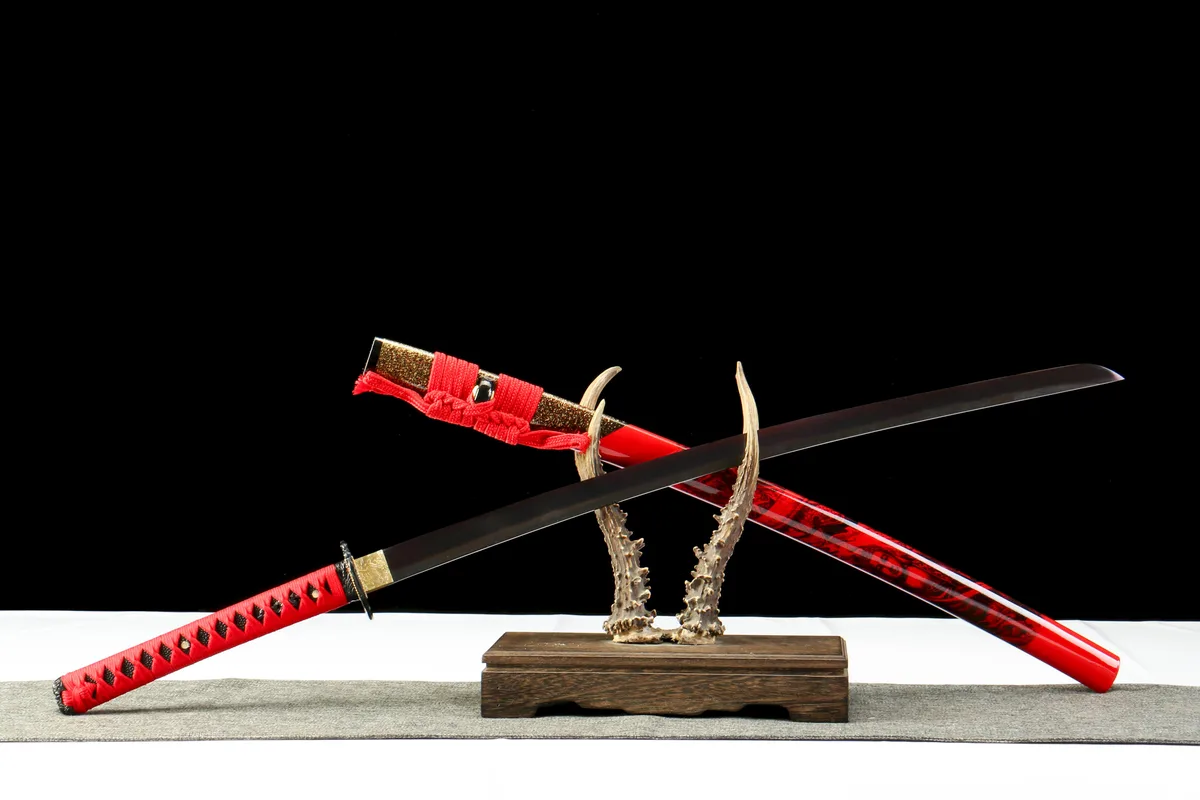


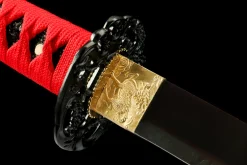

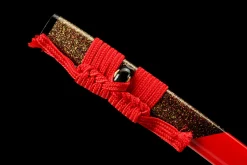



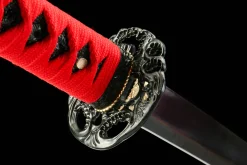


Yaksha (炎) – Hand Forged T10 Tool Steel Katana Sword
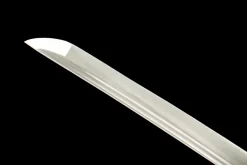
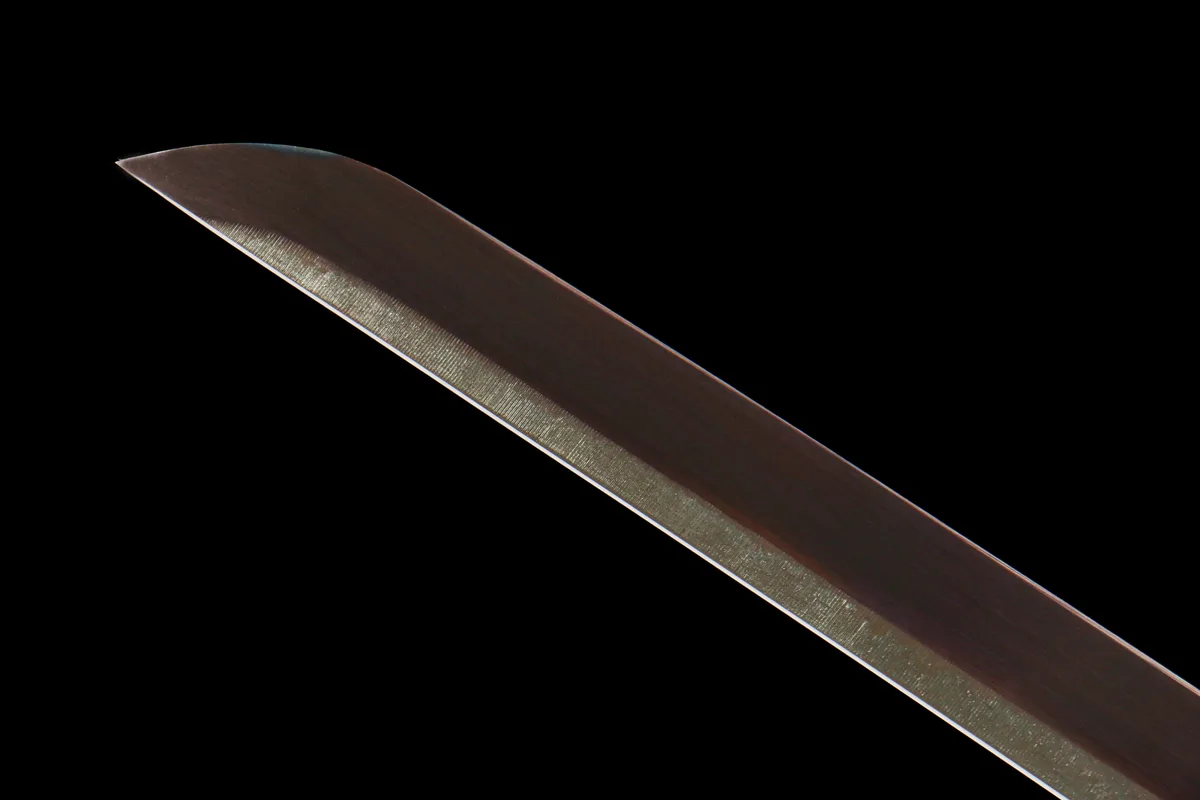
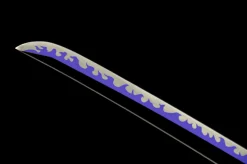
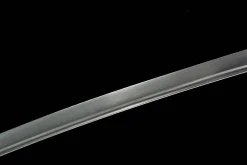
The Yaksha (炎) katana earns its fierce name — “Night Demon Flame” — through a blade of T10 High Speed Tool Steel finished in a striking烤紫 (roasted violet) heat-color patina that glows like embers at the edge. This Shinogi-Zukuri ridgeline katana balances aggressive cutting geometry with a mid-range price that makes serious T10 steel accessible to dedicated practitioners. At 72 cm of blade and paired with a rare green Aohada bark wood saya, the Yaksha is one of the most visually arresting T10 katanas available under $200.
Specifications
| Blade Steel | T10 High Speed Tool Steel (烤紫 — Roasted Violet Finish) |
| Total Length | 103.0 cm / 40.6 inches |
| Blade Length | 72.0 cm / 28.3 inches |
| Blade Width | 3.2 cm |
| Weight | 950 g / 33.5 oz (net) |
| Heat Treatment | Oil Quench & Temper |
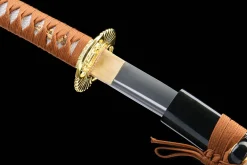
| Fittings | Zinc Alloy |
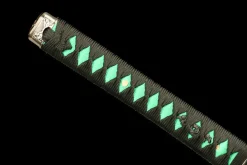
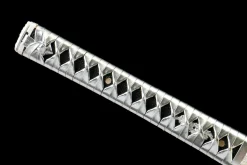
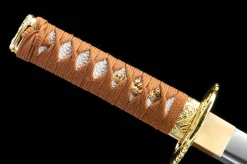
| Handle | Cotton Ito Wrap |
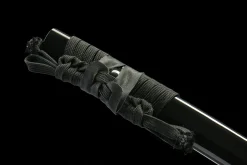
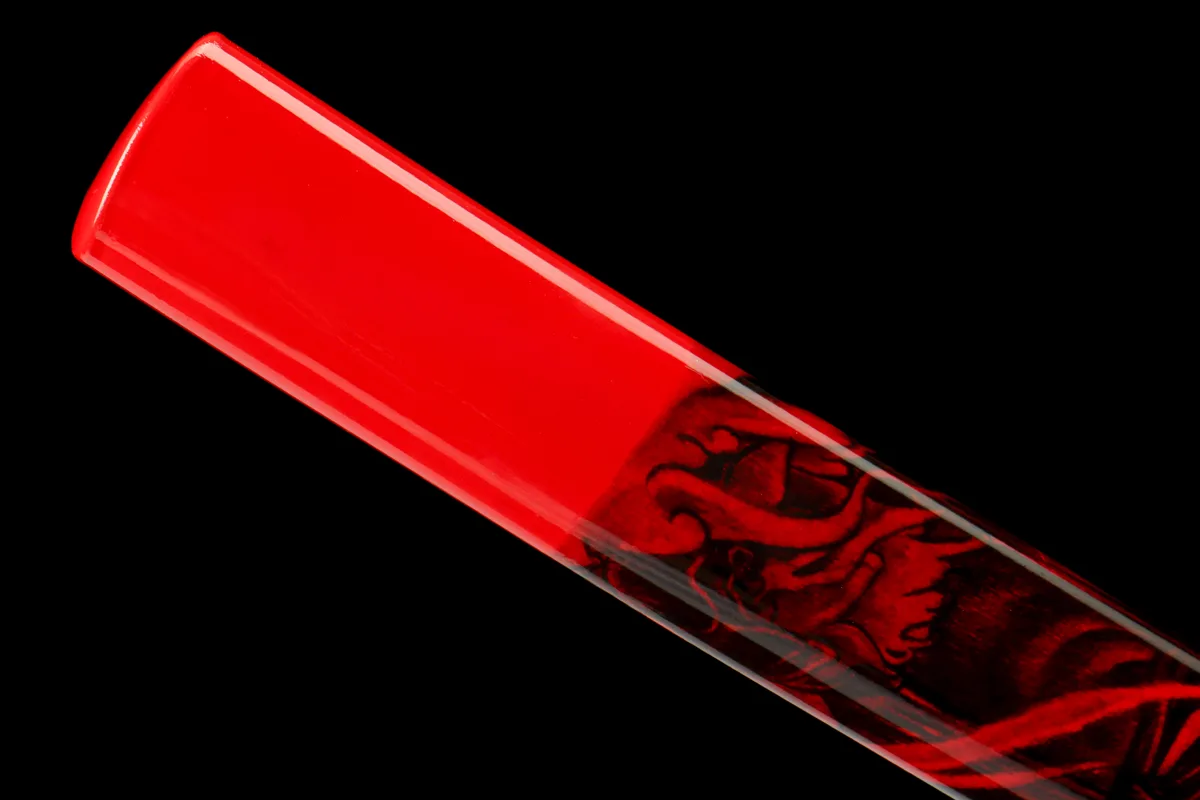
| Sheath | Green Bark Wood (Aohada) |
Craftsmanship & Materials
T10 tool steel stands apart from standard high-carbon steels by virtue of its tungsten content, which increases hardness and wear resistance without sacrificing the toughness a functional katana demands. The Yaksha’s blade undergoes an oil quench and temper process that locks in a fine, stable grain structure — delivering an edge that holds under repeated cutting while remaining less brittle than water-quenched alternatives. The 烤紫 surface treatment is not mere cosmetics: this controlled oxidation process creates a violet-to-amber gradient along the spine and flat that recalls the color of a flame’s inner cone, making every Yaksha blade uniquely individual.
The Shinogi-Zukuri profile — the classical ridgeline geometry used by Japanese swordsmiths for centuries — gives the Yaksha exceptional cross-sectional rigidity. The raised shinogi line divides the flat ji from the sloping shinogi-ji, channeling cutting force efficiently and reducing flex on impact. At 3.2 cm wide and 0.7 cm thick at the spine, the geometry is neither too blade-heavy nor too slender, sitting comfortably in the hands of both martial artists and collectors building their first serious piece.
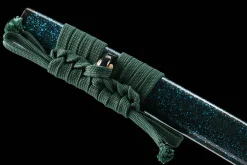
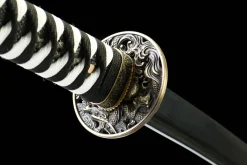
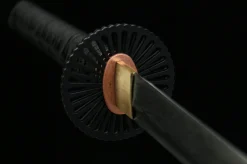
The saya is crafted from Aohada (green bark wood), a material prized in Longquan workshops for its tight grain and natural moisture resistance. Its deep forest-green tone creates a dramatic visual contrast against the violet-flamed blade when drawn, a pairing that feels intentional and theatrical in equal measure. The cotton ito wrap on the tsuka provides a secure, tactile grip that only improves with use as the fibers seat themselves to the hand.
Perfect For
- First serious T10 purchase: Collectors stepping up from entry-level 1045 or 1060 steel who want genuine T10 performance and visual character without crossing the $200 threshold.
- Tameshigiri practice: The oil-quenched T10 edge and classical Shinogi-Zukuri geometry make the Yaksha well-suited to cutting practice on tatami mats and rolled targets.
- Display with edge: The烤紫 flame patina and Aohada saya make this a conversation-starting display piece that also happens to be fully functional.
Care & Maintenance
T10 tool steel, while highly wear-resistant, contains no chromium and will develop surface rust if left unprotected — wipe the blade dry after any handling and apply a light coat of choji oil or mineral oil every two to four weeks. The 烤紫 patina is a protective oxide layer; avoid abrasive polishing that would strip it away and instead clean with a soft cloth only. Store the Yaksha horizontally in its Aohada saya in a low-humidity environment to protect both the blade and the wood’s natural finish.
Frequently Asked Questions
What is T10 tool steel and why is it used in the Yaksha katana?
T10 tool steel is a high-carbon steel alloyed with tungsten, giving it superior hardness and wear resistance compared to standard high-carbon steels. In the Yaksha (夜叉炎), this translates to a blade that holds a sharp edge exceptionally well under repeated use. T10 is widely regarded as one of the best steels for functional katanas, balancing cutting performance with durability, making it an excellent choice for serious practitioners and collectors alike.
What does ‘oil quench and temper’ mean for the Yaksha blade?
Oil quenching involves rapidly cooling the heated blade in oil rather than water, producing a slightly softer but significantly tougher result with reduced risk of warping or cracking. The Yaksha’s T10 blade undergoes this process followed by tempering — a controlled reheating — to relieve internal stress. The result is a blade with good flex resilience and edge retention, well-suited to functional cutting without the brittleness associated with harder quenching methods.
Is the Yaksha (LQS-0071) battle ready for cutting practice?
Yes, the Yaksha is a functional, battle-ready katana suitable for tameshigiri (test cutting) and dojo practice. Its T10 tool steel blade with oil quench treatment provides solid edge retention and toughness. The Shinogi-Zukuri ridgeline geometry adds structural strength along the blade. Note that the zinc alloy fittings, while adequate for regular use, are a tradeoff at the $180 price point — handle all cutting sessions with proper maintenance and inspection.
What is the green Aohada sheath on the Yaksha katana?
Aohada (青肌) refers to a green bark wood scabbard finish, giving the Yaksha’s saya a distinctive natural texture and visual character. This wooden sheath protects the blade from moisture and impact while contributing to the sword’s overall aesthetic. The green tone pairs with the sword’s 夜叉炎 (Yaksha Flame) theme, making it a visually striking display piece as well as a functional scabbard.
Is the Yaksha good value at $180 compared to other T10 katanas?
At $180, the Yaksha offers genuine T10 tool steel — typically found on katanas priced $150–$300 — making it competitive in the mid-range tier. The tradeoff is zinc alloy fittings rather than brass or copper. Buyers prioritizing blade quality for cutting practice will find strong value here. Those wanting premium fittings and Damascus aesthetics should consider stepping up to the Purgatory Vein (LQS-0072) at $240, which includes copper fittings and pattern-welded steel.
| Weight | 1.2 lbs |
|---|---|
| Dimensions | 103.0 × 3.2 × 0.7 in |
| Sword Type | Katana |
| Blade Steel | T10 Tool Steel |
| Total Length | 103.0 cm |
| Blade Length | 72.0 cm |
| Heat Treatment | Oil Quench & Temper |
| Handle Wrap | Cotton Ito Wrap |
| Sheath Material | Green Bark Wood (Aohada) |
| Fittings | Zinc Alloy |
| Forging Style | Shinogi-Zukuri (Ridgeline) |
Related products

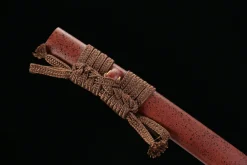
High Carbon Steel
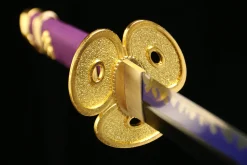
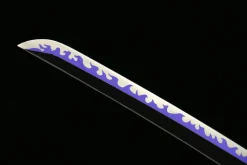
1045 Carbon Steel


Damascus Steel
Crimson Flame (之烽) – Hand Forged Damascus Steel Katana Sword

1065 Carbon Steel
1045 Carbon Steel
White Celestial – Hand Forged 1045 Carbon Steel Katana Sword
1065 Carbon Steel

Damascus Steel


1065 Carbon Steel