






Dragon Blade Forge · Sizing Guide
Find the Right Katana Length.
Nagasa, tsuka length, and overall weight. Three measurements that determine whether a sword handles correctly for your body dimensions.
Nagasa · Blade Length
Blade length by height.
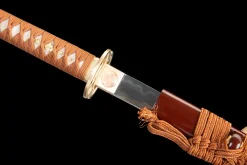
The nagasa (blade length, machi to kissaki) is the primary sizing measurement. The traditional Japanese method measures from the navel to the ground — approximately 36–38% of body height. For cutting practice, a slightly shorter blade improves control without sacrificing reach.
| Your Height | Recommended Nagasa | Notes |
|---|---|---|
| Under 5’4″ (163 cm) | 68–71 cm (27–28″) | Shorter nagasa improves control |
| 5’4″–5’8″ (163–173 cm) | 71–73 cm (28–29″) | Standard range, most common |
| 5’8″–6’0″ (173–183 cm) | 73–76 cm (29–30″) | Full-length katana proportion |
| Over 6’0″ (183 cm+) | 76–80 cm (30–31.5″) | O-katana length |
If you train in a specific style, your instructor’s recommendation takes priority over general guidelines.
Tsuka · Handle Length
Handle sizing by hand span.
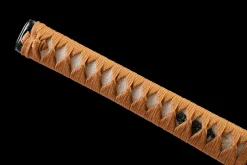
The tsuka should accommodate your dominant hand near the tsuba and your off hand at the pommel, with two finger-widths between them. For a two-handed grip, minimum 25–27 cm tsuka length.
| Hand Size | Tsuka Length |
|---|---|
| Small (glove S) | 24–26 cm |
| Medium (M) | 26–28 cm |
| Large (L) | 28–30 cm |
| Extra Large (XL+) | 30+ cm |
Weight
What to expect in hand.
A well-balanced katana of 70–75 cm nagasa should weigh 900–1,100 grams. Below 800 g typically means the blade geometry has been thinned for display. Above 1,300 g for a standard nagasa suggests a thick spine designed for contact practice.
900–1,100g
Cutting sword weight
6–8mm
Spine thickness
28–32mm
Base width
Find the blade that fits your hand.
Free worldwide shipping on orders over $500.