






Buying Guides
Damascus vs Carbon Steel Katana: Which Should You Buy?
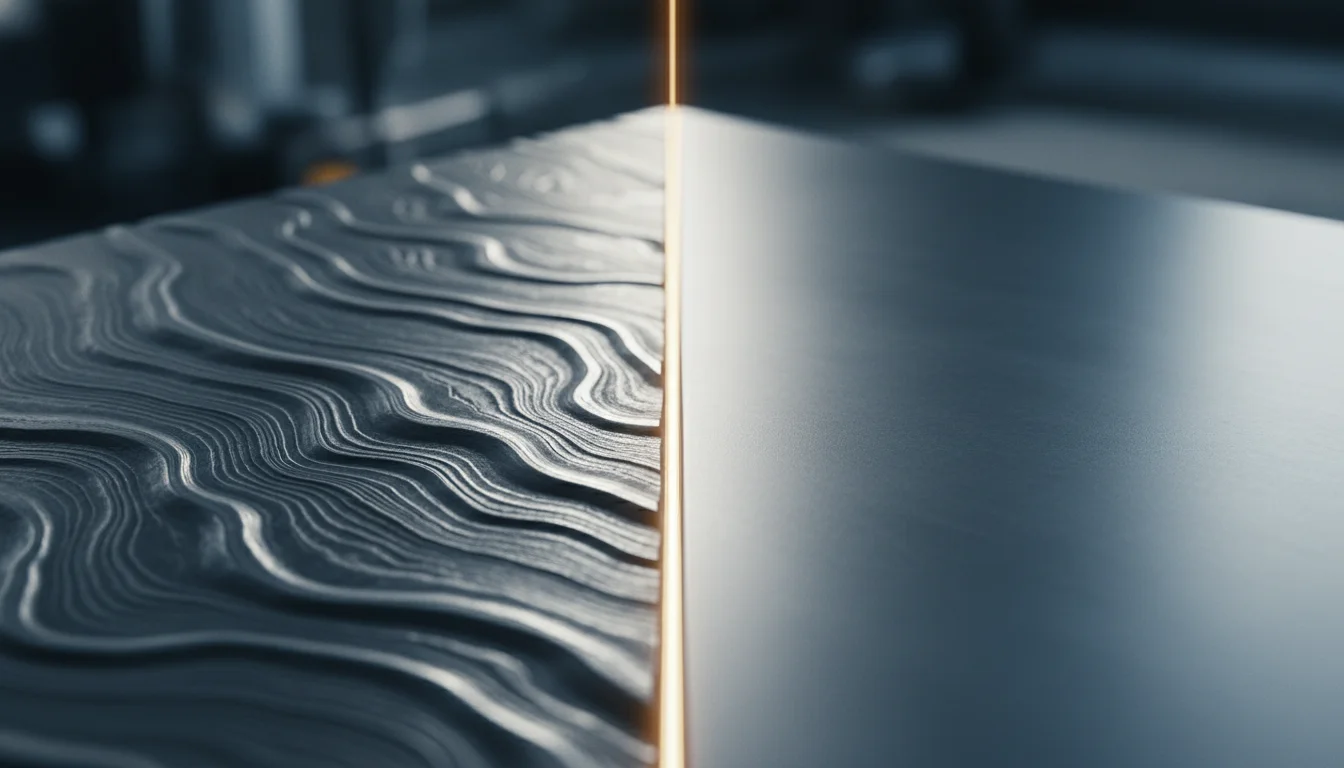
This question comes into our inbox several times a week. Someone has a budget, a purpose in mind, and two very different-looking blades in front of them. One has that rippling, water-pattern surface. The other is matte grey with a hamon line that glows when the light hits it right. Both are real steel. Both are forged here in Longquan. But they are not the same tool, and choosing wrong is an expensive mistake.
Let us go through what each material actually is, how they perform side by side, and which one belongs in your hands.
What Is Damascus Steel, Really
The name carries a lot of mythology. Modern Damascus, the kind you see on katana today, is pattern-welded steel. Two or more steel alloys, typically a high-carbon and a low-carbon variety, are forge-welded together, folded, twisted, and drawn out repeatedly. The number of layers varies by maker. In our shop, we work with 64-layer and higher counts depending on the blade. Each fold doubles the layer count, and each set of folds introduces a new twist or manipulation that will show up in the final surface pattern.
After the blade is shaped and heat-treated, the smith etches the surface in acid. The high-carbon layers darken; the low-carbon layers stay bright. That contrast is what creates the visible grain. No two blades produce identical patterns, because no two forging sessions go identically. A slight temperature variation, a different twist angle, a longer draw at the hammer, and the grain shifts entirely.
Think of it like fine wood grain on a guitar. The beauty is structural, not painted on. It comes from the material itself.
What Damascus is not is a single-alloy “super steel.” The performance of the blade depends entirely on what steels went into the billet. Our Damascus katana use a 1095 and 15N20 combination. The 1095 provides hardness and edge retention. The 15N20 adds nickel, which creates the bright contrast in the pattern and contributes toughness. The finished blade typically heat-treats to around HRC 58-60, which puts it squarely in functional territory. Our full Damascus collection includes blades built to that standard.
What Is High Carbon Steel
High carbon steel is simpler in construction and more demanding in performance. A single alloy, controlled carbon content, heat-treated to a specific hardness. The three grades we work with most often are 1065, 1095, and T10, and they are not interchangeable.
1065 sits at 0.65% carbon. It is tough, forgiving of hard use, and easy to sharpen. Edge retention scores a 6 out of 10 by our internal testing, but toughness reaches 8. For someone starting out with tameshigiri or who plans to train hard and sharpen often, 1065 forgives errors in technique that would chip a harder blade.
1095 runs at 0.95% carbon and behaves differently in every way that matters. Edge retention climbs to 9 out of 10. Toughness drops to 5. That trade-off is the whole story with 1095. It takes a razor edge and holds it through multiple cutting sessions, but it does not absorb shock as generously. A lateral impact on a poorly executed cut will tell you immediately. It rewards precision, and punishes sloppiness.
T10 tool steel adds tungsten to the mix, which is why it is classified as a high-speed tool steel. Tungsten increases wear resistance, which means the edge holds its geometry longer under cutting stress. Toughness sits at 7, edge retention at 8, and when clay-tempered, it produces one of the most visually striking hamon patterns of any steel we work with. Our steel comparison guide breaks down all five grades with full scoring across five performance categories.
Head-to-Head Comparison
Cutting Performance
On pure cutting metrics, T10 and 1095 lead everything in the carbon steel category. Damascus, built on a 1095/15N20 billet, performs comparably to a mono-steel 1095 in most cutting tests, but not identically. The layered structure creates a micro-serrated edge at the microscopic level, which some cutters describe as aggressive initial bite. The edge retention score for Damascus sits at 7 out of 10 in our data. Solid, but a dedicated T10 clay-tempered blade edges it out.
For clean, repetitive tatami cuts, the edge geometry matters as much as the steel grade. A well-ground 1065 blade at the right angle will outcut a poorly ground 1095 every time. Steel is the ceiling, not the floor.
Durability
Here is where carbon steel mono-alloys have a structural advantage. A single alloy, properly heat-treated, has consistent hardness across the cross-section of the blade. Damascus steel, by its layered nature, has alternating zones of harder and softer material. That is part of what makes it tough, but it also means the edge performance is an average of the two steels rather than the peak of either one. Toughness scores for Damascus and T10 are both 7 out of 10. Under hard lateral stress, both perform similarly. Over thousands of cuts, the mono-steel T10 maintains edge geometry more consistently.
Maintenance
Both Damascus and high carbon steel will rust if you neglect them. Corrosion resistance scores for Damascus, 1095, and T10 all cluster around 2-3 out of 10. That means regular oiling after handling, proper storage, and wiping down after every use. See our sword care guide for the full maintenance schedule we recommend.
Damascus requires one additional step. The acid-etched surface that creates the pattern needs to be protected carefully. Aggressive abrasive polishing will remove the etch and flatten the contrast between layers. If you re-sharpen a Damascus blade on a coarse stone, work only the edge bevel and keep the flat of the blade off the abrasive. Ease of sharpening for Damascus scores 5 out of 10, lower than 1065 at 9 or 1095 at 7, specifically because of this sensitivity.
Visual Appeal
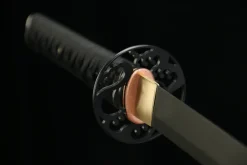
Damascus wins here, without qualification. The layered grain pattern is visible to the naked eye from across a room. Every blade is unique. A clay-tempered T10 hamon is genuinely stunning in the right light, and collectors do seek it out, but it requires angular lighting to fully show. Damascus pattern is visible in any light condition. For display, for photography, for the kind of blade that draws a reaction when you draw it from the saya, Damascus delivers something no mono-steel can replicate.

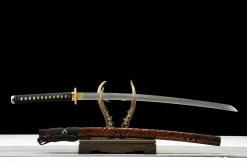
Ink Meteor – Damascus Katana
Three-panel san-mai construction with Damascus cladding. $775. Our flagship display-grade functional sword.

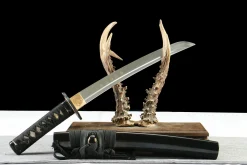
Silent Thunder – T10 Katana
T10 high-speed tool steel, clay-tempered, full functional build. $280. The workhorse of our carbon steel line.
When to Choose Damascus
Choose Damascus when the blade itself is part of what you are collecting. If you want something that rewards close inspection, that looks different in morning light versus lamp light, that will never be exactly duplicated, Damascus is the right answer. The Ink Meteor uses a san-mai construction, meaning the Damascus steel forms the outer cladding over a harder core. That gives you the visual complexity of full Damascus with better structural consistency at the edge. At $775, it is an investment in a blade that does double duty as art and functional sword.
Damascus also suits buyers who want something that signals serious craft to other collectors. When someone who knows swords picks up a layered Damascus blade, they understand immediately what went into making it. There is a conversation in the material itself.
One honest note: if your primary goal is cutting performance per dollar spent, Damascus is not the most efficient path. You are paying for the pattern work, the forge time, the etching process. That cost is real and it is worth it for the right buyer, but it should be a conscious choice. Our katana buying guide covers this trade-off in detail if you want to think it through before committing.
When to Choose Carbon Steel
Choose carbon steel when cutting is the primary purpose. A T10 clay-tempered blade at $280-$340 will outperform a Damascus blade at twice the price on the cutting mat. The Silent Thunder and Dark Ravine are both T10 builds that we have tested extensively on tatami and bamboo. They hold their edge through long cutting sessions in a way that demands respect.
Carbon steel is also the better choice for beginners. Not because it is easier to use, but because it is more forgiving of the inevitable learning-curve mistakes, and more affordable to replace or service if something goes wrong. Starting with a $230-$280 carbon steel katana and learning proper technique, maintenance, and draw is the right sequence. You graduate to Damascus when you know exactly what you are asking a blade to do.
Browse our full katana collection by steel type to compare options across price points before deciding.

Dark Ravine
T10 tool steel with clay tempering. $340. Exceptional hamon clarity, built for cutting.
Ink Meteor
Damascus san-mai construction. $775. For collectors who want functional beauty.
Silent Thunder
T10 high-speed tool steel. $280. The most efficient cutter in our entry-to-mid range.
Our Recommendations
For cutting practice and tameshigiri: start with the Silent Thunder or Dark Ravine. Both are T10, both are clay-tempered, both are priced so that you are spending your budget on performance rather than aesthetics. The hamon on these blades is genuinely beautiful, but it is earned through the tempering process rather than layering, which means it tells you something about how the blade was made.
For display, collection, or a blade you want to cut with and also hang on the wall: the Ink Meteor is the one. The san-mai Damascus construction gives it real cutting credentials. It is not a display-only piece. At $775 it is a serious purchase, and it is serious about what it delivers in return.
If you are still unsure, look at the Damascus steel category alongside the T10 options and compare them in the same browsing session. The gap in visual character becomes immediately obvious. So does the gap in price. One of those gaps matters more to you than the other, and that is your answer.
Frequently Asked Questions
Ready to Find Your Blade?
Browse Damascus and carbon steel katana side by side. Every blade ships from Longquan with a full inspection certificate.
