

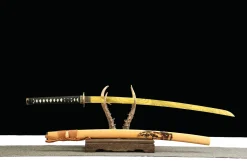




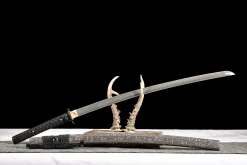



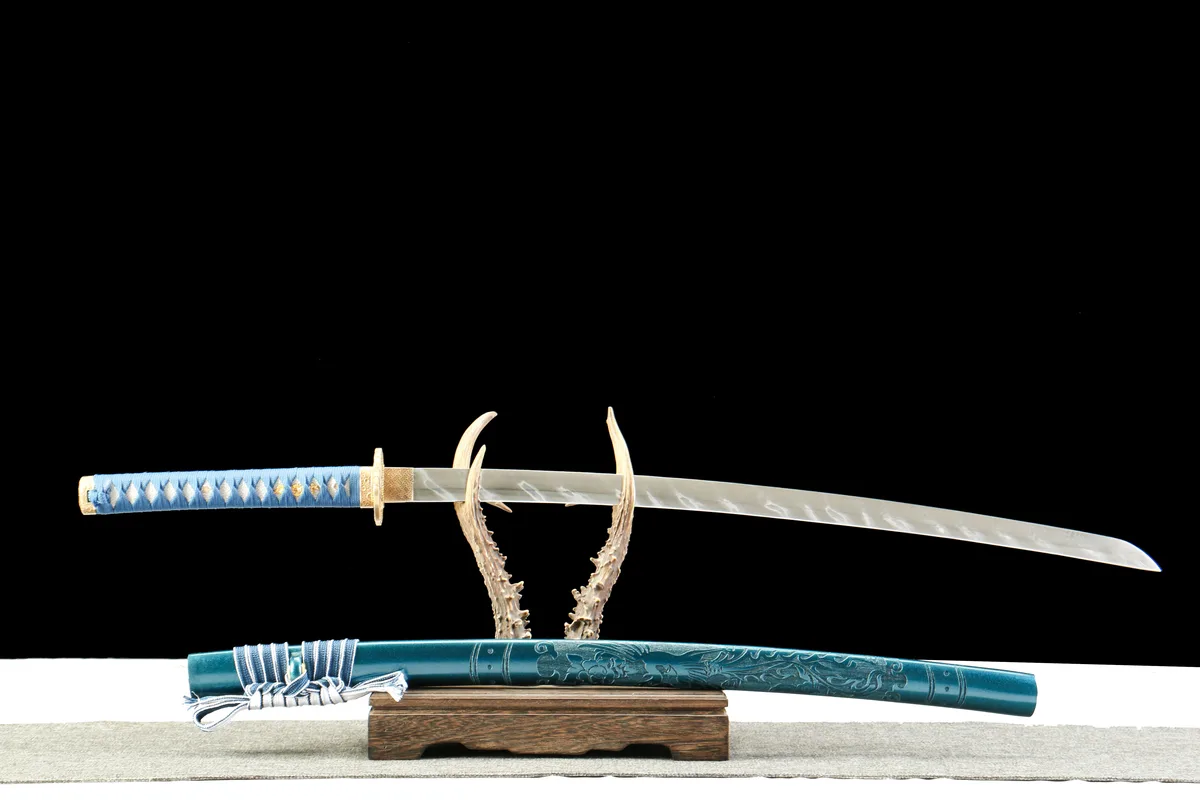




Fallen Star – Hand Forged Damascus Steel Katana Sword
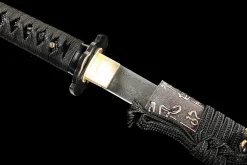
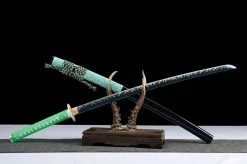
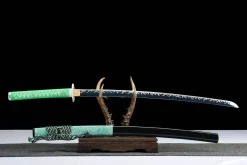
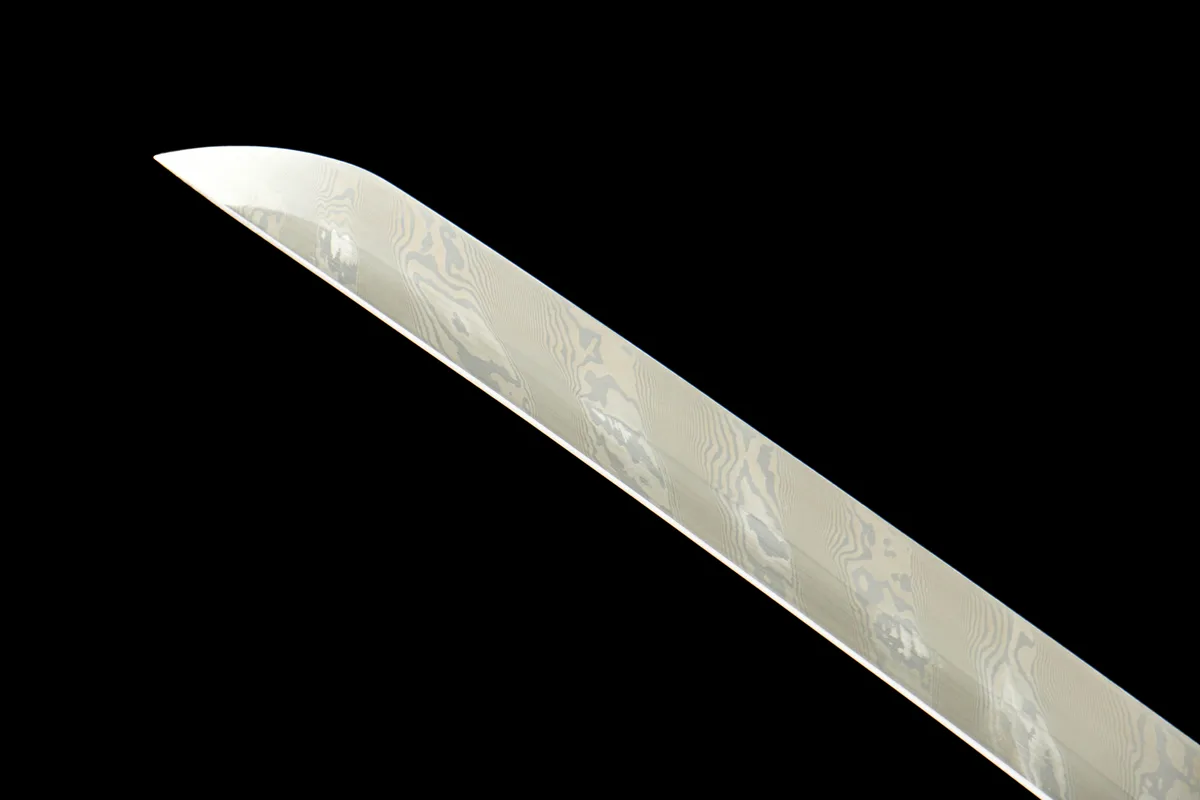
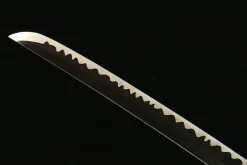
The Fallen Star katana — 星陨 — is one of the most visually arresting swords in our Longquan collection: a Damascus steel blade forged in the twist-pattern style, its surface a swirling galaxy of light and dark lines that seem to shift as the blade moves, as if a star were coming apart in slow motion. Elevated copper fittings and a premium $340 price point place Fallen Star firmly in collector and serious practitioner territory, while its folded pattern-welded construction connects it to one of the oldest forging traditions in the world. This is a katana made to be both used and admired.
Specifications
| Blade Steel | Damascus Steel, Twist Pattern |
| Total Length | 103.0 cm / 40.6 inches |
| Blade Length | 72.0 cm / 28.3 inches |
| Blade Width | 3.2 cm |
| Weight | 950 g / 33.5 oz (net) |
| Heat Treatment | Oil Quench & Temper |
| Fittings | Copper |
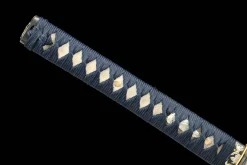
| Handle | Cotton Ito Wrap |
| Sheath | Green Bark Wood (Aohada) |
Craftsmanship & Materials
Pattern-welded Damascus steel — the forging style used on Fallen Star — is created by layering two or more high-carbon steels, forge-welding them under the hammer, folding the billet, and repeating the process until dozens or hundreds of individual layers are compressed into a single coherent blade. On Fallen Star, the billet is then twisted before final forging, which creates the dramatic radial swirl pattern visible across the blade’s surface after etching: concentric spiraling bands of light and dark steel that evoke the streaking trail of a meteor crossing a night sky. No two twist-pattern Damascus blades are ever identical — the pattern that emerges from the twist is governed by the exact geometry of the billet, the intensity of the twist, and the hand of the smith.
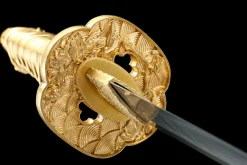
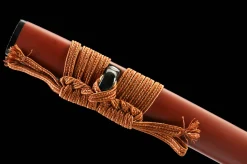
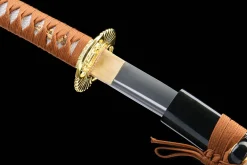
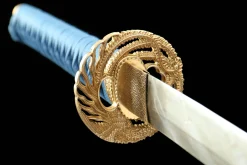
The copper fittings — tsuba (handguard), habaki (blade collar), fuchi, and kashira — distinguish Fallen Star immediately from zinc alloy alternatives. Copper is softer and warmer in tone than brass, developing a rich patina over time that deepens the sword’s character with age. Copper fittings are also a traditional choice in Japanese sword furniture, and their presence here signals that Fallen Star is built with material integrity in mind at every component. The Aohada green bark wood saya provides a counterpoint: cool, botanical, and quietly elegant against the warm metal tones.
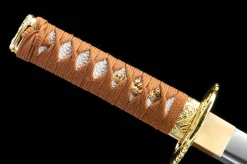
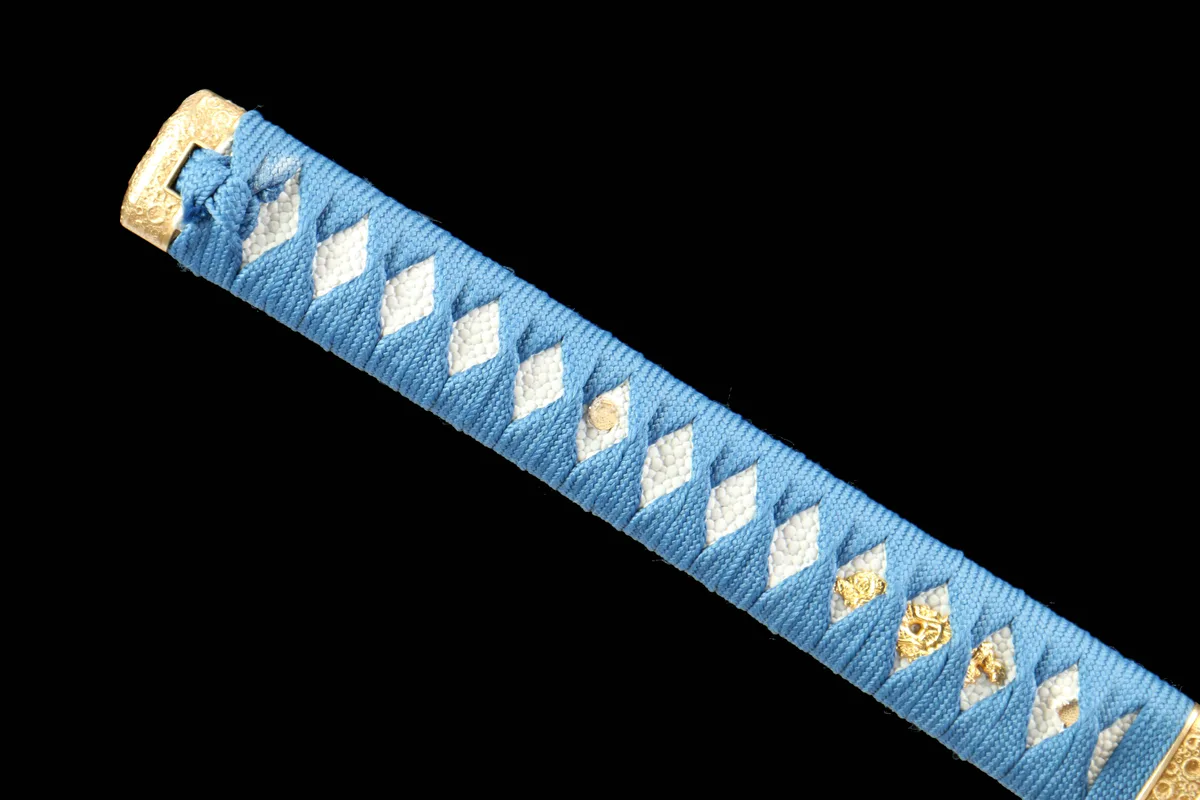
The oil quench and temper heat treatment process used on this Damascus billet produces a blade that is hardened and functional, not merely decorative. The folded construction distributes carbon throughout the billet in ways that differ from mono-steel blades, and the resulting edge, while requiring care in sharpening, responds beautifully to whetstone work. The cotton ito wrap across the 27 cm tsuka is wound tightly, giving a confident grip that lets the sword’s 950 g balance feel controlled and intentional in the hand.
Perfect For
- Collectors seeking a Damascus katana with genuine visual distinction — the twist pattern is unique on every blade forged
- Intermediate to advanced practitioners who want a functional pattern-welded katana with premium copper fittings at a reasonable premium price
- Gift buyers looking for a high-impact, visually spectacular katana that will become the centerpiece of any sword display
Care & Maintenance
Damascus steel requires attentive care because the differential steel layers can oxidize unevenly if left unprotected — oil the blade thoroughly after every session with choji or camellia oil, paying particular attention to the etched pattern surface where moisture can wick into the layer boundaries. The copper fittings will naturally patinate over time; this is normal and desirable, but if you prefer to slow the process, a light application of Renaissance Wax to the metal surfaces will help. Re-etch the pattern periodically with diluted ferric chloride if you wish to keep the Damascus layers visually vivid and sharply defined.
Frequently Asked Questions
What is Damascus steel and what makes it special for a katana like the Fallen Star?
Damascus steel — also known as pattern-welded steel — is created by forge-welding multiple layers of different steel alloys together and manipulating them to create distinctive flowing patterns. The Fallen Star features a twist-pattern Damascus construction, where the layered billet is twisted during forging to produce a visually striking grain. Beyond aesthetics, the combination of hard and tough steel layers can enhance both edge retention and resilience, making it prized by collectors and enthusiasts alike.
What is the twist pattern on the Fallen Star’s Damascus blade and how is it made?
The twist pattern on the Fallen Star is achieved by taking a forge-welded Damascus billet and physically twisting it at forging temperatures before drawing it out into a blade shape. This manipulation causes the layered steel to form a spiral or wood-grain-like visual pattern when the blade is ground and etched. Each blade’s pattern is unique. The Fallen Star’s twist-pattern Damascus is both a functional blade and a work of visual art, making it particularly appealing to collectors.
Is the Fallen Star Damascus katana functional for cutting, or is it primarily a collector’s piece?
The Fallen Star is a functional collector’s katana. Its Damascus twist-pattern blade is oil-quenched and tempered, producing a working edge capable of controlled cutting practice. However, at the $340 price point with Damascus steel and copper fittings, many buyers primarily value it as a display and collector’s piece. It is suitable for light to moderate cutting use, but Damascus pattern-welded blades require more careful maintenance — including regular oiling to prevent rust in the etched pattern — compared to monosteel blades.
Why does the Fallen Star have copper fittings instead of zinc alloy, and does it make a difference?
The Fallen Star features copper fittings, a significant upgrade over the zinc alloy fittings found on lower-tier swords. Copper fittings are denser, more durable, and develop a natural patina over time that many collectors find desirable. They also hold fine decorative detail more crisply than cast zinc alloy. At the Fallen Star’s $340 premium price tier, copper fittings are an expected quality marker that complements the Damascus blade and elevates the overall aesthetic and structural integrity of the sword.
Is the Fallen Star worth $340 compared to other Damascus katanas?
At $340, the Fallen Star offers strong value within the premium Damascus katana tier. Key differentiators include its handcrafted twist-pattern Damascus blade, copper fittings (versus zinc alloy on cheaper alternatives), Aohada sheath, and cotton ito wrap. Compared to similarly priced mass-produced pattern-welded swords, the Fallen Star’s folded steel construction and visual uniqueness justify the price for collectors and enthusiasts. Buyers purely focused on cutting performance, however, may find a mono-steel 1095 or T10 clay-tempered blade a more practical investment at this price range.
| Weight | 1.2 lbs |
|---|---|
| Dimensions | 103.0 × 3.2 × 0.7 in |
| Sword Type | Katana |
| Blade Steel | Damascus Steel |
| Total Length | 103.0 cm |
| Blade Length | 72.0 cm |
| Heat Treatment | Oil Quench & Temper |
| Handle Wrap | Cotton Ito Wrap |
| Sheath Material | Green Bark Wood (Aohada) |
| Fittings | Copper, (装) |
| Forging Style | Folded Steel (Pattern Welded) |
Related products
Carbon Steel

1045 Carbon Steel


Damascus Steel
Crimson Flame (之烽) – Hand Forged Damascus Steel Katana Sword
1065 Carbon Steel

1045 Carbon Steel

High-End ($400-$800)


Anime & Pop Culture

1045 Carbon Steel
Black Heaven Feather – Hand Forged 1045 Carbon Steel Katana Sword