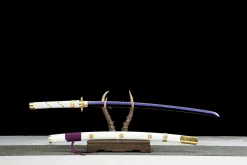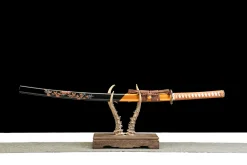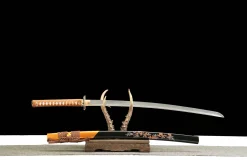








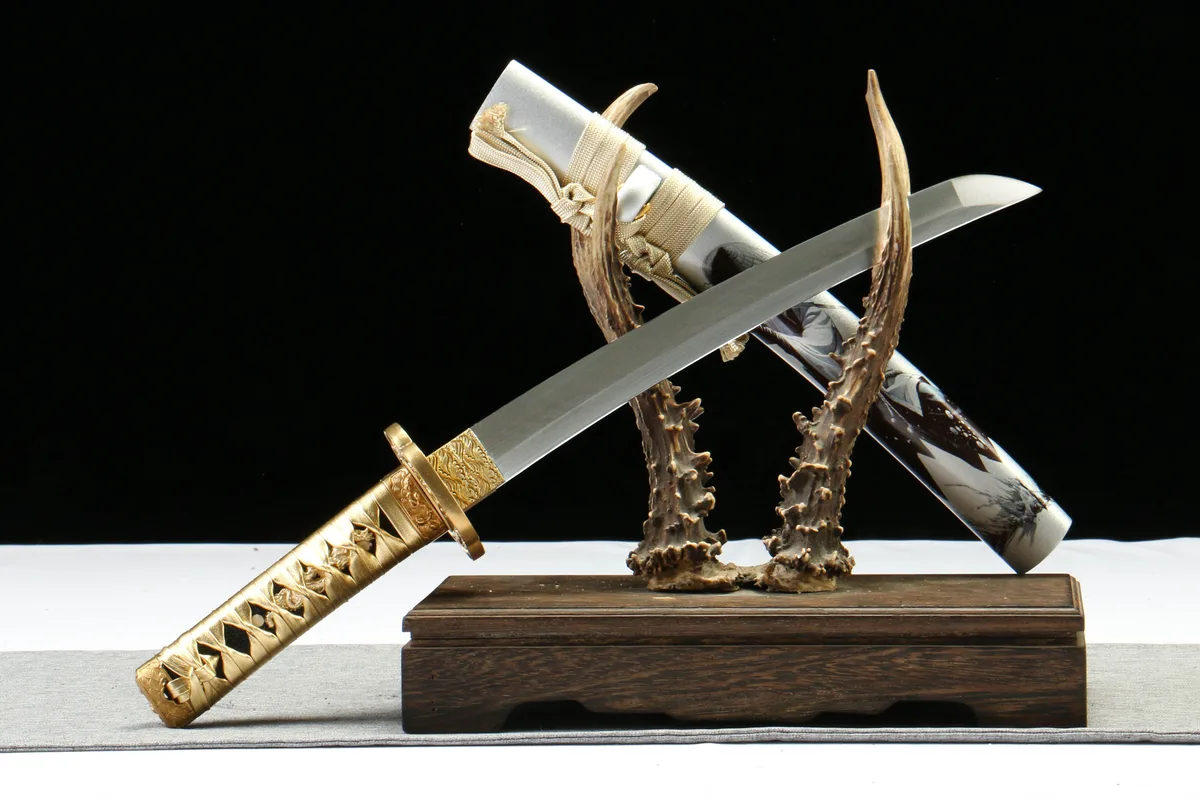

Silver Wave – Hand Forged T10 Tool Steel Tanto Sword
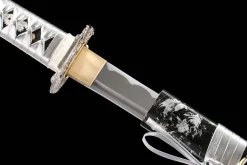
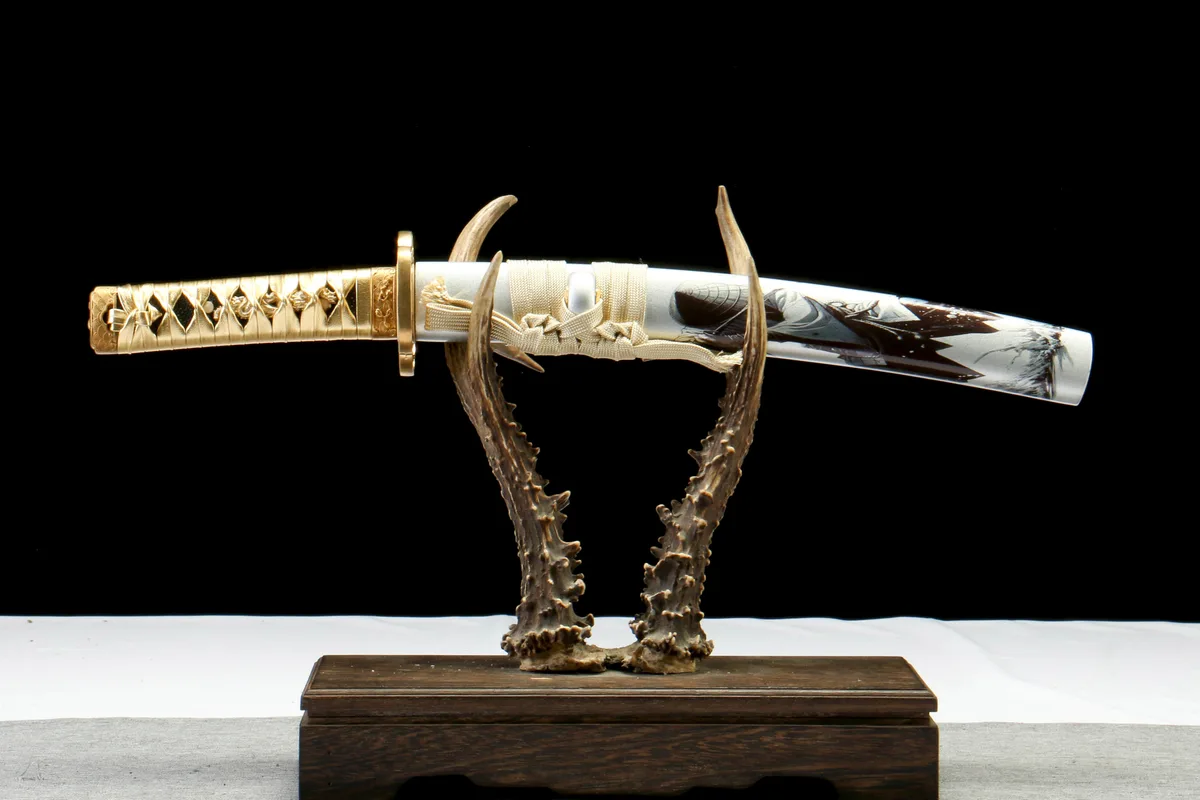
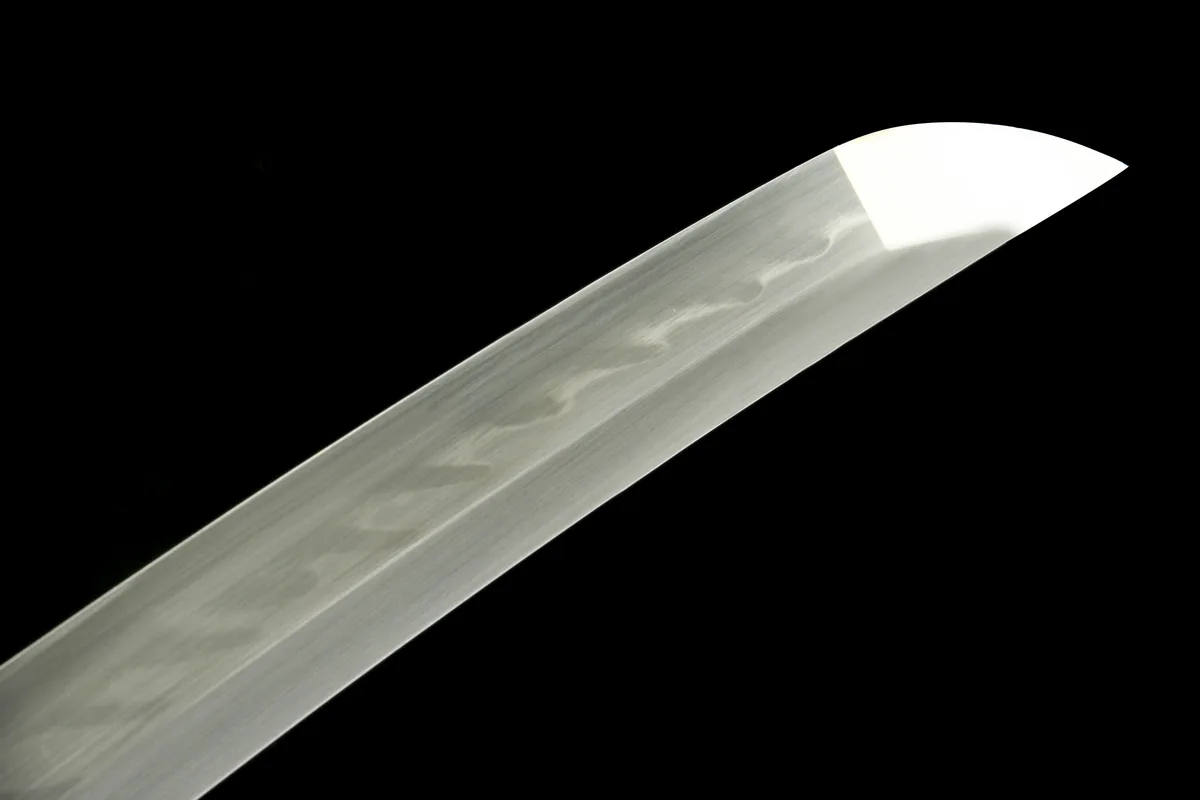
Hand-forged T10 Tool Steel tanto (52cm total / 32cm blade), crafted in Longquan. Clay-tempered blade with a genuine hamon line — visible contrast between hardened edge and soft spine.
$459.99
Silver Wave – Hand Forged T10 Tool Steel Tanto Sword
A tanto (short blade, traditionally under 30 cm) at this level of specification is an uncommon object. The Silver Wave carries the same clay-tempered T10 construction and the same proprietary silver wave hamon as its katana counterparts in this series – but compressed into a 32-centimeter blade where every millimeter of the temper line is in close, uninterrupted view. There is nowhere for the hamon to hide, and on this blade, it does not try.
Specifications
| Blade Steel | T10 High Speed Tool Steel |
| Total Length | 52.0 cm / 20.5 in |
| Blade Length | 32.0 cm / 12.6 in |
| Blade Width | 3.2 cm |
| Weight | 780 g / 27.5 oz |
| Heat Treatment | Clay Tempering (Differential Hardening) |
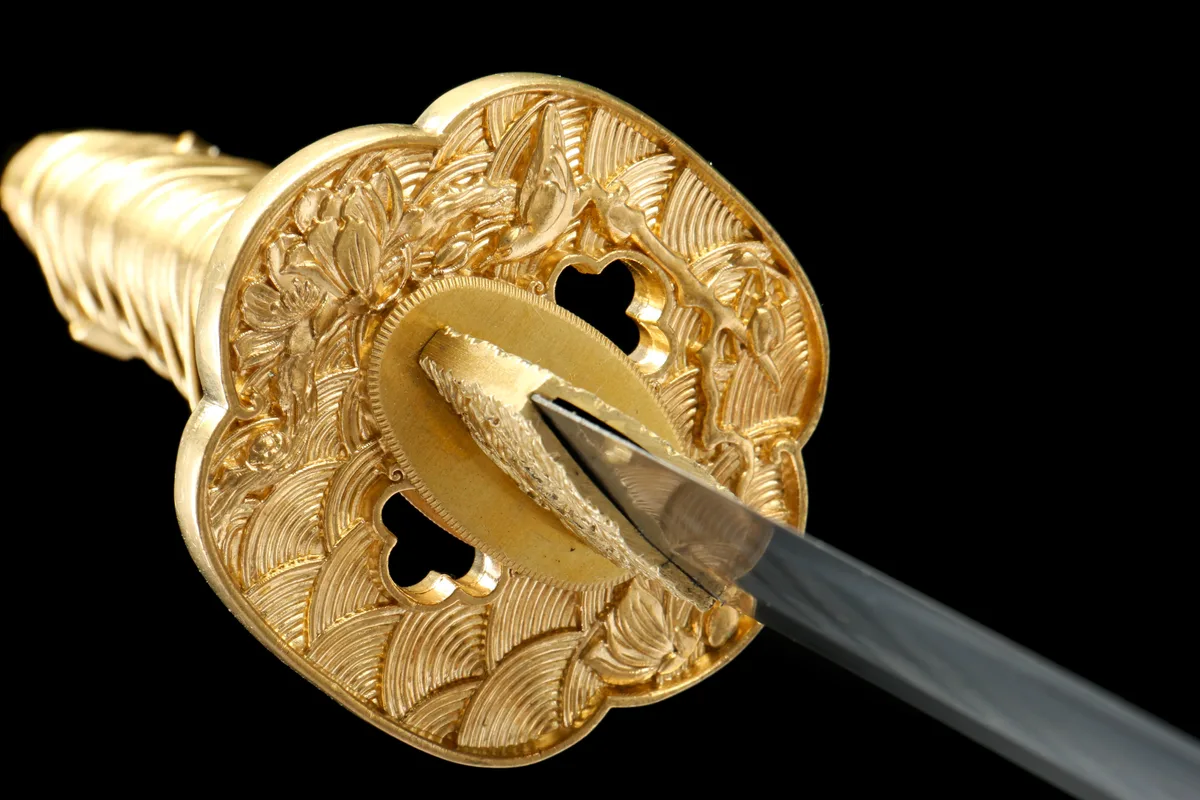
| Fittings | Brass |
| Handle | Cotton Ito + Genuine Rayskin |
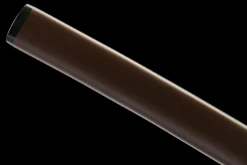
| Sheath | Hardwood (High-Gloss Lacquer) |
What the Steel Does
T10 high speed tool steel contains tungsten in addition to its high carbon content – this is not a marketing distinction. Tungsten refines carbide distribution within the steel matrix and raises wear resistance at the edge beyond what plain carbon steels of identical hardness can achieve. In the context of a tanto, where blade width and length are both reduced, the edge geometry is necessarily more concentrated, and the steel at that edge is under proportionally greater stress per unit of surface area. T10 handles that stress without the edge-chipping that affects more brittle steels at equivalent hardness.
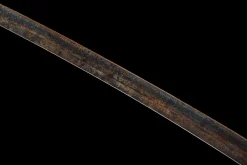
Clay tempering applies that edge hardness differentially: the clay jacket laid along the mune (spine) insulates it during quench, keeping spine hardness in the 40-45 HRC range while the ha (cutting edge) reaches 58-62 HRC. The hamon – the temper line visible at that boundary – on the Silver Wave follows the proprietary wave pattern designated in its Chinese name: undulating, active, with nie (individual martensite crystals) visible in raking light along the habuchi (temper line boundary). On a 32-centimeter blade, the hamon covers a shorter run than on a katana, but the detail density is the same – every arc and peak of the wave pattern is fully formed within that compressed length. The shinogi-zukuri (ridgeline) construction gives the flat a raised central ridge that reads clearly at the tanto’s width.
The Feel of It
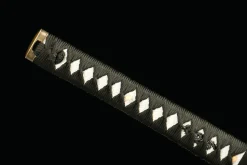
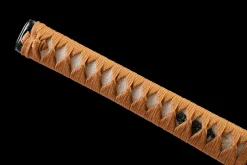
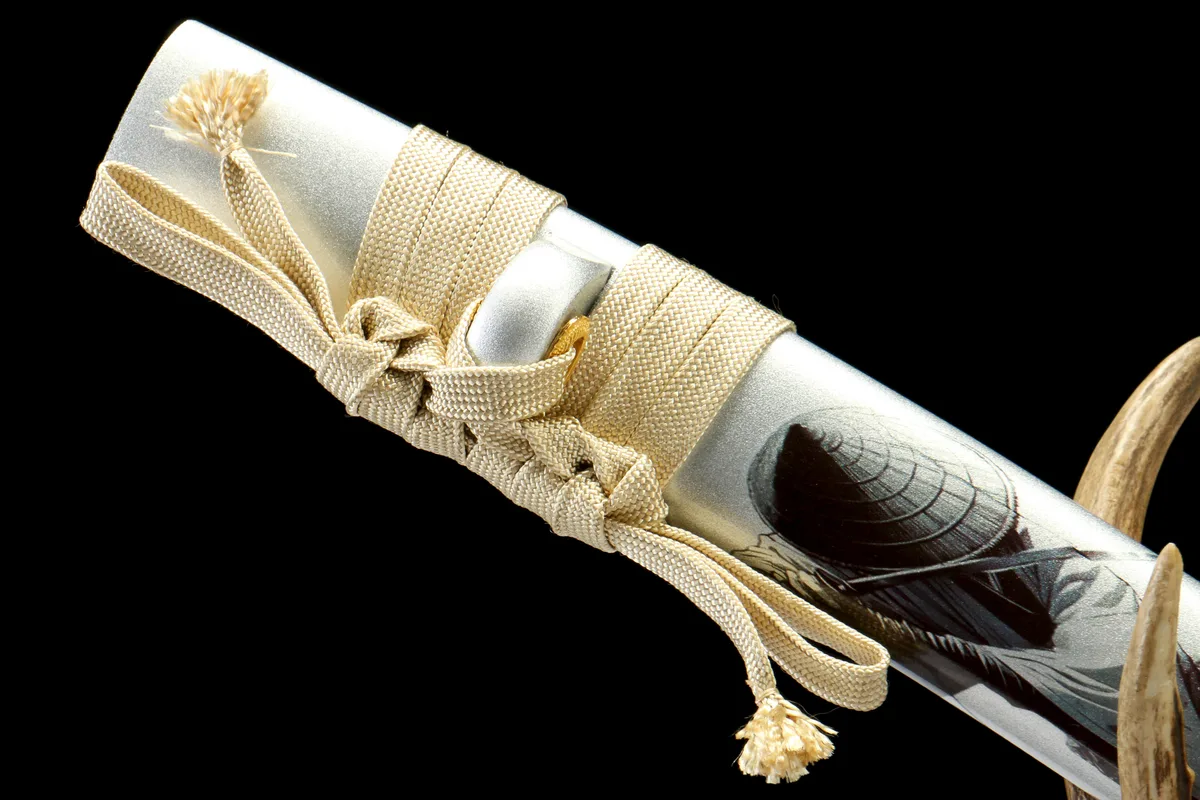
The 26-centimeter handle on a tanto is a deliberate choice – long relative to the blade, giving a two-hand capability that standard tanto handles rarely offer, and changing the character of the draw entirely. Wrapped over genuine rayskin (same) in cotton ito, the handle has the textural depth of a full-scale katana in the hand: the same nodular same surface legible through the wrap, the same diagonal ito pattern locking at each crossing. Drawing the Silver Wave from its high-gloss lacquered hardwood saya is a short, direct motion, and the koiguchi (sheath mouth) – fitted to this blade’s specific habaki (collar) – releases with a clean resistance. At 32 centimeters of blade, the shinogi-zukuri ridgeline runs the full visible length with nothing to interrupt it.
Maintenance Notes
Apply choji oil (clove-based mineral oil, the traditional preservative for Japanese blades) to the entire blade surface after handling, using a soft cloth or uchiko ball and working from the habaki toward the kissaki (tip). The shorter blade length means the job takes moments, but it is no less important than on a full katana – T10 will stain if left with fingerprint acids on the surface. Store horizontally in the saya in a dry, stable environment and re-oil every three months if the tanto is in static display.
| Weight | 1.0 lbs |
|---|---|
| Dimensions | 52.0 × 3.2 × 0.7 in |
| Hamon | Real Hamon (Clay Tempered) |
| Blade Steel | T10 Tool Steel |
| Total Length | 52.0 cm |
| Blade Length | 32.0 cm |
| Heat Treatment | Clay Tempering (Differential Hardening) |
| Handle Wrap | Cotton Ito + Genuine Rayskin |
| Sheath Material | Hardwood (High-Gloss Lacquer) |
| Fittings | Brass |
| Forging Style | Shinogi-Zukuri (Ridgeline) |
Related products